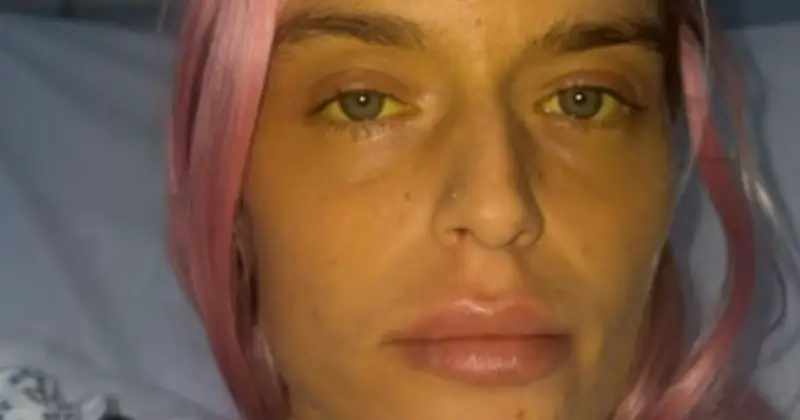
A former drug addict who took up to 14g of ketamine daily at the height of her decade-long addiction has revealed how she nearly died from organ failure and suffered seizures, with her parents even called to say their final goodbyes.
Georgia Lee Hampshire, 27, from Huddersfield, West Yorkshire, began experiencing episodes where her head and body would shake and twitch uncontrollably around four years ago. She said her bladder even contracted to the size of a "teaspoon." Despite acknowledging her body was breaking down, and following a frightening incident where doctors thought she was near death, she continued using the substance.
A Stark Warning About Ketamine
Now she is delivering a stark warning to anyone who wrongly assumes it is a harmless recreational drug. "It's a slow deadly killer," Georgia told creatorzine. "I don't know one person that does ketamine and hasn't had any bad side effects. Ketamine has nearly killed me multiple times, and it's killing people every day."
Georgia's substance use began when she was just 15. She said: "I was 15 and I took a pill once at a party, smoked weed a few times, took speed at 16, tried LSD at 16, then went to college, turned 17 and tried ketamine at a rave and stuck with it. I used to hate drugs, but I made friends with a bunch of people and started to go to raves every weekend. Everyone was experimenting with cocaine and ketamine. I stuck with ketamine. I wasn't addicted to it straight away, and I only did it every now and again. I ended up realising it wasn't a party drug. I enjoyed the feeling of being dissociated, and I was taking it in my bedroom by myself. Nobody knew at first."
Collapse and Intensive Care
Her dependency escalated alarmingly in subsequent years, and four years ago she started suffering seizures she believes were connected to her substance misuse. She was spending £120 at a time on narcotics. In June 2025, Georgia collapsed at her recruitment job when her kidneys and liver failed. A colleague from a neighbouring office found her unconscious on the floor, blood seeping from her mouth after she had bitten through her tongue, and immediately called 999.
Georgia was rushed to hospital and transferred directly to intensive care, where she remained unconscious and unresponsive. Medical staff told her parents that her prospects of survival were poor and encouraged them to come and say their final goodbyes. Georgia recalled: "I think my body just had enough. Doctors made a call to my family and said I wasn't going to make it. They were asked to come and say goodbye to me. My mum and dad had to think about whether they wanted to bury or cremate me. That's something parents should never have to think about."
Recovery and Rehab
She slowly began to regain consciousness, though doctors were unsure whether she had suffered brain damage. She was kept sedated owing to the gravity of her condition and underwent several dialysis sessions. She developed jaundice, required feeding through a tube, and received three blood transfusions. Her muscles had stopped working entirely, compelling her to relearn fundamental movements such as standing and walking through physiotherapy.
Medical professionals advised both a liver and kidney transplant, however Georgia claims she was refused due to her addiction. At her lowest, she weighed merely five stone, spending more than a month in hospital before being readmitted as she was unable to retain food. Just a week following her discharge, Georgia suffered a relapse. She confessed: "In my addict mind, I used a week after leaving hospital just because it was sunny outside. Everything from then just went horrendous. I was even scared looking in the mirror as I didn't recognise myself."
She then lost her job and wrote off her car in an accident. Her physical state deteriorated dramatically, resulting in a nephrostomy tube being fitted into her right kidney in April 2026 after being diagnosed with hydronephrosis. In July, a support worker from Change Grow Live eventually contacted Georgia about entering rehab, and funding was later obtained. She completed a two-week detox programme at a Liverpool facility before moving to a rehabilitation centre in Barnsley. Her treatment has included group therapy, weekly one-to-one sessions, DBT therapy, workshops and the 12-step programme. She also attends recovery meetings and has stayed clean for nine weeks, representing her longest stretch of sobriety since commencing substance use.