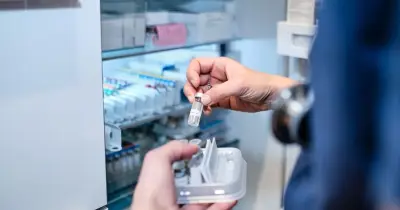
More than half of organisations providing HIV care surveyed by the International Planned Parenthood Federation (IPPF) said they had run out of stock at some point during the past 12 months, according to a survey of 40 countries.
The survey, which covered 40 countries, revealed that 55% of respondents had run out of stock within the past year, with a critical scarcity of HIV tests and pre-exposure prophylaxis (PrEP) – a prescription medicine that people take to reduce the risk of getting HIV.
Survey findings on stock levels
At the time of questioning, 40% of IPPF members reported they had run out of all stock of a product, and 60% had at least one product at low stock levels. HIV rapid diagnostic tests were the most critically affected product across all respondents.
Testing is provided by almost every responding member association, yet 17 reported low stock and a further five reported no availability, meaning that more than half cannot offer sustained HIV testing at the point of care.
Impact on prevention and treatment
Oral and injectable PrEP were also scarce, with 12 member associations reporting low stock or none at all. Respondents from the Arab world, Asia and Oceania, Europe, the Americas and the Caribbean said supplies, including condoms and antiretroviral therapy, were unreliable.
Mallah Tabot, a senior adviser at IPPF Africa’s regional office, said: “These shortages are a warning of what happens when funding becomes uncertain and the supply systems communities depend on grow fragile.”
“We cannot let decades of progress against HIV be undone simply because products aren’t available. This is not a distant risk – it is already happening. HIV infections are rising in a number of countries around the world and lives are being lost,” she added.
Global context and warnings
An estimated 40.9 million people were living with HIV worldwide last year, when there were 570,000 Aids-related deaths recorded, alongside 1.2 million new HIV infections.
In 2025, HIV responses around the world were disrupted by cuts that threatened to stall years of progress. That year, there was a fall in aid spending of about 23% compared with 2024, leading the UN to warn in June of the risk of a resurgence of the HIV epidemic.
Lori Miller, an HIV adviser for IPPF, said: “Our partners already have what it takes to deliver integrated HIV prevention, testing and treatment – the clinic networks, digital infrastructure, health workforce and community trust to reach people with care – but unreliable supplies are letting them down.”