Around 35 per cent of drivers admit they have been temporarily blinded by headlight dazzle while on the roads, according to research by RAC, and eye experts warn that persistent difficulties could signal underlying conditions that must be reported to the DVLA or risk fines up to £1,000.
As winter approaches and daylight hours reduce, many motorists are travelling in the dark, where the headlights of oncoming cars become a major issue. Modern LED headlights produce a brighter, whiter light that feels more intense than older halogen bulbs, leaving many people less confident about driving at night.
How headlight glare affects eye conditions
Eye experts say headlights may not just cause temporary issues but can make existing visual problems more noticeable, including reduced night vision, cataracts, astigmatism and outdated prescriptions. Contact Lens Optician at Feel Good Contacts, Tina Patel, explained: "Many drivers feel that headlights have become brighter in recent years, particularly with the widespread use of LED lighting."
"While these lights can cause temporary dazzle for anyone, certain eye conditions can make the effect feel significantly worse. Cataracts are one of the most common causes of increased sensitivity to glare because clouding of the eye's natural lens causes light to scatter more than normal," she said.
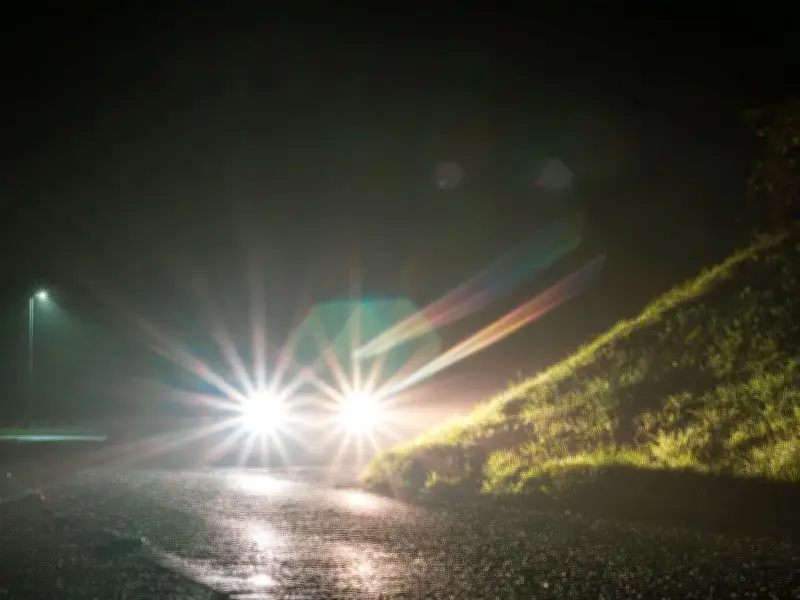
"Astigmatism can make headlights appear streaky or star-shaped, while an outdated prescription or uncorrected short-sightedness, known as myopia, may make it harder to focus clearly on the road after dark."
Six eye problem signs exposed by headlight glare
- Headlights look like halos, streaks or starbursts - could be a sign of out-dated prescription, smeared lenses of dry eyes. Uncorrected short-sightedness can also make it hard to see clearly in the distance.
- Temporarily blinded after oncoming headlights - concern raised when eyes take longer to recover than expected, a few seconds can make all the difference.
- Rainy night roads feel harder to read - wet roads can make headlight dazzle feel worse as the light reflects off puddles, windscreens, mirrors and road markings.
- Squinting, looking away or slowing down more than usual - these signs indicate that your eyes may need more support than just avoiding headlights.
- Eyes feel dirty, gritty or tired during night drives - dry eyes can make glare worse as it can scatter more light. This can be more noticeable after a long day of screen use, in heated cars or when air vents are blowing towards the face.
- Avoiding driving at night altogether - difficulty driving at night can be linked to night blindness, also known as nyctalopia, where the eyes struggle to see or adapt properly in low-light conditions. It may also be influenced by other changes to vision and eye health.
Steps drivers should take before next night journey
Motorists are urged to wear any glasses or contact lenses needed to meet the legal eyesight standard for driving, and to ensure the DVLA has up-to-date information about any notifiable eye condition that affects their ability to drive, as failing to do so could result in a fine of up to £1,000.
Other recommendations include cleaning glasses, windscreens, mirrors and camera lenses regularly, as smears and dirt can worsen glare, considering anti-reflective coatings on glasses if recommended by an optician, and avoiding heavily tinted glasses when driving at night, as they reduce the amount of light reaching the eyes.