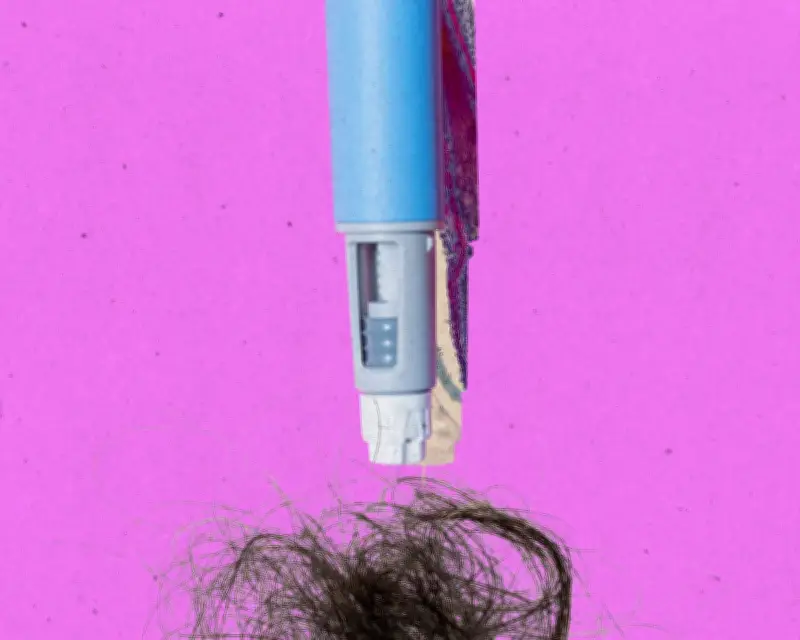
About 20 million people across the US, UK, and EU are taking GLP-1 receptor agonists like tirzepatide and semaglutide (brands include Ozempic or Mounjaro) for weight loss and type 2 diabetes. As use has surged, researchers are learning more about side-effects, including hair loss, which has gained attention.
In one survey of people taking these medications, 20% of respondents experienced hair shedding. However, the lack of high-quality data from a randomized, controlled trial makes it difficult to know exactly how common it is.
While GLP-1-related hair loss is often temporary and reversible, it’s significant enough that some patients hesitate to take drugs they would otherwise benefit from using.
Types of Hair Loss Observed
Most people who take GLP-1 drugs don’t have hair loss. Those who do often notice it within the first year, usually peaking a little before the 12th month.
Lynn Petukhova, a geneticist at New York University who studies hair loss disorders, says people usually experience one of two types. The most common is telogen effluvium, a stress-related condition where a stressor pushes an unusually large share of hair follicles into their resting phase. During this stage, affected hair ceases to grow, and after two to three months, it falls out. This kind is temporary; shedding stops once the stressor does, and hair typically returns to normal growth.
A much smaller proportion of people taking GLP-1s experience new or increased pattern baldness, according to Petukhova. This genetically influenced, usually permanent hair loss causes a receding hairline or thinning at the crown in men, and widening of the center part in women.
In a recent study Petukhova led, men taking GLP-1 drugs were 7% more likely to experience this type of hair loss than men not taking the drugs. The study was unable to assess the risk in women because their genes for the condition aren’t as well understood. Hair loss may also differ by hair type: one study found white patients were more likely to report hair shedding and thinning, while Black patients more commonly reported hair dryness and breakage.
Causes and Contributing Factors
Telogen effluvium has two possible causes in the setting of rapid weight loss: the shock of sudden and severe calorie restriction, and micronutrient deficiencies from dramatically reduced food intake.
The type of drug and dosage is also relevant; people taking tirzepatide and semaglutide, especially at higher doses, had the highest rates of temporary hair loss. Women make up nearly 90% of people who report telogen effluvium when taking GLP-1 drugs. Women also commonly experience it after giving birth due to abrupt hormonal changes, and it frequently follows weight loss surgery—as many as 60% of patients have hair loss after the procedure.
Pattern baldness on GLP-1s is less well understood but likely occurs because of a biological connection between genes that make someone respond to GLP-1 drugs and those that cause this type of hair loss, says Petukhova. “Some people have a higher genetic risk” for pattern baldness, she says, “and the drug will unmask it.”
Prevention and Treatment Options
If you’re considering starting a GLP-1 drug, it’s worth discussing the possibility of hair loss with your doctor. Because hair follicles are extremely sensitive to certain nutritional deficiencies, eating enough protein and ensuring sufficient iron, zinc, and biotin are sound strategies. However, these precautions are not guaranteed to prevent hair loss, especially with rapid weight loss. A lower dose and slower weight loss may also reduce your risk.
If you are experiencing hair loss, consult your regular doctor or a dermatologist to determine whether it is temporary or permanent, and how to treat it. Temporary hair loss is reversible with nutrition, time, and patience. For pattern hair loss, medications like minoxidil and finasteride may be useful.
If you have been prescribed a GLP-1 drug for health reasons and are concerned about side effects like hair loss, it’s important to talk to your doctor. The prospect of cosmetic changes alone shouldn’t discourage people from doing what’s best for the rest of their body, says Petukhova. “It’s more important for most people to get your metabolic health under control than to ensure that you have all the hairs on your head,” she says.