
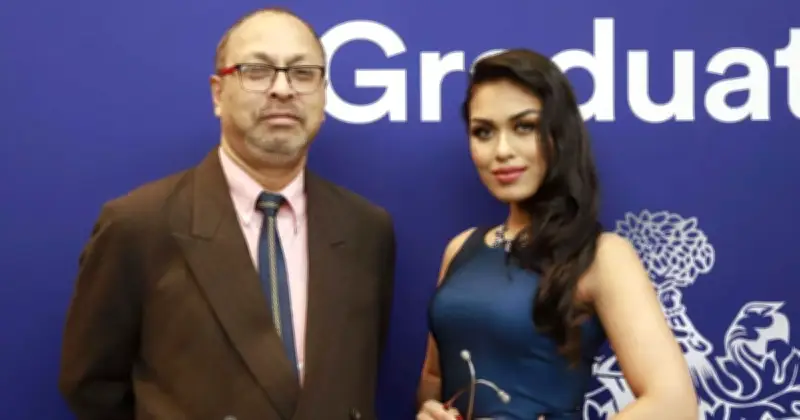
Dr Bhasha Mukherjee, a former Miss England who became a GP after her father was diagnosed with diabetes, has spoken about the moment that sparked her passion for preventing the condition. The 30-year-old was studying at medical school about a decade ago when she discovered her father, known as DD, had almost crashed his car due to undiagnosed diabetes affecting his sight.
She said: “That was a really scary moment for me, given the fact that vision is so, so integral to being functional in society. Being in medical school, learning about that kind of stuff, and having that happen in my own family and household — it was one of those times that really shook me and motivated me to be dedicated towards and passionate about prevention.”
Diabetes and Vision Risks
High blood sugar levels, even for a short time, can cause vision to become temporarily blurry. Consistently high blood sugar levels over a longer period can damage the retina at the back of the eye, known as diabetic retinopathy, which can lead to blindness. DD was diagnosed with Type 2 diabetes after the incident and now receives treatment. Dr Mukherjee said the diagnosis did not come as a shock, as her dad had struggled with obesity.
The experience led Dr Mukherjee to support Diabetes UK after being crowned Miss England in 2019. She dedicated her Beauty with a Purpose project — part of a global humanitarian programme associated with Miss World — to diabetes prevention, travelling to schools, community centres and temples to raise awareness.
Career in General Practice
This passion also inspired her to specialise in general practice. Dr Mukherjee said: “When I was working in hospital, I kept seeing revolving doors in the NHS. We were always heaving with so many patients that it was impossible to really knuckle down and fix people. I felt like GP was where it's at, to be able to keep people well at home in the community. I became a GP for that reason — to help with promotion, prevention and managing of chronic illnesses like diabetes. Then my interest developed in lifestyle medicine and towards neurodiversity as well.”
Type 2 diabetes occurs when the body either does not produce enough insulin or the cells become resistant to it, causing blood glucose levels to rise. Risk factors include being overweight or having high blood pressure, and a family history of the condition. More than four million people are thought to be living with diagnosed Type 2 diabetes in the UK, and a further million are estimated to be undiagnosed. Dr Mukherjee said many people are unaware of the wide-ranging complications that can occur if the condition is undiagnosed.
She added: “People think of diabetes as just affecting your sugar levels, but the fact that it is a slow, silent illness that literally rots away at your insides from every single organ — from sexual dysfunction to high blood pressure to stroke to memory to vision to losing limbs entirely. It's a debilitating illness, and it's often preventable. If we see the signs early, you can make lifestyle changes to stop that cascade happening.”
Personal Lifestyle Changes
Dr Mukherjee said she recently made changes to her own lifestyle after realising her health was at risk. She explained: “I was convinced that I was going to head towards Mounjaro because I was putting on weight, my job was so sedentary. But just through consistent lifestyle change in this last year, I've lost 10kg. I lowered my cholesterol, made lots of changes and built lots of muscle. So it is possible.”
The GP, of north London, has worn glasses since the age of 10 and underwent “transformational” laser eye surgery to improve her vision. She also supports global sight charity Orbis, which helps communities around the world access high-quality eye care to prevent avoidable blindness. More than 1.1 billion people are living with vision loss around the world, and 90% of cases are treatable or preventable. Orbis works across Africa, Asia and Latin America to provide critical surgeries, glasses and medicine, train local doctors and nurses to prevent eye disease and deliver community progress to identify those with vision loss.
Dr Mukherjee added: “Vision is so integral to so many aspects of our life. It was really important that when I did get my laser eye surgery not to forget how lucky I was, and that people around the world aren't necessarily in the same position.”




