
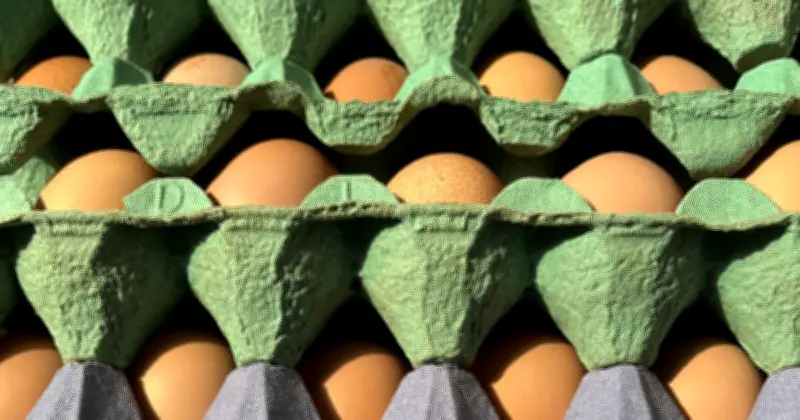
The long-running debate over whether eggs belong in the fridge or the cupboard has been settled by experts, who say the fridge is the best place to keep them fresh and safe.
Where to store eggs
Food Standards Scotland, Scotland's public-sector food body, recommends keeping eggs in "a cool, dry place, ideally in the fridge." The agency also advises storing eggs away from other foods, such as in an egg tray, to keep them separate.
Consumers are reminded to check the best before date printed on both the box and the egg itself. Dishes containing eggs should be eaten as soon as possible; if not, cool them quickly and refrigerate, eating within two days. Hard-boiled eggs can be kept in the fridge for up to two days, whether shell-on or peeled. For freezing, whisk whole eggs until combined and pour into tightly sealed, freezer-safe containers.
Eggs and nutrition
Dr Sarah Berry, a professor in the Department of Nutritional Sciences at King's College London and chief scientist at ZOE, highlighted the benefits of eggs. She said: "Whole eggs are nutritionally rich. They supply almost every nutrient the human body needs except fiber. They're even sources for some harder-to-source nutrients like vitamin D and vitamin B12."
Dr Berry added: "The majority of recent research suggests that eggs pose no risk to our health than much more likely to actually provide health benefits. In fact, eating eggs alongside other food can help our bodies absorb more vitamins. They can make us feel full for longer. And one study found that adding an egg to a salad can increase how much vitamin E we get from the salad."
She described eggs as a "great convenience food" that is also good for health, contrasting with many other convenience foods.




