
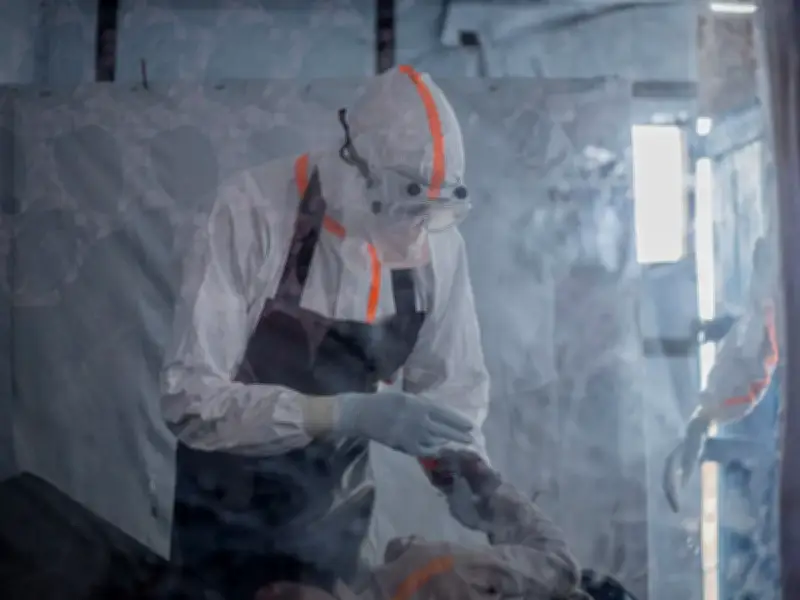
The Ebola outbreak in the Democratic Republic of Congo is on track to become the deadliest ever recorded, with more than 2,000 people having died since it was declared in May. Over 4,500 cases have been confirmed, and more than 2,060 of these have been fatal.
Rare strain with no vaccine
This is the country's 17th outbreak, but none of the previous ones were caused by the rare Bundibugyo strand, which currently has no approved vaccine. The strain has a fatality rate of 45%.
In a news conference in Geneva, Tedros Ashanom Ghebreyesus, director general of the World Health Organisation (WHO), said: “It’s already the second-biggest Ebola epidemic on record, and it’s moving faster than any previous Ebola outbreak. At its current pace, it’s on track to eclipse the West African Ebola outbreak of 2014-2016.”
Rapid spread and response
The Democratic Republic of Congo has reported 68 new confirmed cases and 50 deaths since the previous daily report, while Uganda has confirmed 20 cases and 2 deaths. The WHO is focusing on transmission control through a community-led approach, which involves early detection, access to health-care, support for healthcare workers, and providing sufficient resources.
Ebola is transmitted through blood or bodily fluids. Initially, symptoms such as fevers, headaches, tiredness, vomiting and diarrhoea were misdiagnosed as flu or malaria, allowing the outbreak to spread rapidly and become significantly more difficult to contain. Mohamed Janab, director of the WHO African Region, said: “We are chasing the virus, the virus is ahead of us.”
Vaccine development efforts
Alongside transmission control, the WHO is conducting a study called the ‘R & D blueprint programme’. Known contacts of cases will be randomised to receive Ervebo, a single-dose vaccine designed to protect against the disease, or a placebo. More vaccines will be added to the trial as they become available.
A separate jab is being created by Oxford scientists using the same technology as the Oxford-AstraZeneca Covid vaccine. Three other groups are also developing vaccines for Bundibugyo, but they have not entered clinical trials yet. The first vaccine to be pushed into the field for study will be Merck’s Ervebo, which targets a different species of the virus. New data from a human study suggests it could offer some cross-protection. Another Bundibugyo-specific vaccine is being developed by the non-profit group IAVI, using the same basis as Ervebo, but it will be months until more vaccine doses are available for a Phase three trial.




