
The UK Health Security Agency (UKHSA) has stated that the current Ebola outbreak poses a "low risk" to the UK population. Imported cases are extremely rare, with only four confirmed cases reported in the UK since 1976, and no UK deaths from the disease.
Ebola Outbreak in the Democratic Republic of the Congo
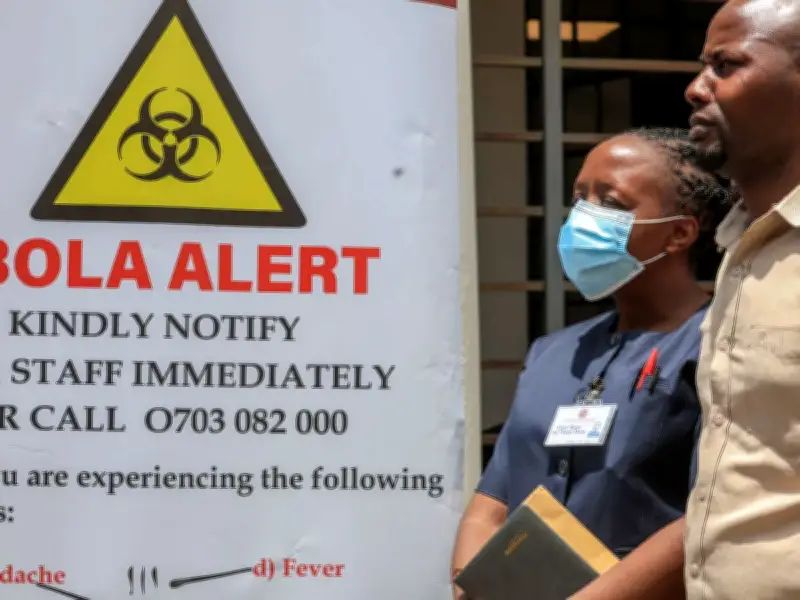
Ebola was declared a public health emergency earlier this year by the World Health Organisation (WHO) after an outbreak in the Democratic Republic of the Congo (DRC). Earlier this week, the latest report from Congo's public health institute put the number of cases at 9,066 and deaths at 4,381, reported Reuters.
The outbreak, caused by the Bundibugyo strain of Ebola, has become the largest and deadliest in Congo's history, overtaking the 2018 to 2020 epidemic.
What Ebola Means for the UK
The UKHSA has explained that Ebola disease is caused by a group of viruses known as orthoebolaviruses. Ebola can affect humans and animals alike and was first identified in 1976 when there were near-simultaneous outbreaks in Zaire (now known as the DRC) and Sudan (now known as South Sudan).
In the years between 1979 and 1994, no human cases were reported. But since then, outbreaks have occurred with increasing frequency, including a large West Africa outbreak between 2014 and 2016, which caused over 28,000 reported cases and saw intense transmission in urban areas for the first time.
There are four species of the virus known to cause disease in humans, alongside a fifth found only in animals so far, and a sixth discovered specifically in bats in 2018, whose potential to infect humans is still unknown, the UKHSA explains. The NHS has established procedures and specialist centres for managing any suspected cases.
How Ebola Spreads and Symptoms to Look Out For
The UKHSA has explained that Ebola spreads through close contact. Transmission between people happens through contact with the body fluids of someone who is infected, sick or has died from the disease, or through contact with contaminated objects such as needles or soiled clothing. In rarer cases, people become infected through contact with infected animals, such as bats or non-human primates, in countries where the virus is present. Fruit bats are believed to be the natural reservoir for the virus: a species where the virus can live, grow, and multiply.
An infected person can only spread the virus once symptoms begin. There's no evidence that Ebola spreads through intact skin, or through coughing or sneezing, in the way that flu or COVID-19 does.
Symptoms usually appear suddenly, between two and 21 days after infection, with an average of eight to 10 days. Early symptoms are flu-like including high temperature, extreme tiredness, muscle aches, sore throat and headache, the UKHSA explains. These symptoms are usually followed a few days later by vomiting, diarrhoea and stomach pain. Some people go on to develop a rash, cough, shortness of breath, red eyes, bruising, and yellowing of the skin and eyes. In more severe cases, bleeding can occur as the disease progresses which may include blood in poo and bleeding from different parts of the body.




