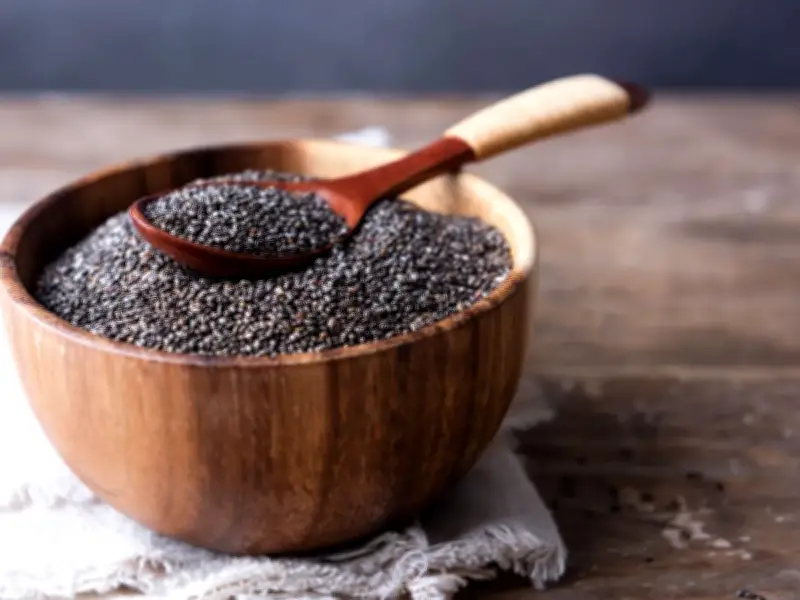
Adding inexpensive chia seeds to meals could help protect the heart, according to a doctor. Dr Corne Hurter, Medical Director for Services and Delivery at AXA Health, named the seed among three foods to eat for a healthy heart, with more than 8 million people in the UK living with cardiovascular disease, according to the British Heart Foundation.
Three foods to eat for a healthy heart
Dr Hurter recommended eating oily fish twice a week. “Fish such as mackerel, sardines, fresh tuna and salmon are an excellent source of omega-3 fats, which can help protect your heart against disease. Omega-3 fats can help protect the heart and blood vessels from disease, helping to improve circulation, prevent blood clots and lower blood pressure.”
Whole grains such as quinoa were also highlighted. “Whole grains such as quinoa and brown rice contain high levels of fibre, which can help to regulate blood pressure and cholesterol, making it a possible key to better heart health. Quinoa is a gluten-free grain alternative that offers a range of health benefits as it is packed with fibre, magnesium, B vitamins, iron, and antioxidants. Quinoa aids digestion, helps regulate blood sugar levels, and provides sustained energy throughout the day.”
The doctor added: “The process fibre goes through in the body requires bile acids that are partly created by cholesterol, meaning the more fibre we eat, the more cholesterol the body uses to process it, helping to lower our bad (LDL) cholesterol levels.”
Nuts and seeds for heart health
“Chia seeds are great for heart health as they are high in fibre, protein, and omega-3 fatty acids. They also contain calcium, magnesium, and antioxidants. These seeds can help stabilise blood sugar, improve digestion, and support heart health. Chia seeds can be easily incorporated into smoothies, yoghurt, or used as an egg substitute in baking.”
With Healthy Heart Day taking place on September 29, 2026, Dr Hurter also advised cutting back on saturated fat. “Making small changes to your diet can have positive health benefits. Choose semi-skimmed over full-fat milk and leaner cuts of meat. Try steaming or grilling food rather than frying. However, fat shouldn’t be avoided; it’s an essential part of a healthy, balanced diet.”
He explained: “There are unsaturated fats, saturated fats and trans fats. As a very general rule, you should avoid trans fats, limit saturated fats and aim to eat unsaturated fats, which are considered more beneficial to your health. Unsaturated fats can improve your blood cholesterol levels, ease inflammation and regulate heart rhythms.”
Lifestyle tips for a healthy heart
Managing weight is also important. “Being overweight can increase your risk of heart disease. Aim to eat a balanced, varied diet rich in fruit and vegetables, and incorporate regular physical activity, such as cardiovascular and strength-based exercises, suited to your lifestyle and fitness level to maximise benefits and support heart health.”
Adults should eat no more than 6g of salt a day – around one teaspoon – to maintain healthy blood pressure. Salt can already be found in foods such as bread and breakfast cereals. Smoking is one of the main causes of coronary heart disease, as nicotine raises heart rate and blood pressure. After a year of giving up, the risk of a heart attack falls to about half that of a smoker.
The three best exercises for heart health
Dr Hurter said: “As a rule, the best activity to improve circulation is aerobic exercise – the kind that makes you warm and mildly out of breath. It’s ideal because you can modify the intensity and duration of this kind of exercise to suit your level of experience, ability and health.”
Cycling improves heart, lungs and circulation, reducing the risk of cardiovascular diseases. Research shows that cycling regularly reduces the risk of coronary heart disease by 50% and may reduce cancer risk. Running reduces blood pressure, lowers BMI and cholesterol levels, and helps circulation by increasing blood flow. Swimming strengthens the heart, allowing it to pump blood better, which helps reduce resting heart rate over time and promotes better blood circulation.
Dr Hurter warned: “If you have high blood pressure, avoid any exercise that will cause an immediate spike in blood pressure over a short period of time, such as weightlifting or powerlifting, scuba diving, squash and sprinting. This is due to the pressure it puts on the heart and walls of your arteries.”