
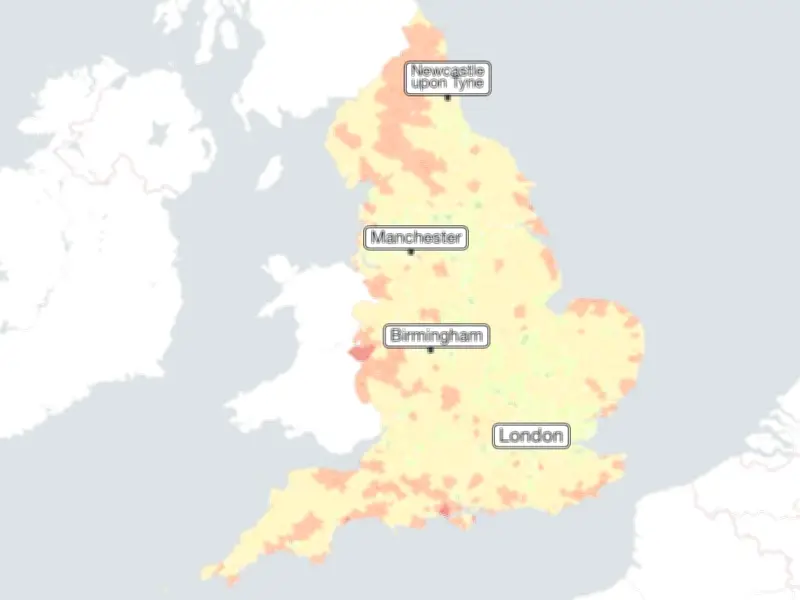
Brits living in a cluster of coastal areas are more likely to be living with cancer than anywhere else, according to new maps highlighting the neighbourhoods with the highest rates of the condition.
Cancer Prevalence in the UK
An estimated 3.5 million people living in the UK are understood to be living with cancer or are in remission from the disease, with some 400,000 new diagnoses every year. Health data from the House of Commons Library highlighted specific areas in England and Wales that have the highest proportion of cancer diagnoses since 2003.
Coastal and rural areas typically have higher numbers of cancer survivors, with pockets of New Forest in South East and East Devon in the South West dominating the top 10 list of areas with the highest rates. The higher rates in these areas could potentially be explained by the higher number of older people who live in the neighbourhoods, as age is the biggest single risk for cancer.
Top Neighbourhoods for Cancer
Six of the top 10 neighbourhoods with the highest cancer rates are in the New Forest, which historically has some of the highest melanoma rates in the country due to an older demographic and the active lifestyle of its residents, who enjoy being outdoors amid the lush scenery where they are likely to be exposed to UV light.
Around one in 12 people living in New Milton West in New Forest (8.44 per cent) and in the Sidmouth Sidford neighbourhood in East Devon (8.40 per cent) are either in remission or currently battling cancer. Residents of New Milton West have an average age of 44, and a quarter of the population is aged 65 or over (24 per cent). In Sidmouth Sidford, the average age is 50, and more than a third of residents are pensioners (35 per cent).
While not among the oldest residential regions, both areas have older demographics than at least 70 per cent of English and Welsh neighbourhoods. At the other end of the spectrum, Leeds City Centre has the lowest proportion of cancer sufferers in the country, with just 0.5 per cent of the population living with the disease. That is probably due to a low average resident age of just 26, and fewer than one per cent of the population aged 65 and over.
Data and Methodology
The figures cover middle super output area neighbourhoods, which are made up of between 2,000 and 6,000 households, or around 5,000 to 15,000 people. They refer to patients on GP practice registers last year who have had a diagnosis of cancer since 2003, which is the criteria used by the NHS to record cancer prevalence. They do not include people who have died from cancer since 2003.
"The proportion of people living with and beyond cancer varies across the UK for a number of reasons," said Matt Sample, senior health policy manager at Cancer Research UK. "One factor is that cancer is primarily a disease of older age, and some areas have older populations than others. Beating cancer must mean beating it for everyone."
"The UK Government's recently published National Cancer Plan for England could make a big difference, but it is not a 'job done' on cancer. Promises to diagnose cancers earlier, meet cancer wait targets, and improve best practice treatments must be delivered. It's important that health services in local areas are supported to make these improvements, and can tailor care to match the needs of local people."
Top 20 Areas with Highest Proportion of Cancer Survivors
- New Milton West (New Forest) - 8.44 per cent
- Sidmouth Sidford (East Devon) - 8.4 per cent
- Milford & Lymington South (New Forest) - 8.2 per cent
- Sidmouth Town (East Devon) - 8.18 per cent
- New Milton East (New Forest) - 8.14 per cent
- Lymington North & West (New Forest) - 7.92 per cent
- Hythe (Shepway) - 7.84 per cent
- Clun & Bucknell (Shropshire) - 7.82 per cent
- Hordle & Bashley (New Forest) - 7.78 per cent
- Barton on Sea (New Forest) - 7.77 per cent
- Brockenhurst & Sway (New Forest) - 7.77 per cent
- Hornsea (East Riding of Yorkshire) - 7.73 per cent
- Bembridge & Nettlestone (Isle of Wight) - 7.71 per cent
- Looe & Polperro (Cornwall) - 7.7 per cent
- Hayling Eastoke (Havant) - 7.69 per cent
- Seaford Town (Lewes) - 7.67 per cent
- Cosford & Albrighton (Shropshire) - 7.66 per cent
- South Hayling (Havant) - 7.65 per cent
- Ferring & Kingston Gorse (Arun) - 7.63 per cent
- Ferndown Town (East Dorset) - 7.62 per cent




