
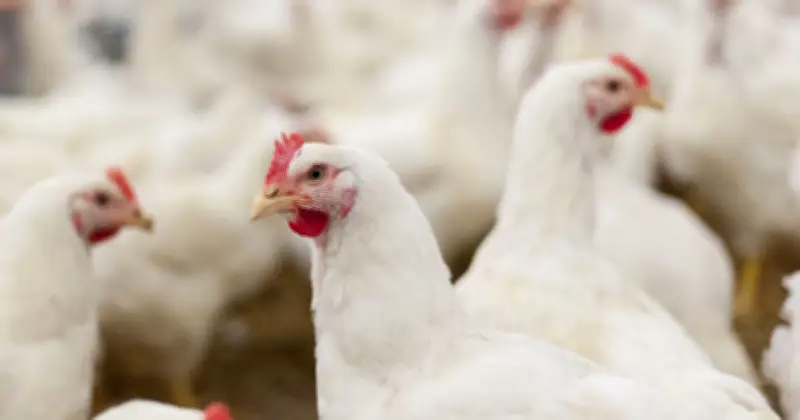
Researchers at the University of Oxford have found that industrial farming with densely populated chicken flocks creates conditions for the spread of Campylobacter, the world's most common bacterial cause of diarrhoea.
There were around 70,000 cases of bacterial food poisoning in the UK last year. Campylobacter causes more than 3.5 times as many gastroenteritis cases in the UK each year as all other monitored foodborne bacteria combined.
Study Details
To investigate bacterial evolution, researchers analysed 2,747 samples collected from chickens and wild birds across 30 countries over a 45-year period. The Campylobacter found has evolved in ways that make it better suited to surviving in commercial chicken flocks, thanks to antimicrobial resistance.
According to the researchers, commercial chicken farms may act like 'sponges' for harmful bacteria. There are more than 1,500 such farms in Britain. As thousands of birds are kept close together, bacteria from different sources – including wild birds – can enter chicken flocks, spread quickly and multiply.
Evolutionary Consequences
Sam Sheppard, professor of microbial genomics and evolution at the University of Oxford, said: "Industrial farming has created one of the largest animal habitats on the planet. Our findings provide new evidence that human-driven environmental change can increase the spread of infectious diseases. As chicken populations have grown, bacteria that were once largely confined to wild birds have gained far more opportunities to enter poultry flocks, spread and become established. Understanding these evolutionary consequences is essential if we are to reduce future risks from zoonotic disease and antimicrobial resistance."
Health Impact
Campylobacter infection can cause severe stomach cramps, vomiting and diarrhoea that may contain blood. In more severe cases, particularly in people with weakened immune systems, the bacteria can spread into the bloodstream, potentially leading to sepsis.
Research has also indicated that Campylobacter could play a role in the progression of certain cancers. A study published in the journal Cell Host & Microbe last December suggested the bacterium may make existing bowel tumours more aggressive and increase their ability to spread. Scientists from China found that Campylobacter produces a toxin capable of switching on signalling pathways within bowel cancer cells already present in the body. According to the researchers, this process may encourage cancer cells to invade surrounding tissue and spread to other organs.




