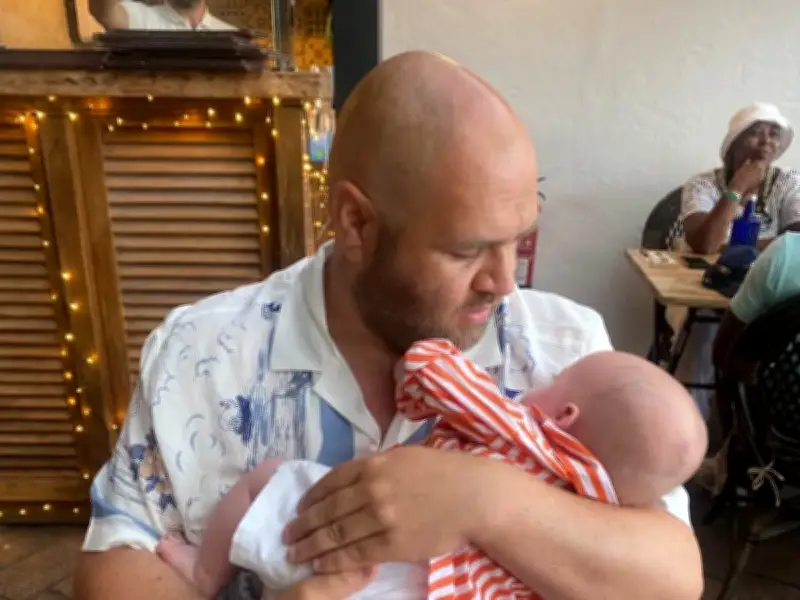
A dad from Cheshire has been forced to travel to Germany for a second stem cell transplant after being denied NHS funding for the treatment. Sean Turner, 40, from Runcorn, is currently recovering in Dresden following the successful completion of his transplant.
Sean, who has a wife and two-year-old son, was previously covered by the Manchester Evening News after his blood cancer recurred following his first stem cell transplant, leaving him without further NHS treatment possibilities. He has since raised more than £63,000 through GoFundMe, while also borrowing money from relatives and friends to finance his German treatment.
No further NHS options
Sean said: "When my first transplant failed, I was told there was nothing left for me because of funding and NHS guidelines.

"I'm a young man with a wife and two-year-old son and I just want the chance to keep fighting and be there for them. The NHS had left me feeling like I had no choice but to look elsewhere, like my life didn't matter."
Sean received his acute myeloid leukaemia (AML) diagnosis in 2024 after first presenting with symptoms such as persistent exhaustion, generally feeling unwell and inflamed gums. He suffers from an uncommon variant of the condition called KMT2A, reports the Liverpool Echo.
Recovery in Dresden
Sean underwent his first stem cell transplant in November 2024, but his cancer returned in June 2025. He subsequently went on a clinical drug trial and went into remission in September, before relapsing again in February this year. He was then told there were no further treatment options available to him in the UK on the NHS.
Sean has now undergone the second transplant in Germany and is recovering in Dresden. The case comes as three blood cancer charities launch a campaign calling on NHS England to change its policy on second stem cell transplants.
Charities call for policy change
Anthony Nolan, DKMS UK and Leukaemia UK say patients whose cancer returns less than 12 months after their first transplant can currently be denied a second transplant under NHS England's policy, which was introduced in 2017. The charities argue that advances in transplantation mean decisions should instead be made on an individual basis, taking into account the patient's circumstances and the judgement of specialist doctors.
Sean said travelling to Germany had given him and his family hope, but the process had come at a huge emotional and financial cost. He said: "Reaching the team in Dresden gave us so much hope, but the worry of travelling abroad and funding the treatment and aftercare has placed an enormous emotional, physical and financial strain on all of us.
"My wife Rebbecca has had to keep working and care for our son whilst I try and recover hundreds of miles away. No family should have to go through this. Decisions about a second transplant should be based on the patient, the evidence and the judgement of the specialist doctors, not outdated policies.
"I've got a little baby, I've got to do everything I can to be with him. I just want to watch him grow up. I feel like I'm being denied that from my own country."
The charities say patients affected by the policy can be left with no options other than palliative care or paying for treatment themselves.
Other patients affected
Other patients have also spoken about being forced to fundraise for second transplants. Ruth Wake, 58, relapsed nine months after her first transplant for AML and was told she would move to palliative care once her temporary treatment stopped working. She was eventually able to access a second transplant through a private healthcare provider and is now recovering after the treatment was successful.
She said: "To be given the news you've relapsed is bad but then to find that decisions have been made on data that is way out of date doesn't make sense. I know there are no guarantees that my leukaemia won't come back again but this gives me extended time with my family when otherwise I would have had nothing."

Faith Hinitt, 28, was also diagnosed with AML and had to launch a fundraising appeal after her cancer returned following her first stem cell transplant. She said: "I don't want any other family to go through what we went through. I never would expect a policy to deny me lifesaving treatment. I presumed all treatment in this situation would be funded."
Yasmin Sheikh, Head of Policy and Public Affairs at Anthony Nolan, said transplant medicine had "moved forward significantly" since the current policy was introduced. She said: "Nearly a decade ago, Anthony Nolan successfully campaigned to stop NHS England withdrawing access to second stem cell transplants altogether.
"That campaign secured an important policy change, but medicine has not stood still. Now NHS England must update its policy so clinicians can make decisions based on the latest evidence and what is right for each patient."
Michael Gallagher, Policy and Public Affairs Manager at DKMS UK, said the campaign was not calling for automatic access to a second transplant. He said: "Timing of relapse matters, but it should inform a clinical decision, not dictate it."
Georgia Papacleovoulou, Head of Policy and Advocacy at Leukaemia UK, said: "For patients with relapsed blood cancer, a second stem cell transplant can be their only chance of survival. Treatment decisions should be based on clinical need and no patient should have to turn to private healthcare or fundraising for a live-saving treatment."
In a BBC article last year with a similar case study, an NHS spokesperson said: "Living with cancer is extremely difficult and the NHS is committed to improving care and outcomes by ensuring patients have access to the latest innovative treatments on the NHS.
"All decisions around repeat stem cell transplants should be made between patient and clinician and in line with the latest clinical policy, which is kept under review.
"If any patients are concerned or have questions about their treatment options, they should speak with their local clinical team for support."