
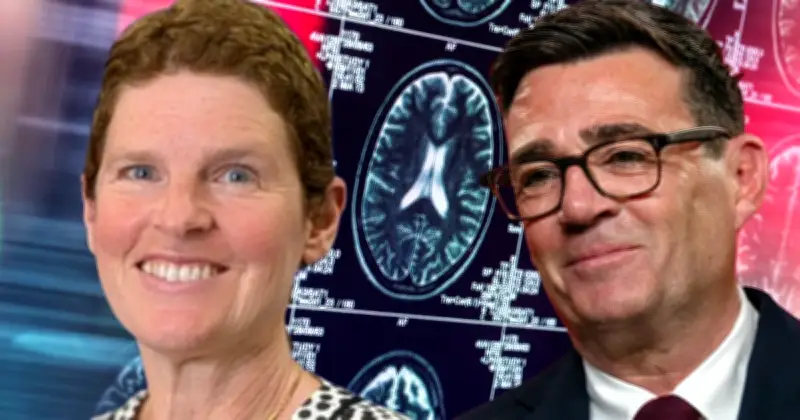
Michelle Dyson has issued a direct appeal to the UK's new Prime Minister, Andy Burnham, urging him to tackle the dementia crisis as a top priority. In an opinion piece, Dyson, whose affiliation is with the Alzheimer's Society, emphasises that dementia is the UK's biggest killer and the greatest health and social care challenge of our time.
The Scale of the Crisis
One million people are currently living with dementia in the UK. The condition carries one of the highest economic costs of any health condition, costing the UK economy £42 billion a year, including £17.2 billion on social care alone. Despite this, Dyson argues that dementia has never been treated with the priority it deserves.
A Personal Connection for the Prime Minister
The new Prime Minister has a personal stake in the issue: his own father lives with Alzheimer's disease, the most common form of dementia. Dyson notes that neither the financial impact nor the personal consequence of dementia will be lost on him.
Lessons from Cancer Care
Dyson draws a parallel with cancer care, which improved because it was treated as a long-term priority. Diagnosis became faster, treatment more consistent, and outcomes began to improve. She argues that similar progress is possible for dementia, especially as scientific advances accelerate. Blood tests for earlier detection are already available, and new treatments are being developed to prevent symptoms, not just respond to them.
The Opportunity for Reform
However, Dyson warns that scientific progress alone will not change lives. New tests and treatments only deliver their promise if the health and care system is prepared to adopt them. She points to the Modern Service Framework for Dementia and Frailty in England as a significant opportunity to establish a clear, long-term vision for dementia care, bringing together diagnosis, treatment, care and support within a coherent national approach.
Failures in Diagnosis and Support
Currently, around a third of people living with dementia do not have a formal diagnosis. It can take years to get a diagnosis, leaving people uncertain and unsure where to turn. When a diagnosis does come, many are left to navigate the aftermath alone, discharged from the NHS with nothing more than a leaflet. Access to support depends heavily on where you live, and the system is fragmented, inconsistent and hard to navigate. Dyson states: 'This is not by accident. This is the consequence of years of political inaction and instability.'
A Call to Action
Dyson urges the Prime Minister and his new Health and Social Care Secretary to make dementia a priority. She calls for setting a clear ambition to reduce deaths from dementia, making early and accurate diagnosis the norm, ensuring new treatments reach those who need them, and building a system that supports people living with dementia and their families. 'Momentum must not be lost. For the millions of people across the UK affected by dementia, now is the time for courage. We must not miss this opportunity,' she concludes.




