
Two million older people are living without the help they need because of the crisis-hit social care system, new figures show. Many are struggling with daily tasks like eating, dressing, bathing and going to the toilet.
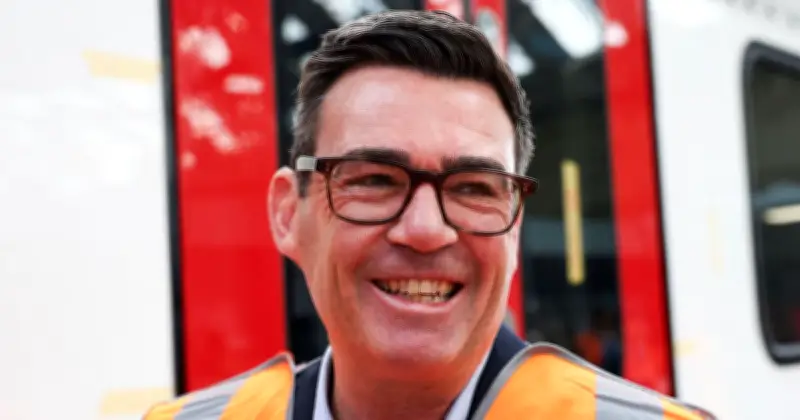
The number of over-65s with “unmet needs” has surged by almost 400,000 in the past three years. The figures come as Prime Minister Andy Burnham prepares to unveil his plans to grip the problem on Wednesday.
Campaigners' demands
Campaigners have urged Mr Burnham to focus on several core issues: accelerating the current timetable for reforms, committing to free social care on the same basis as the NHS, sufficient funding, and a policy of preventive social care.
Dennis Reed, director of Silver Voices, said now is the “best chance since the Second World War” to put social care on a par with the NHS and create a “world-leading service to ensure that older people can remain with dignity in their own homes for as long as possible.”
He added: “Hospital wards are currently filled with unhappy older people, deteriorating fast in expensive hospital beds when there is no need for intensive medical intervention; they could be thriving in familiar surroundings at home with the right social care support. Don't bottle it, Andy. Millions of older people will benefit from radical social care reform, and so will the UK economy.”
Burnham's plans
Mr Burnham will use a visit to a North London care home to commit to fast-tracking reform of a care system he has described as “broken”. He will say that a review led by Baroness Casey will be accelerated to enable changes to begin before the end of the decade. But he is likely to stop short of saying how the estimated £18.5 billion cost will be met.
Critics have warned against the Prime Minister’s favoured 10% care levy, branding it a “death tax”. Mr Burnham has also invited Tory leader Kemi Badenoch and Lib Dem leader Ed Davey to meet with him to discuss how to drive urgent reform.
Speaking ahead of his speech, Mr Burnham said: “For decades, governments have kicked this issue down the road because they’ve seen it as too risky, too difficult, and too complicated. Politicians might have different views but I’m serious about fixing this issue and to do that, we have to find common ground and listen to others to find a way forward. It’s time to draw a line under people playing politics when the human cost of that means carers struggling, families paying the price and our NHS buckling under the strain. This comes down to a choice. We can carry on passing the problem to the next generation, or we can face it head on and work together to build a care system that gives people dignity, security and the support they deserve.”
Baroness Casey's remarks
Baroness Casey has previously said there have been no fewer than 22 attempts since 1997 at reforming the sector – none of which she said had “fixed the foundations”.
She said: “For too long, we have been stuck in the same cycle: crisis, promises of reform, another review, and then retreat, while the people who need care, and their families, bear the brunt. Fixing adult social care is about far more than money. People are already paying for failure through council tax, pressure on the NHS, their savings, giving up work, and the forced sale of their homes. The choice is whether we keep putting money into a system that is unfair, unpredictable and broken, or have an honest conversation about how to build something better.”
Scale of crisis highlighted by Age UK
The shocking scale of the social care crisis was highlighted by Age UK, with the charity warning that older people struggling with daily tasks increases their risk of falls, serious injury or worse. Its review of 11 million over-65s in England found that nearly two million have unmet needs. Of these, 1.4 million have difficulty with dressing, 930,000 struggle with bathing or showering, 730,000 have problems getting in and out of bed, and 490,000 are unable to use the toilet without help. Another 430,000 have difficulty walking across a room while 230,000 struggle with eating.
Caroline Abrahams, charity director at Age UK, said reforming the social care system will allow people to focus on the “prize” not the challenges. “Knowing that if we develop care needs and disabilities as we get older, we will not be abandoned to struggle alone - as happens to almost two million of us at present. A reformed system would ensure that there would be some help for us, and hopefully it would be properly joined up with the health care that we typically require as we get older too.”
She added that people will “all have to put our hands in our pockets” but this doesn't mean people “pay more, just that we will pay differently. Something in advance in all likelihood, or after our death through a contribution from our estate, rather than facing an enormous bill at one of the most vulnerable times in our lives, if we need care and have to pay for it ourselves.”




