
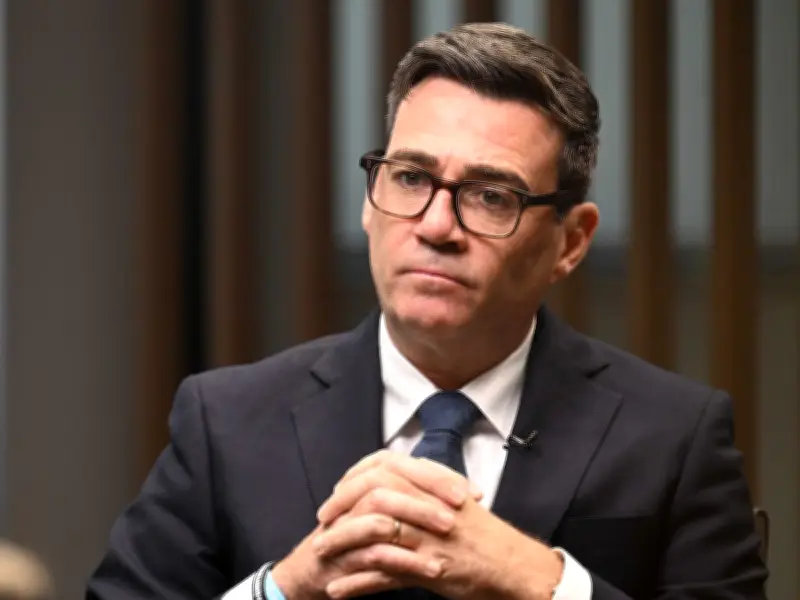
Andy Burnham has signalled he could make it harder for benefit claimants, saying the UK must 'get really serious' about curbing the welfare bill. The Prime Minister indicated ministers could tighten conditions attached to receiving support, while insisting more should be provided to help people into work. The number of people in England and Wales claiming PIP has passed four million for the first time, roughly doubling since 2019, with spending on PIP forecast to rise to more than £41 billion by the end of the decade.
Social care reforms and youth benefits
Speaking to BBC's Sunday with Laura Kuenssberg, Mr Burnham also promised to bring 'substantial change' to social care 'as quickly as I can', but stopped short of giving a timeline. He is expected to make interventions on social care, youth unemployment and devolution in the coming days. He is under pressure to find savings from the welfare budget to fund other priorities, including billions more for defence and a new social care system.
Teenagers claiming sickness benefits for conditions such as anxiety reportedly receive £100 a week more than part-time workers on a minimum wage. More than 87,000 16 and 17-year-olds are claiming PIP, with over two thirds on the upper tier (£194 a week) claiming it for mental health and neurodevelopmental conditions such as anxiety and ADHD, according to a report in The Times. A 16-year-old working 12 hours a week on the under-18 minimum wage takes home about £94.
Timms review and PM's stance
The analysis comes after a review of disability benefits found the system is 'no longer fit for purpose', with promises of 'bold' reform. The Timms review, led by disability minister Sir Stephen Timms, was launched last year after ministers were forced to climb down on plans to reform disability benefits in the face of backbench Labour opposition. A final report is due in the autumn.
Asked whether there were people claiming benefits who did not need them, the Prime Minister told the BBC's Laura Kuenssberg he would not 'go straight to blaming those people'. "What I would say is that there are people in the benefits system, young people in their 20s, who have been I would say quite seriously let down because the support wasn't there for them when it should have been there."
Pressed on whether he could remove or reduce benefits for current claimants, Mr Burnham said: "It's about changing the nature of the support and making some of the support conditional upon people taking opportunities that are presented in front of them. So you might increase the conditions required to receive benefits. I think it's a good thing that the Government has given guarantees of opportunities for young people. And I think we need to continue down that approach and where mental health support is needed, for instance, it's provided in work to support people in an opportunity."
He went on to say the country has 'got to get really serious' at bringing the welfare bill down. Mr Burnham kept Pat McFadden on as Work and Pensions Secretary, who may stage a fresh attempt at slashing the welfare bill after a backbench MP rebellion last year forced Sir Keir's government into a partial U-turn over a £5 billion package of cuts.
Social care reform and political reactions
Separately, the Prime Minister also said a change was needed on social care, saying that he would 'go as quickly as I can' on reforming the system. He warned that, without change, 'we will never get the NHS back to good waiting time standards' and that the health service 'will collapse under the weight of trying to care for people who've really not needed to end up in the NHS system'.
Unlike NHS care, social care is not free at the point of use and high costs sometimes mean people are forced to sell their homes to pay for what they need. People with savings worth more than £23,250 are not entitled to help with the cost of care from their local council.
Mr Burnham said: "Whatever political capital I have, I will put in to fixing broken social care and I would not want to leave office without having brought in the substantial change." But pressed on whether the overhaul would come before the next election, he said: "I can't put a timeline on it right here, right now."
Reform of the social care system is unfinished business for Mr Burnham, who set out plans for change while he was health secretary in Gordon Brown's administration. His 2010 plans to overhaul social care for the elderly with the creation of a national care service for England were scuppered by the Conservatives, who labelled it a 'death tax'.
Tory leader Kemi Badenoch challenged Mr Burnham to rule out tax rises or increased borrowing to pay for social care reform. In a letter to the Prime Minister, she said her party was willing to work with the Government but only if two 'core principles' were met. She wrote: "First, any solution to the issues around social care must also be fair to those who have made provisions and saved up over the course of their lives. Second, the money must be found by reducing current spending. You must rule out any tax rises, or increased borrowing that will ultimately fall on the next generation to pay for."




