
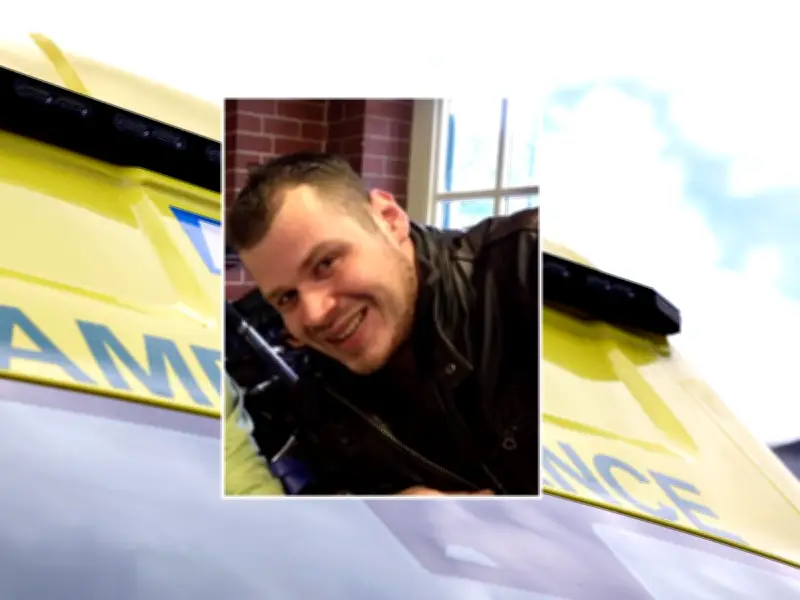
Andrew Edward Watson died from quinsy 67 minutes after calling 999 on October 10, 2019, due to ambulance delays, an inquest heard. Senior assistant coroner Crispin Oliver told Crook Coroner's Court that delays in the ambulance service meant emergency treatment was not delivered in time.
The 32-year-old had been living in supported accommodation in Langley Moor. He had reported choking overnight and struggling to breathe to staff from Potens, which runs the accommodation. He attended his GP surgery and saw nurse practitioner Jacqueline Griffiths, who did not see signs of quinsy, a complication of tonsillitis where swelling blocks the airway.
Coroner's findings
Coroner Oliver said: "Had ambulances been more readily available, Andrew probably would have survived. In effect, service delays contributed to his death." He added: "Andrew was pronounced dead at 19.45pm on 10 October 2019 at Cecil Court, Langley Moor from a critical medical condition requiring emergency treatment for survival. This was not delivered in time because of delays in the response of the ambulance service."
By the time paramedics William Parry and Catherine Wilson arrived, "At that point Andrew's medical condition had ceased to be survivable."
Concerns over call categorisation
The coroner said he was "baffled" by the "perverse" situation where, because Andrew called 999 himself, his choking symptoms could not generate a higher priority Category 1 response. He is to write to NHS England raising this concern. He said: "I remain baffled as to why choking due to intrusion of a foreign object generates a Category 1 response whereas choking due to a preventable but equally life-threatening natural cause generates only a category 2."
"It appears that because Andrew was, for the first two calls he made, making the calls himself and that they were not made by a third party that this was material to the categorisation. It seems somehow perverse that because he self-helped, this somehow reflected in a lower categorisation."
Investigation failings
The inquest heard Andrew's case was among those where the "harm level" was downgraded by then-senior personnel at the North East Ambulance Service (NEAS), as disclosed by whistleblowers in 2022. The family only became aware of any investigation after media coverage. In November 2024, they told ChronicleLive of their five-year fight for justice.
Coroner Oliver said: "There is public interest in shedding light onto how a vital public service reports to the Coroner and also investigates itself in relation to a fatal incident concerning a member of the public it was tasked to serve and strive to save." He added that NEAS admitted 'poor management and governance in [its] investigation' which impacted the coronial process.
Some staff, notably the paramedics who attended Andrew, were "candid from the outset that the facts and implications of this case had to be taken seriously and investigated properly." But at a root cause analysis meeting, the paramedics suggested there was "jerrymandering" of evidence to "make the harm level settled upon fit the response timings."
The coroner said he will issue a prevention of future deaths notice to NHS England highlighting the issues that prevented Andrew's death from receiving a higher priority response.




