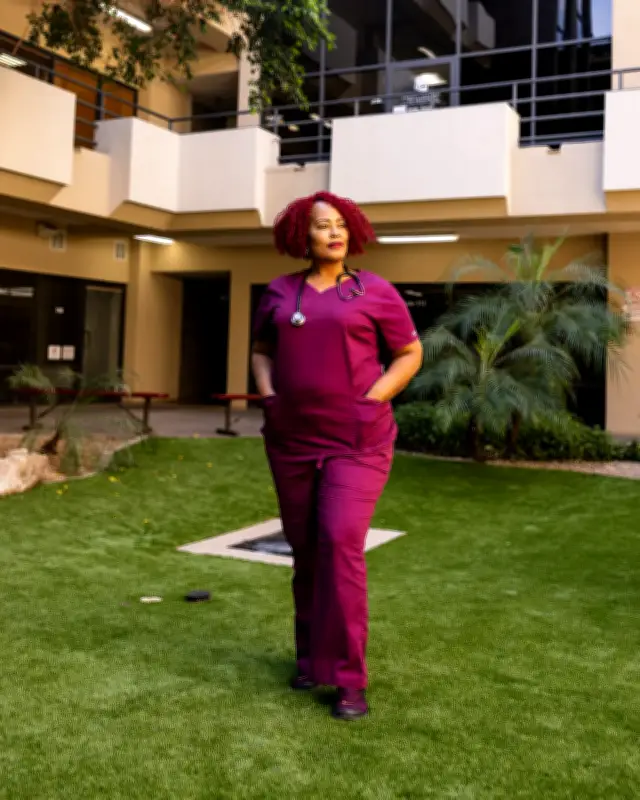
Dr DeShawn Taylor, a gynecologist and abortion provider, runs Arizona's only Black woman-owned abortion clinic, Desert Star Institute for Family Planning in Phoenix, blending her Christian faith with her work. When patients ask if they will be condemned for their choices, she shares bible verses about free will. "If God wants that vessel, that spirit to get here, God will choose another vessel. You get to say, 'I'll pass,'" Taylor said at her clinic. "I think that makes people feel a lot better with that understanding."
A Unique Clinic in a Changing Legal Landscape
As founder and CEO, Taylor heads a clinic with a staff of women of color, serving a diverse clientele. On 6 February, an Arizona judge struck down state laws requiring patients to receive an ultrasound and wait at least a day before an abortion. Following the US Supreme Court's Dobbs v Jackson Women's Health Organization ruling in 2022, states gained authority to regulate abortion access. Two years later, Arizona voters enshrined the right to abortion in the state constitution.
Desert Star Institute, one of nine brick-and-mortar abortion clinics in the state, provides abortion care and gender-affirming services. Taylor and some staff are Christian women who sometimes join religious clients in prayer before a procedure. "How did abortion become the one sin that you can't repent for?" Taylor said. "Granted, I don't think abortion is a sin, but even if you think it's a sin, it's still forgiven. God is forgiving already."
Faith and Service to the Underserved
Loretta J Ross, an associate professor at Smith College, said marginalized people are dying in states with abortion restrictions. "She's choosing to put her career and her license on the line to serve the people who have the least access, and the most need," Ross said. "In my 50 years of working in the movement, it's usually those doctors that have that particular passion for serving the underserved that risk ... at least losing their license, and having their families attacked. In many ways, they're the heroes of the movement."
The clinic offers wellness exams, routine gynecological checkups, and birth control alongside abortions. "Abortion is healthcare," Taylor said. Over the past six years, it has also offered gender-affirming hormone therapy. "It's been a struggle to keep the clinic open, and I've had consultants come in and try to change the model," Taylor said. "But if we ever did that, then why should this clinic be here? Then it becomes no different than any other abortion clinic. We've created something here that is very special. And patients recognize that."
Personal Journey and Professional Growth
Taylor wanted to be a medical doctor since age six. After reading "Gifted Hands" by Ben Carson, she decided against brain surgery and dedicated her career to women's health. She pursued a doctorate of medicine at UCLA and completed a residency in obstetrics and gynecology. Taylor founded her clinic in 2013 and sold it to her nonprofit at the end of 2023 to receive grants and host fundraising campaigns.
Through the nonprofit, she trains future abortion providers and started a birth justice hub last year. Taylor has faced criticism from anti-abortion Christians, including undercover footage released by the Center for Medical Progress in 2017. "That ignited me," she said. In 2023, she published "Undue Burden: A Black, Woman Physician on Being Christian and Pro-Abortion in the Reproductive Justice Movement." Earlier this year, she published the workbook "Beyond Choice."
Historical Context and Ongoing Political Fight
Dr Carole Joffe, a professor at the University of California, San Francisco, noted that people of faith have long supported abortion. The Catholic church accepted early-term abortions until 1869. In 1967, the Clergy Consultation Service on Abortion formed to help women safely terminate pregnancies, assisting an estimated 500,000 women. Regina Mahone, co-author of "Liberating Abortion," said anti-abortion sentiments in the late 1800s were rooted in racist and sexist ideas.
Following Dobbs, Arizona prohibited abortions past 15 weeks with no exception for rape or incest. In 2024, Arizona became one of seven states to establish abortion access as a fundamental right. Courts have since lifted several restrictions, including a ban on abortions past 15 weeks and a 24-hour wait requirement. Former ACLU of Arizona attorney Lauren Beall said the fight isn't over, noting the legislature spent more than $800k of taxpayer money to uphold restrictions.
A Safe Haven for Patients and Staff
Annie Nguyen, a registered nurse who joined the clinic last December, appreciates Taylor's patient-centered approach. "I don't think any of our patients ever feel pressured," Nguyen said. "It's their choice." A 31-year-old Mexican American client said the Black and brown staff "makes me feel more comfortable." Rose Espericueta, a practicing Catholic and clinic manager, helps religious patients. "I always tell my patients who struggle because of their faith, there's people doing actual crimes out here," Espericueta said. "I don't think God is judging you for having an abortion."