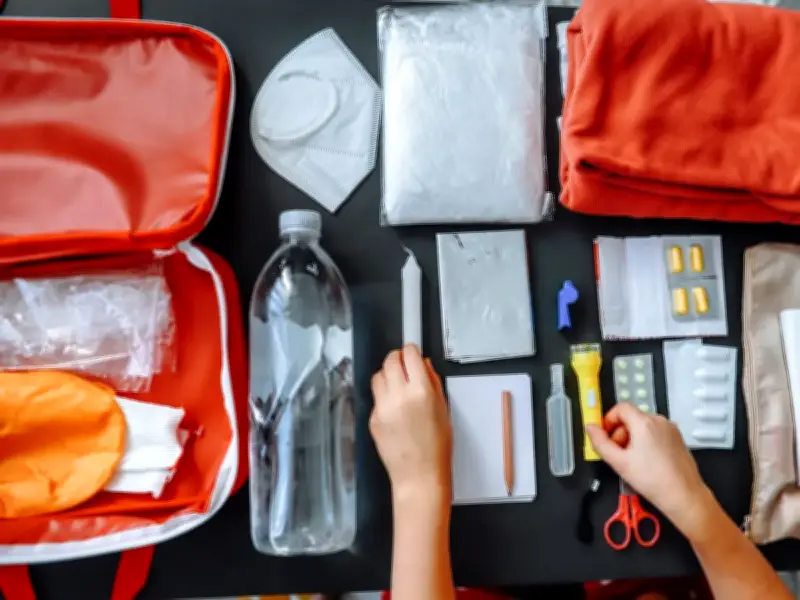
The U.S. Department of Homeland Security's Ready.gov website provides a list of 14 essential items every household should consider keeping in an emergency kit, covering scenarios from natural disasters to nuclear strikes.
With around 110 armed conflicts ongoing worldwide, according to the Geneva Academy, governments are issuing guidance on how citizens can keep families and communities safe. In many emergencies, people may need to survive on their own at home, so having enough supplies to last several days is vital.
Water and Food Essentials
Access to drinking water is the most essential item, as normal supplies can become contaminated or unavailable during disasters. Ready.gov recommends storing one gallon (3.8 litres) of water per person per day to cover drinking and sanitation needs.
Non-perishable food that does not require refrigeration is also basic, with a priority on tinned goods, grains, and powdered milk. A manual can opener is advised to keep at hand.
Medical and Hygiene Supplies
First aid supplies are a must, including dressings, plasters, essential painkillers, spare prescription glasses, and contact lenses. People relying on regular medication should plan ahead to avoid running out during disruptions.
Basic hygiene supplies, such as soaps, sanitisers, garbage bags, and plastic ties, are also recommended, a need highlighted by the COVID-19 pandemic. Dust masks can help reduce exposure to airborne dust and particles, while plastic sheeting and duct tape are advised for emergency sheltering needs, though they are not sufficient for nuclear emergencies, where families should get inside a substantial building and move away from exterior walls.
Communication and Power
A hand-crank radio is listed as a useful way to receive emergency announcements if internet and mobile networks are unavailable. A reliable torch with spare batteries is also recommended for power cuts, and a whistle can help attract attention if someone becomes trapped.
Every household may have additional needs, such as infant formula, nappies, personal hygiene products, extra medication, pet food, and extra water for animals. Ready.gov suggests storing supplies in airtight bags inside easy-to-carry containers like plastic bins or duffel bags, and checking expiry dates about once a year.
The full list includes water, food, a battery-powered or hand crank radio with a NOAA Weather Radio, flashlight, first aid kit, extra batteries, whistle, dust mask, plastic sheeting with scissors and duct tape, moist towelettes with garbage bags and plastic ties, wrench or pliers, manual can opener, local maps, and a cell phone with chargers and a backup battery.