
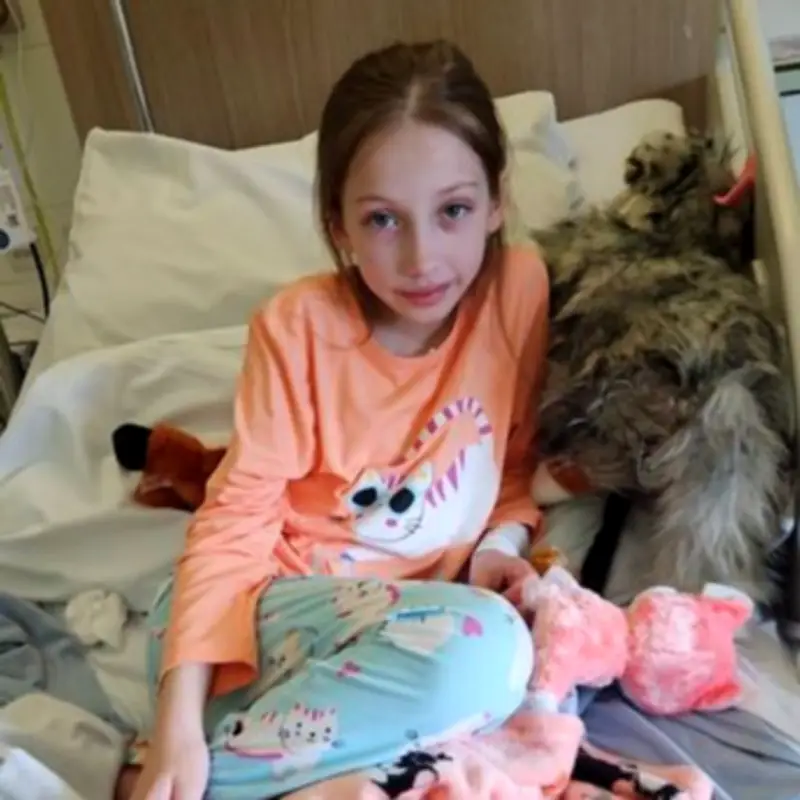
The parents of a nine-year-old girl diagnosed with diabetes are racing against the clock as they attempt to rescue her failing immune system. Victoria Przekop's mum and dad believed she was developing flu symptoms when she began falling asleep immediately after returning home from school. However, an appointment with their family doctor uncovered the real reason behind their daughter's condition; her blood glucose readings had rocketed to over 300mg, exceeding twice the normal range of 70-140mg.
Blood glucose serves as the body's main energy source, obtained through diet. When glucose enters the bloodstream, it normally triggers the pancreas to produce insulin, enabling the glucose to be taken in. Diabetes develops when the body fails to generate sufficient insulin, leading to excessive glucose in the blood and causing severe health complications such as hyperglycaemia.
Urgent hospital admission
Victoria, from Norris Green, was taken urgently to Alder Hey Children's Hospital for additional examinations. By this stage, her father Robert said they had already begun to suspect diabetes was responsible. He said: "By now I was expecting diabetes because there was no other reason her glucose could be that high. But we were hoping it wasn't going to be that. Then after a few hours in the hospital, they told us it was most likely diabetes type 1."
At first Victoria was extremely ill, tired, and had no energy. She would sleep all the time. The last two days she spent at school, she would come home and fall asleep straight away, which never happened before. She simply couldn't absorb the glucose in the cells.
What ensued was an endless cycle of painful finger-pricks, constant blood sugar alarms, and permanent insulin injections while Victoria underwent treatment for hypoglycaemia.
Pioneering treatment in Poland
Victoria's relatives hope to preserve her remaining insulin-producing beta cells through pioneering cellular therapy in Poland. Should it prove effective, this would enable Victoria's body to maintain limited natural insulin production, lessening the condition's severity and diminishing long-term dangers including blindness, kidney failure, and cardiac complications.
The procedure, unavailable within the UK, carries a £100,000 price tag. Robert and his wife Karolina now face a desperate race against the clock attempting to raise the necessary funds before their daughter's final beta cells are destroyed.
Robert, 37, explained: "We're hoping she may still have up to 30% of her beta cells left in the pancreas. She's now in the honeymoon period, because she was given insulin her beta cells have a little bit of rest. But her immune system will continue killing them until they are all gone. We are trying to fight for this treatment to stop her immune system from attacking the pancreas."
Victoria's concerns about school
Victoria is a very bright kid and understands her condition. Her parents are trying not to put too much on her because it is a lot to take in. They have told her that everything is going to be okay and that they will take care of her food and glucose monitoring. However, she is worried about going back to school and having school meals. Her biggest concern was whether she would manage in school with the insulin.
Robert said: "Right now, her diabetes is attacking her own organs and killing the cells which produce insulin. Without producing insulin, the body doesn't absorb glucose, which can lead to a life-or-death situation. That's why we need to constantly keep on top of her insulin. If you keep your levels right it's okay, but if it gets too high then it can slowly affect the nervous system, the eyes, and so on."
This is the only window in her life they have to stop the progression. Another four weeks, and that is it. The family knows it is not possible to be cured, but they are looking for any treatment that could increase her time because once those cells are dead, that is it.
Right now, whatever Victoria does, she has to be monitored all the time. Every night is a sleepless night. Her parents are scared all the time because of the fear of hypoglycaemia. Robert said: "We can manage it. I know we can manage it. But it's something she will have to live with for the rest of her days unless we do something about it now. It's really hard. Our world collapsed a bit, but we can't give up for her. Like every parent, we want to do what's best for our daughter. You hear about these things and think it would never happen to my kid, but then it does."




