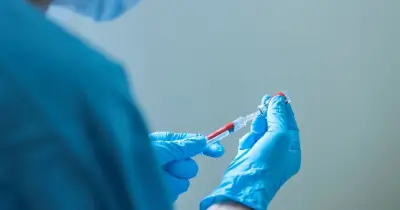
A once-a-day pill for Parkinson's disease could be offered to patients in the UK, according to a charity. Parkinson's UK said it wanted solengepras to be made available to people as soon as possible after a clinical trial showed the drug reduced the amount of time patients spent struggling with issues such as stiffness, slowness and tremors.
The drug was also found to help people stay alert and eased the burden of everyday tasks such as dressing and eating. The final-stage phase three trial involved 341 people with Parkinson's who were randomly assigned to receive either solengepras or a placebo, once a day for 12 weeks.
All the patients enrolled in the trial also continued to take the drug levodopa and other dopamine-based drugs, which were already being prescribed. Parkinson's causes a reduction in dopamine, which plays a vital role in the body by regulating movement.
New treatment for Parkinson's
Claire Bale, associate director of research at Parkinson's UK, said: "These phase three results indicate that solengepras could be an important new treatment option for Parkinson's. The most exciting thing about this new drug is that it works in a different way to existing Parkinson's medications to improve symptoms.
"As shown in this recent trial, this means it can be used alongside existing drugs to offer greater symptom control without increasing troublesome side-effects to improve quality of life.
"We are keen to see this important new treatment made available to people with Parkinson's in the UK as soon as possible and will be reaching out to the company behind solengepras to offer our support."
How solengepras for Parkinson's works
Solengepras works differently from dopaminergic therapies, which mainly replenish, enhance or mimic dopamine. Instead, solengepras blocks the GPR6 receptor rather than increasing dopamine levels, thereby improving motor and non-motor function.
Dame Kate Bingham, managing partner at SV Health Investors, whose Dementia Discovery Fund backed Cerevance, the Boston-based biotech company behind the drug, said it "has opened up an entirely novel drug class beyond the dopamine pathway, which has been the basis of Parkinson's treatment for decades".
Another Parkinson's medication trial shows 'improvement'
It comes as Parkinson's UK published phase two data showing how another drug, known as SNT-4728, led to patients seeing an improvement in movement even after the clinical trial ended.
People in this study had isolated REM sleep behaviour disorder, a condition which leads to a 70% chance of being diagnosed with Parkinson's within 15 years.
Dr Lynsey Bilsland, managing director of Parkinson's UK's global drug development programme, said: "Right now, no drug can stop or slow the progression of Parkinson's. These latest results from the trial of SNT-4728 are encouraging, showing an improvement in movement symptoms in a population who have yet to be diagnosed with Parkinson's in such a short time."