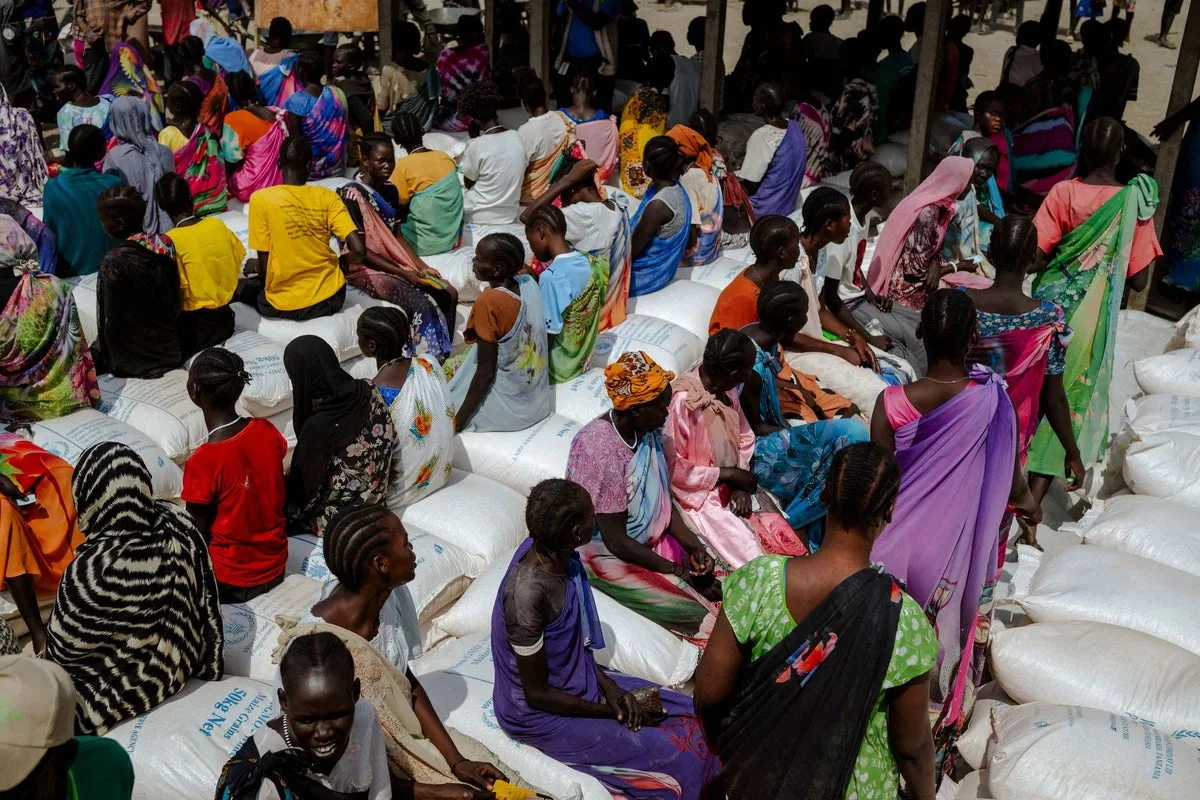
UN Warns Famine in South Sudan: Deadly Downward Spiral

South Sudan is on the brink of famine, according to a joint warning from three United Nations agencies. The Food and Agriculture Organisation (FAO), the World Food Programme (WFP), and UNICEF have reported that 56 percent of the country's 12 million population is experiencing high levels of hunger. This includes 5.3 million people in a hunger crisis, 2.5 million facing a hunger emergency, and 73,300 in a hunger catastrophe—the most severe classification. The number of people in the catastrophe category has surged by 160 percent over the past six months.

Famine Risk in Key Regions

The agencies have identified a credible risk of famine in four counties in the northern Upper Nile region and the central Jonglei region. Additionally, 11 counties across these states and Unity are projected to reach extremely critical malnutrition levels by July. Famine, as defined by the international classification system, occurs when at least 20 percent of households face an extreme lack of food, acute malnutrition rates exceed 30 percent, and people are dying. Children suffering from severe acute malnutrition can weigh as little as half their expected weight for their age, as their bodies consume muscle and organ tissue after fat reserves are depleted. This condition is reversible if caught early.

Doctor's Harrowing Account

A doctor at a hospital in Maban County, Upper Nile, shared a desperate situation with The Independent. The hospital has no electricity due to a lack of fuel, no malaria tests, no IV fluids or blood bags. Surgeons performed caesarean sections this week with almost no medicines. Colleagues are leaving, and the doctor has not received his full monthly salary for seven months. He said, "[The] hospital is worse now. Staff are running away... We don't know what to do." His family has not eaten in seven days, and a sack of sorghum, the staple grain, has become unaffordable. He concluded, "Thank you for following our situation. Our life is not easy."

Wide Pickt banner — collaborative shopping lists app for Telegram, phone mockup with grocery list

Historic Famine Declarations

Since the international famine classification system was created, famine has been formally declared only five times: Somalia in 2011, South Sudan in 2017 and 2020, Sudan's Darfur region in 2024, and Gaza last year—the first declaration outside Africa.

Malnutrition Crisis Among Children

Nearly 2.2 million children under five across South Sudan are acutely malnourished—100,000 more than six months ago. By July, 700,000 are expected to face severe acute malnutrition. Additionally, 1.2 million pregnant and breastfeeding women are acutely malnourished. Ross Smith, WFP's director of emergencies, said the agency is in "a critical race against time" to reach remote locations before the rainy season cuts off access. In Jonglei alone, nearly 300,000 people have been displaced, leaving communities unreachable.

Global Aid Cuts and Oil Crisis

WFP, FAO, and UNICEF have called on the international community to act immediately, but global aid cuts have made this difficult. The US reduced foreign assistance by 57 percent in 2025, UK aid has fallen to its lowest level since 2008, and Norway, Germany, and France have also cut budgets. Rein Paulsen of the FAO warned that the crisis is erasing progress, as South Sudan had been rebuilding agricultural production before conflict and climate shocks reversed it. He said, "We cannot afford to lose the hard-won gains made in recent years."

Since the US and Israel launched strikes on Iran in late February, Iran's Revolutionary Guard has blockaded the Strait of Hormuz. Oil prices rose from $60 to a peak of $126 per barrel and currently sit around $107. The World Bank describes this as the largest oil supply shock on record. The Strait carries not only oil but also a quarter of the world's fertiliser supply, along with medicines, therapeutic foods, and humanitarian supplies routed through hubs in Dubai and India to communities across Africa.

Pickt after-article banner — collaborative shopping lists app with family illustration

Save the Children has calculated that every $5 rise in oil prices adds $340,000 a month to its shipping, fuel, and medical supply costs—equivalent to a month of aid for nearly 40,000 children. Willem Zuidema, the charity's global supply chain director, said: "We are being squeezed from both ends. While world leaders are cutting aid budgets, conflict is driving up the cost of every shipment, every sachet of food, every medical kit we send."

Call for Humanitarian Corridor

The International Rescue Committee (IRC) has called for a humanitarian corridor through the Strait after $130,000 of pharmaceutical supplies destined for Sudan were stranded in Dubai. IRC president David Miliband said: "When vital shipping routes like the Strait of Hormuz are disrupted, the impact is not abstract—it is measured in empty shelves, shuttered clinics, and lives at risk." South Sudan, dependent on the same hubs, faces a similar situation.

If the conflict proves prolonged, the World Bank warns that rising food prices could push 45 million more people into acute food insecurity this year. For South Sudan, these are not projected figures but a description of a country already in famine conditions, already defunded, and already waiting for supplies that may not arrive before the rains make roads impassable.

Lucia Elmi, UNICEF's director of emergencies, said: "We are witnessing a deadly downward spiral. Every day of delayed humanitarian access is a day a child's life and future hang in the balance."



