
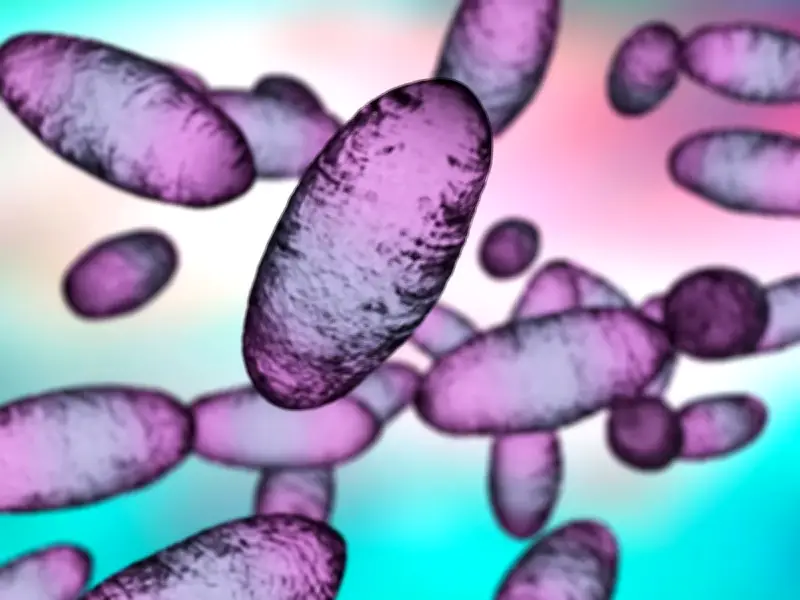
Scientists have warned that ancient "zombie viruses" locked beneath the Siberian ice could unleash a new global pandemic. The warning comes as the mysterious death of 28-year-old lab technician Darya Shipilova has sparked panic over a potential plague outbreak.
Shipilova, an employee at the Irkutsk Anti-Plague Research Institute of Siberia, reportedly died from "unknown" pneumonia. While World Health Organization (WHO) officials found no immediate evidence of a plague outbreak following her death, experts warn the real danger may be lying dormant in Russia's frozen wilderness.
Revived prehistoric viruses
A landmark study led by French researcher Jean-Michel Claverie of Aix-Marseille University revealed that melting permafrost caused by rising temperatures poses a serious public health risk. His team successfully revived 13 prehistoric "zombie viruses" extracted from deep inside the Siberian frost, including a strain called Pandoravirus yedoma that had been frozen solid beneath an underground lake for 48,500 years.
Other strains, dating back 27,000 years, were pulled from the stomach remains and fur of ancient woolly mammoths. Scientists fear that as climate change thaws the deep, oxygenless ice - a perfect storage vault for biological material - microbes up to a million years old could be unleashed into the modern world.
Previous outbreak and current fears
The region has already seen a grim preview of the danger. In 2016, blistering 95°F heat in Siberia melted permafrost and exposed the infected carcass of a reindeer, triggering a deadly anthrax outbreak that killed a 12-year-old boy.
While tests showed the revived prehistoric viruses currently infect amoebas in lab settings, experts warn the world remains dangerously unprepared for what might crawl out of the deep freeze next. It comes as fears of a deadly "Russian plague" triggered widespread panic along the borders with China and Mongolia, following the death of Shipilova on October 2.
Lack of transparency
Russian health authorities insist the 28-year-old scientist died from "pneumonia of unknown origin" and denied any leak of high-threat pathogens. However, the official narrative triggered global alarm after roughly 200 of her contacts were hit with a sudden emergency quarantine.
Unconfirmed local reports suggest Shipilova may have dropped a vial containing lethal, airborne Yersinia pestis bacteria or caught pneumonic plague during a recent trip to Mongolia. Despite Russia's legal obligation to share critical details, Moscow has left international observers completely in the dark.
Devi Sridhar, Chair of Global Public Health at the University of Edinburgh, warned that the lack of information highlights a collapse in international trust. Writing for the Guardian, she said: "The WHO has pushed the Russian government for more information – including confirmation of the diagnosis and details of the investigations – but it has not yet received this information."
She added: "While we can have research and expert conferences into better diagnostics, faster genomic sequencing, more effective vaccines and accessible treatments, none of these advances can compensate for a failure to share the information needed. Without transparency, it will be a case of one step forward, two steps back."




