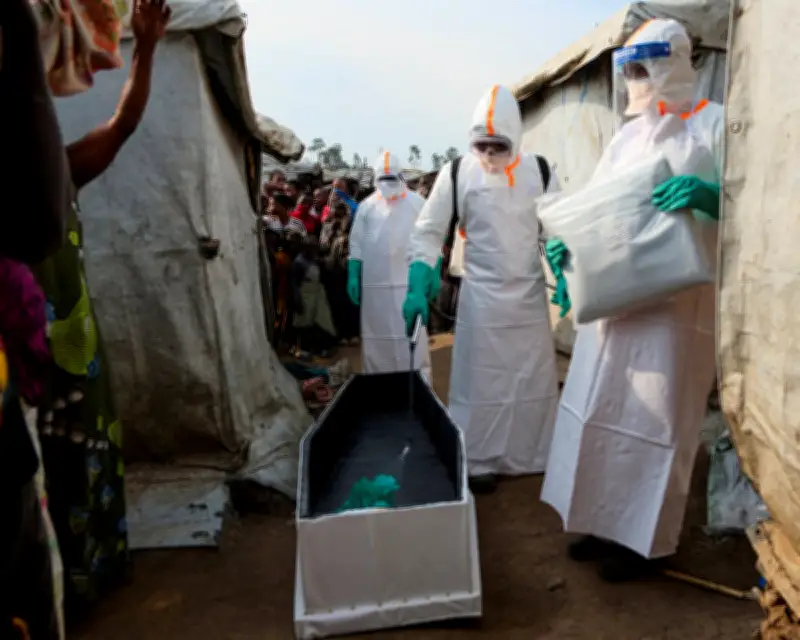
The whereabouts of almost 300 people who have tested positive for Ebola in the Democratic Republic of the Congo remains unknown, according to Africa's top public health official. Dr Jean Kaseya, director general of the Africa Centers for Disease Control and Prevention (CDC), stated on Thursday that the humanitarian crisis in conflict-affected areas means over 1 million people are living in camps inaccessible to health workers.
Outbreak Projections and Spread Risk
Projections from the World Health Organization's Africa regional office, published in the Lancet Infectious Diseases journal, predict approximately 8,210 cases and 1,420 deaths by mid-September. The modelling suggests a 70% chance of the outbreak spreading to neighbouring South Sudan in the coming weeks. To date, the DRC has reported 1,118 confirmed cases and 291 deaths, with 20 cases and two deaths in Uganda.
On Wednesday, France announced that a doctor who had been working in the DRC tested positive upon return. His employer, medical NGO Alima, stated they are working to understand how the contamination occurred.
Missing Patients and Community Transmission
Figures on recoveries, current treatments, and deaths indicate that 297 people who tested positive are unaccounted for. "This is a concern that we have. Where are these people?" asked Kaseya. DRC authorities said on Thursday that anyone from affected provinces must wait 21 days before travelling onward.
The outbreak, caused by the Bundibugyo strain, is the largest on record for five weeks after declaration. At the same stage, the 2014-2016 west Africa outbreak had 239 cases and 160 deaths, ultimately infecting over 28,000 and killing over 11,000.
Response Efforts and Funding Gaps
Kaseya noted that 30% of new cases are among known contacts, indicating "huge, huge community transmission." Authorities plan to recruit 20,000 local community health workers to boost contact tracing. Bed occupancy in Ebola treatment centres is at 95%, and "we didn't reach the peak yet," he added.
He emphasised that camps housing displaced people "have cases, and because we don't have access to these camps, we cannot have the contact tracing. We cannot have a photo of what's happening there. We cannot stop this outbreak, without resolving the humanitarian issue."
Africa CDC and the WHO earlier stated that $518 million (£392 million) in health spending is needed, rising to $1.4 billion with humanitarian needs. Only about 13% of the $910 million pledged by international governments and organisations has been supplied so far.
Upcoming Drug Trials
The first trial of drugs targeting the Bundibugyo virus is due to begin in the DRC next week, followed a week later by a trial of an antiviral given to contacts to prevent disease development.