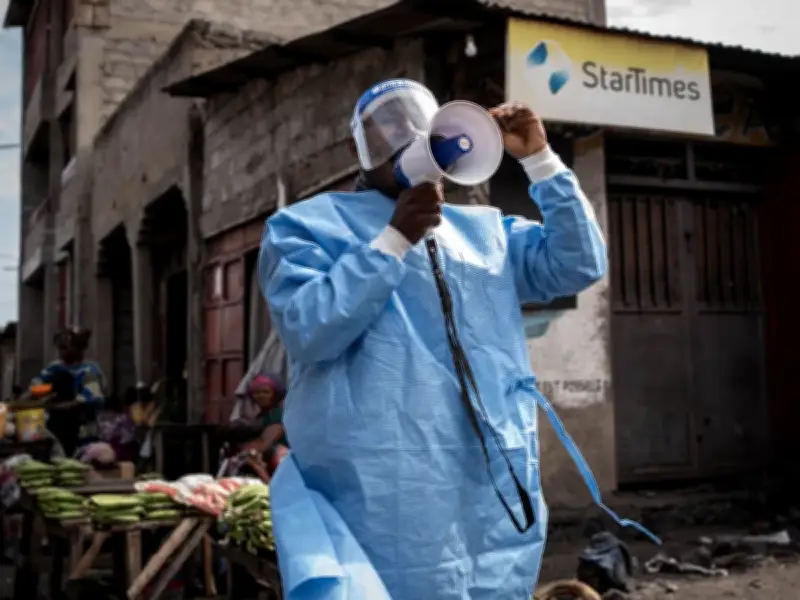
An ongoing Ebola outbreak in the Democratic Republic of Congo has now killed 5,678 people among 11,613 confirmed cases, according to the latest World Health Organization (WHO) data. The case fatality rate has risen to 48.9%, up from 48.6% last month.
Rising Death Toll and Community Impact
A WHO spokesman said: "The high proportion of deaths occurring in communities, meaning outside of dedicated treatment centres, especially among young children, continues to highlight challenges in early case detection and timely access to appropriate care."
The current outbreak is now the deadliest of the 17 the country has faced. Experts have described it as the fastest growing outbreak on record in terms of new infections.
Health data shows there were 720 deaths reported since October 28. The WHO said 452 occurred in communities and 268 in treatment centres.
Affected Regions and International Spread
Ituri and Nord Kivu remain the most affected provinces, while Sud-Kivu and Sud Ubangi have not reported cases for more than 42 days, the organisation said. No new cases have been reported from Kenya or Nigeria, which had also reported outbreaks, and both countries have started a 42-day countdown to declare the end of their outbreaks. No new country has reported confirmed cases.
The WHO warned: "However, the high-level transmission in the Democratic Republic of the Congo calls for continued need for readiness in the region, including cross-border surveillance, points of entry monitoring, timely case detection and coordinated preparedness and response measures."
Response and Obstacles
Six months into the outbreak of Bundibugyo virus disease (BVD) in the Democratic Republic of the Congo, the response has expanded significantly, but further scale up is needed, with rising insecurity remaining the greatest obstacle to the expansion of operations.
The outbreak, which started in May, became the DR Congo's deadliest in its history in August, public health officials said. The Bundibugyo species is behind the current outbreak. There is not yet any treatment or vaccine for this strain.
The WHO said the risk in the country remains "very high" due to the intensity and geographic expansion of the outbreak. They cited ongoing undetected transmission, community deaths, health-care transmission, insecurity, laboratory constraints, gaps in community engagement and funding, and the continued potential for national spread.
A British doctor who was working on the epidemic returned to the UK earlier this month for specialist treatment after testing positive for the disease.