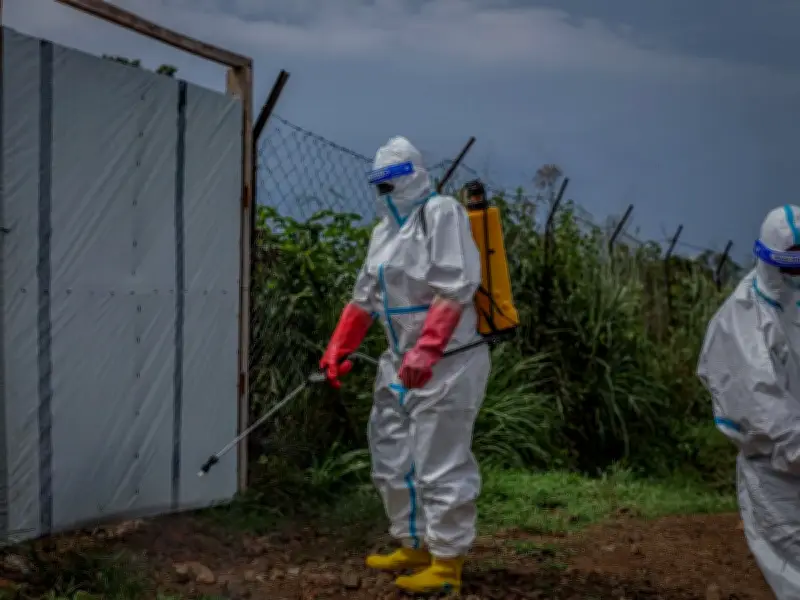
Ebola cases in the Democratic Republic of the Congo (DRC) have surged to a record high, with the virus now spreading to neighbouring countries and sparking global alarm. Health workers in the DRC confirmed on Tuesday that Ebola has officially infected 10,060 people since the latest outbreak was declared in May, killing 4,887 people, according to the latest data from Congo's Ministry of Health.
Virus Spreads Beyond Congo
Kenya, Nigeria, and Uganda are among the other nations where cases and deaths caused by the rare Bundibugyo strain of the virus have been reported, with the virus even managing to spread further afield into mainland Europe. Neither Uganda, where 20 cases have been reported, nor France — the sole country in Europe where a single infection of the virus has been recorded — have active cases at the moment, with DRC still recording the largest number. In Kenya, nine cases have been recorded, alongside another two deaths, and one has been recorded in Nigeria.
A recurring problem in the spread in Africa is what appears to be lax surveillance efforts as most of the first cases were confirmed long after people started showing symptoms or after traveling.
Africa CDC Calls for Stronger Response
Dr Jean Kaseya, head of Africa CDC, which is holding a meeting today discussing the escalating worldwide threat, has called on African nations to step up their responses to the now international crisis, saying this week: “Ebola is crossing borders. Our response must move faster, with stronger coordination, greater solidarity and decisive political leadership.”
But while tens of thousands of people have been infected and thousands more are dead, a significant number of people have recovered. At least 2,600 patients have recovered from the disease in Congo though. A viral video this week showed health workers in full protective gear dancing as the last two patients were discharged from a treatment center in Mongbwalu, Ituri province. World Health Organization Director-General Tedros Adhanom Ghebreyesus said of the video: “The outbreak is far from over, but every life saved is worth celebrating.”
Health Workers Overwhelmed
In Congo, the disease has spread to 66 health zones across eight provinces, from three zones when it was first declared in May. Responders have said they’re seeing treatment centers in some of those health zones getting overwhelmed, people still skeptical and violent toward them, and health workers are regularly going on strike to protest delayed or unpaid wages. Sephora Bgosi, with the Ebola burial team in Ituri province, the epicenter, said: "Some people still don’t seem to understand the seriousness of the situation even though they are directly exposed to the risk. Ebola disease is extremely dangerous and can be deadly."
About 80 percent of recorded cases are still coming from outside of monitored contacts, showing there are ongoing chains of transmission that health authorities are not aware of. At least 95 percent are supposed to be coming from known contacts for officials to say the outbreak has largely been brought under control. At least half of deaths recorded are among people who have not been admitted to treatment centers, a sign that people are still not reporting symptoms at all in many areas.
In many zones, health workers are battling challenges ranging from basic needs such as adequate vehicles to complex ones like persuading families to release their relatives who are sick with the disease or who have died from it and need to be buried safely. Last week at the Nia Nia health zone in Ituri province, some Ebola responders, including surveillance and community engagement officers, went on strike over unpaid bonuses owed since late August, a common trend across many affected localities. More than five months since the outbreak was declared, health workers are still being attacked by angry villagers. On Saturday, a nurse was killed and another health worker severely injured while responding to an Ebola alert in Bafwasende, Tshopo province.