
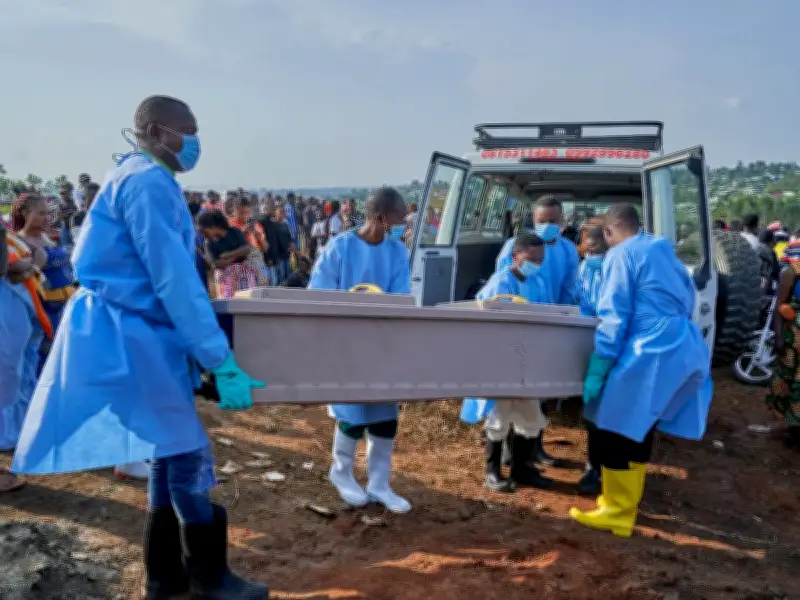
More than 2,000 people have died in the Ebola outbreak in the Democratic Republic of Congo, as the World Health Organization (WHO) warns the true scale of the epidemic could be up to four times larger than official figures indicate.
The outbreak is now the fastest-growing on record, with conflict, poor access, and payment issues hampering relief efforts. Official government data shows about 1,000 of the deaths have occurred in the last three weeks, and the death toll has doubled in little over a fortnight.
Rapid Spread and Challenges
Infection rates remain high as authorities struggle to control the disease. There is no approved vaccine or recognised therapeutic drugs to treat victims, and experts say the high death toll is because patients are not receiving care quickly enough, while many people are not seeking help at all.
Ebola is rare but highly contagious, passed to people from wild animals. Human-to-human transmission occurs through contact with bodily fluids of an infected person, such as vomit, blood, or semen, as well as through contact with contaminated surfaces and materials like bedding and clothes.
WHO Warning and Containment Efforts
The WHO has warned that the true scale of the outbreak could be up to four times larger than official figures, because some communities at the epicentre in Ituri province remain difficult to reach due to fighting between rebel groups and attacks on healthcare workers. In a worst-case scenario, it could approach the scale of the 2014-2016 West Africa epidemic, which killed more than 11,000 people.
Authorities in eastern Congo have restricted public gatherings and closed the main airport to contain the spread. WHO Africa director Dr Mohamed Janabi said on Monday: "We are chasing the virus, the virus is ahead of us." He added that health workers were only reaching about 30 per cent of cases, with the rest dying at home.
Medics and Officials Respond
Paul Hunter, a professor of medicine at the University of East Anglia, said: "In the absence of an effective vaccine, control rests on identifying cases and then nursing them in secure facilities until they recover or sadly perish."
A crisis was declared on May 15, but testing of the virus's genetic material shows it began months earlier, likely in February. Dr Jean Kaseya, director general of the Africa Centres for Disease Control and Prevention, said: "These people are dying. They are dying because we don't have vaccines, we don't have medicine, we don't have funding."
So far there have been 4,294 confirmed cases and 2,001 deaths, DR Congo's health ministry has said. Symptoms can start between two to 21 days following infection and can appear as a flu-like illness, including high temperature, extreme tiredness, and headache. Other symptoms include vomiting, diarrhoea and tummy pain, a skin rash, yellowing of the skin and eyes, blood in poo, lots of bruises, bleeding from ears, eyes, nose or mouth, muscle pain, sore throat, and bleeding from nose, gums or vagina.




