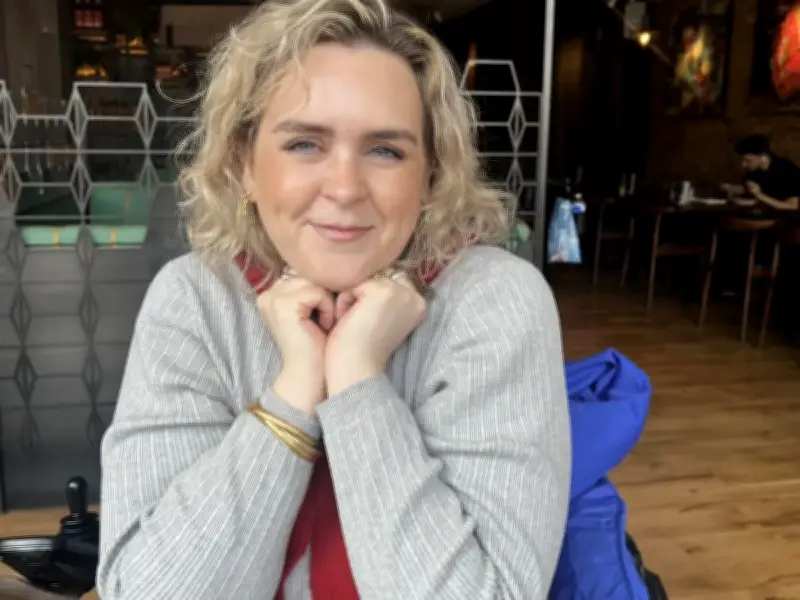
Brittany Pay, 37, from London, went from walking and running normally to being unable to walk within four days, after what she thought was a strained knee turned out to be incurable cancer. The pain began almost overnight, with no obvious injury or accident to explain it.
Within four days, Brittany could no longer make the 10-minute journey to her GP on foot and needed a taxi. She said her doctor appeared reassured by the lack of swelling around her knee and did not initially believe there was anything seriously wrong.
From a Sudden Pain to a Devastating Diagnosis
“I kept trying to find a reasonable explanation, but there hadn’t been an accident or injury,” said Brittany. “I tried resting, stretching, heat and cold, but nothing made a difference. The pain wasn’t behaving like an ordinary strain, and I knew something wasn’t right. The pain was centred around my knee but extended both up and down my leg.”
She added: “It was frightening to go from being able to walk normally to struggling to put weight through my leg almost overnight.”
Brittany saw her doctor just four days after the pain began. “I found the appointment incredibly frustrating because the lack of swelling seemed to reassure the GP it was a break, even though I could barely walk,” she said. “When I could barely stand to leave, they questioned whether it was really that bad. I felt I hadn’t explained just how dramatically my life had changed in four days.”
Stage Four Breast Cancer Found Months Later
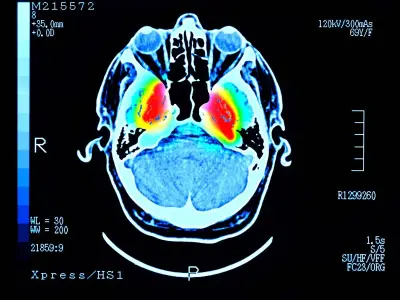
It was months later, in December 2023, that Brittany received the diagnosis of stage four metastatic breast cancer. By then, the disease had spread extensively through her skeleton, including her spine, ribs, pelvis and femur, with a tumour measuring around 11cm in her right thigh bone.
“I hadn’t even thought about cancer until I saw a private knee surgeon that my GP referred me to and he said he didn’t think it was cancer. And I was shocked he even brought it up,” she said. “By November, I was deteriorating further. The night before I eventually went to A&E because I was hospitalised, I had an overwhelming feeling that I was dying. I can’t really explain it, but something inside me was telling me that I needed help urgently.”
Brittany had previously attended a breast clinic three times between January 2021 and May 2023 after discovering a lump in her breast. She said the lump had been scanned during her first appointment but was dismissed, while on the subsequent two visits her right breast was not scanned.
Major Surgeries and a New Life
Her right femur was so badly damaged that surgeons had to remove a significant portion of her thigh bone and replace it, alongside her knee, with a metal implant. She also underwent surgery on her left femur in June 2026, when surgeons inserted a metal nail to strengthen the bone after cancer weakened it.
“Becoming disabled has honestly been harder for me to process than I ever expected. But I don’t want to minimise what living with stage four cancer is like either. Having both experiences happen together has been horrific,” she said.
“Suddenly, every aspect of my life had to change. I had to move house because I couldn’t manage the stairs, I lost my ability to work and I became dependent on other people for things I’d always done independently. It was incredibly traumatic, and I think I’ve had to process a lot of grief for the life I had before.”
Fighting On and Encouraging Others
Now, Brittany is living with cancer, which has spread to her bones, liver and brain, and is preparing to begin her fifth line of treatment, Enhertu. “The aim is to keep finding treatments that control the disease for as long as possible,” she said.
“I have a life worth fighting for, and I want to keep building it. I want people, particularly young women, to understand that breast cancer doesn’t only happen to older women. If something doesn’t feel right, keep pushing for answers. Ask questions, ask for things to be investigated properly and get a second opinion if you aren’t satisfied. You know your own body, and you shouldn’t feel that you’re being difficult or dramatic by asking for help.”