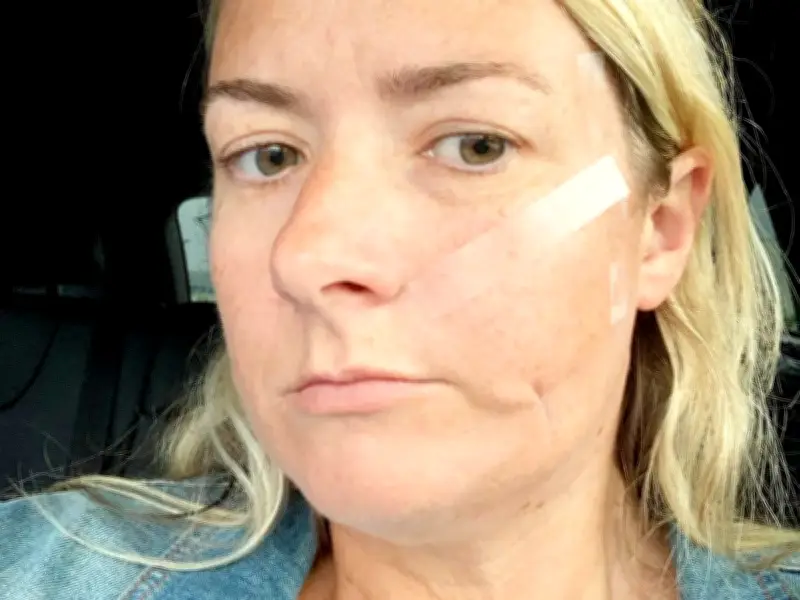
Lisa Martin, 47, from Thornton, Lancashire, first noticed a small lump under her chin in August 2018 and assumed it was swollen glands from a lingering cold. But the lump did not resolve, and after a friend suggested she see her GP, she was referred to specialists who tested the fluid inside it. Two clear tests and a surgery to remove what doctors believed was a gland later, tests revealed it was secondary cancer.
Six biopsies and robotic surgery
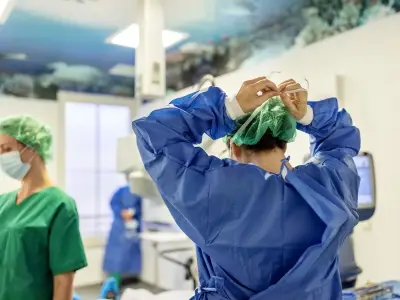
What followed were six biopsies, endless scans and appointments, and a robotic surgery during which the back of her tongue was cut open. Surgeons eventually found the source of the cancer cells: a tumour buried deep in the base of her tongue. Lisa, who works in fundraising for cancer charity Macmillan, was unable to speak for five weeks and could only breathe through a tracheostomy after a biopsy conducted by a surgeon controlling a robot. She then underwent the same gruelling process a second time to remove the tumour.
Three surgeries and recovery
A third surgery to remove her lymph nodes ensured no cancer remained, and she received clear margins. After two years of treatments, she was deemed cancer-free. Lisa said: "Both of the robotic surgeries were very emotionally and psychologically intense. I was put into a coma, had to have a tracheostomy, had to be on a liquid diet through a tube, and couldn't speak for five weeks the first time. But the alternative to the robotic surgery scared me more - the potential side effects of the chemo and radiotherapy included a jaw reconstruction and having no saliva for life."
Initially, Lisa was certain the lump was not cancerous. She had it removed in October 2018 and returned to work once healed, believing everything was behind her. But soon after, she received a phone call asking her to return to the clinic. She said: "I remember seeing the look on the nurse's face as she brought me into see the doctor. The doctor told me they had found secondary cancer in the lump - squamous cell carcinoma. They then needed to find the primary source - it turned out I had been quite far into my cancer journey before I even knew it had begun."
Da Vinci robotic surgery
A standard biopsy of her tongue highlighted "hotspots" that required a more targeted biopsy. This involved "Da Vinci robotic surgery" at Blackburn Royal Teaching Hospital, where a remotely-operated robot controlled by a surgeon moved to the back of her throat and cut into her tongue. Lisa underwent this in March 2019 and was put into a medically-induced coma for 72 hours. She said: "I couldn't speak, so I was Facetiming my sons and text messaging them to tell them off, or writing messages on bits of paper."
She was then told she needed another surgery to remove the cancer. Lisa said: "After that, I was told my first option was to have chemotherapy and radiotherapy rather than more robotic surgery, but that also came with a lot of problems. My original surgeon believed the second option - repeating the robotic surgery, but this time to remove the tumour - was the best option. So I put my big girl pants on and went through the whole process again."
After that surgery in May 2019, she had a third surgery later that month - a bilateral neck dissection - to remove all the lymph nodes in her neck and ensure no cancer remained. In 2024, five years after her final treatment, Lisa received her all-clear scans and was discharged from care.
Grateful and lucky
She said: "It's definitely all been a shock to the system but the words we use are grateful and lucky. Not everyone is given the option for robotic surgery so I guess it was the case of right place, right time, and I feel incredibly lucky I had the opportunity for that. For others, I'd say get as much information as you can, and make the decision that's right for you. And hard as it is, try to stay positive throughout it all. If you can get through it, life is for living."
Jonathan Gregory, National Clinical Adviser at Macmillan Cancer Support, said: "It’s fantastic that innovations like robotic surgery are already helping people like Lisa to have a high quality of life after cancer treatment. But it is critical that everyone benefits from these advances, regardless of factors like where they live, or where they receive their treatment."