
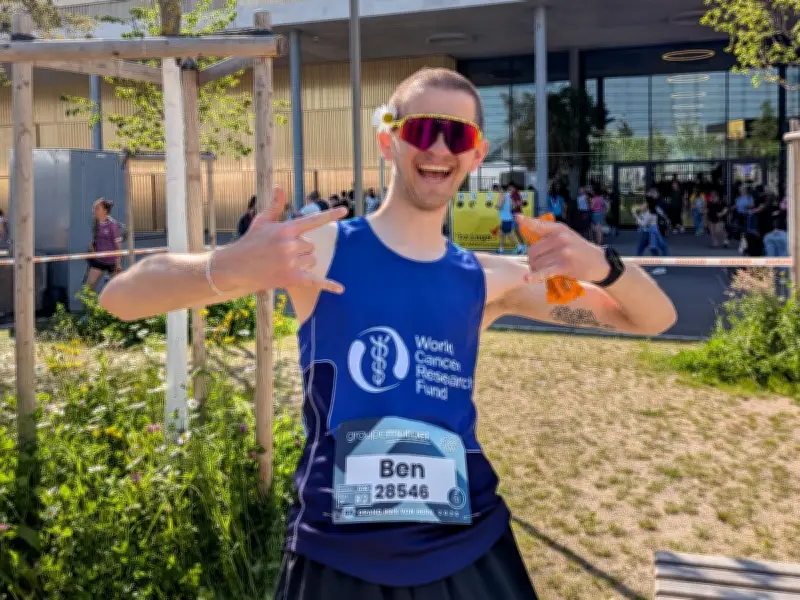
Ben Wagenmann, a German student living in Switzerland, was diagnosed with cervical paraganglioma, a tumour affecting fewer than one in 100,000 people. He underwent radionuclide therapy that made him radioactive, requiring isolation in an underground ward for several days. Now 27, he was 25 when diagnosed.
Diagnosis and Discovery
In April 2023, after a ski trip and a chest infection, Wagenmann noticed a lump on the side of his throat that felt uncomfortable when pressed. The lump persisted even after the infection cleared. He mentioned it to his father, a doctor, and took antibiotics, but it did not go away. By November 2023, a 3D ultrasound and MRI revealed a 6cm tumour behind a lymph node, pushing on a major artery. Doctors initially said it was likely benign and slow-growing.
Just before Christmas 2023, a PET scan showed about eight tiny metastases in his spine. In January 2024, he underwent a 10-hour surgery on the carotid artery that was extremely difficult. For three months afterward, he was not allowed to exercise due to risk of the artery rupturing. A follow-up PET scan revealed the cancer had spread to his bones, including his spine, ribs, and hip.
Nuclear Treatment
Doctors were unsure how to treat his rare cancer, as no clear guideline existed. They decided on radionuclide therapy with the radioactive compound lutetium at a hospital in Aachen, Germany, about six hours from his home in Bern, Switzerland. From summer 2024, he underwent six cycles in an underground isolation ward.
Wagenmann said: "You're not allowed to be near anyone because you're literally radioactive. I was so radioactive that there was no shower in the hospital room because every bit of water that I would either digest or touch would be contaminated with radiation." He passed the time watching shows, reading, and calling friends and family. After each cycle, he had to avoid hugging anyone or sleeping in the same bed for a week, especially around pregnant people or children, because he was still radioactive.
Scans after the third cycle showed the cancer had not shrunk but the spread had stopped. After six cycles, he had two other forms of radiotherapy, with side effects such as an inflamed oesophagus for several weeks.
Life with Incurable Cancer
Doctors told Wagenmann his cancer is incurable and cannot give a prognosis due to its rarity and unpredictable spread. He visits the hospital at least once a month. He manages consistent pain, especially in his back and legs, with physiotherapy and pain medication. He tries to stay active, cycling and skiing between his studies in AI and medicine.
Wagenmann said: "For my parents, it must be awful because I cannot imagine the feeling of knowing that your kid has cancer and potentially dies before you. For me – as hard as it sounds – if I die, I die and I can't really change that. But I'll have the best time till then."




