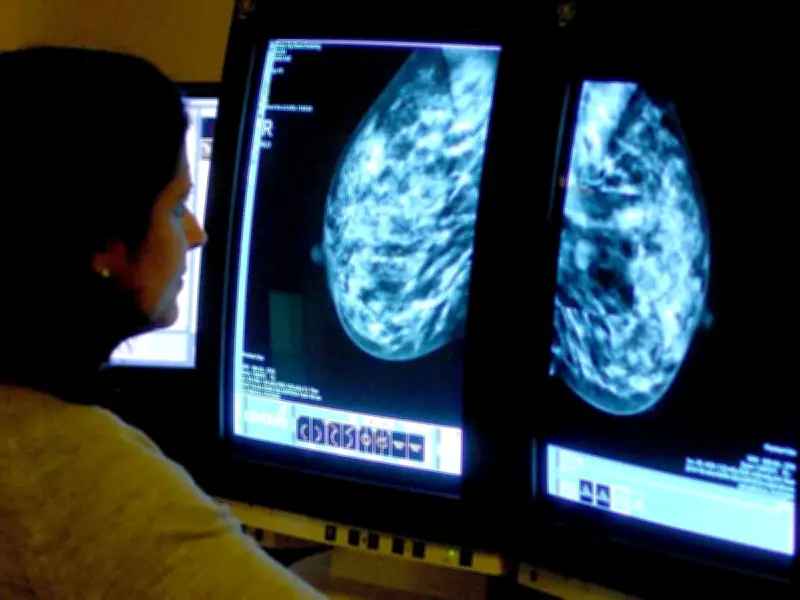
Nearly 700,000 women across the UK are being invited to take part in a £10 million trial to see if artificial intelligence can spot breast cancer earlier. The EDITH study will test whether AI can replace one of the two NHS experts who currently examine each mammogram X-ray.
Women aged between 50 and 71 are offered routine breast cancer screening every three years. Currently, two NHS experts examine each X-ray for possible signs of cancer, but during the trial one of these radiologists will be replaced by AI.
Trial aims to improve detection and reduce workloads
The study will examine whether the move can improve early cancer detection rates, reduce waiting lists and ease staff workloads. Another key goal is to make sure the use of AI won't cause harm by leading women to be recalled unnecessarily for follow-up scans.
Women being invited to routine mammograms at Cambridge University Hospitals are already being offered the chance to take part or opt out. The trial is expected to be rolled out to a total of 30 sites across the UK over the coming months.
Experts and officials back the technology
Sian Taylor-Phillips, professor at the National Institute for Health and Care Research, said: "AI-assisted technology could support staff by flagging areas of a mammogram where cancer might be missed to improve early cancer detection. We have rigorously tested four AI systems for accuracy and will use these safely and transparently. Importantly, all clinical decisions during EDITH will remain with NHS staff."
Health Secretary Yvette Cooper, speaking on a visit to the trial team at Addenbrooke's Hospital, said: "If successful, this technology could help women get a breast cancer diagnosis and start treatment much more quickly, giving them the best possible chance of recovery. AI has huge potential, but we also need proper safeguards in place to make sure we're using it safely and effectively to improve treatment and research."
Shirley Essex, 70, of Cambridgeshire, was diagnosed with early-stage breast cancer in October 2025 after attending a routine screening appointment. Following surgery and radiotherapy treatment, she is now doing well. She said: "I feel so lucky my cancer was detected early. When I received the invitation to attend, I had no symptoms and no clue anything was wrong. My routine mammogram saved my life, so anything that helps other people get diagnosed earlier is crucial."
Evidence and impact
Smaller scientific studies have already shown evidence that AI can improve breast cancer detection rates. The research suggests it can detect subtle patterns of early breast cancer on scans that even an experienced radiologist would struggle to spot. The trial team say all clinical decisions about patient care will be made by NHS staff.
The trial is led by the University of Warwick, the University of Cambridge and Cambridge University Hospitals NHS Foundation Trust. Breast cancer is the most common cancer affecting women in the UK, with roughly 59,000 cases diagnosed annually.
NHS figures show 2.75 million women were invited for breast screening in 2024/25, with around seven in ten taking up the offer. It is estimated that the screening programme helps prevent around 1,300 deaths every year. Professor Kevin Dunbar, deputy director of public health at NHS England, said: "Edith will help build the evidence we need, while ensuring patient safety, quality and the expertise of screening professionals remain at the heart of the programme." Hannah Maybour, head of public affairs and campaigns at the charity Breast Cancer Now, said: "Breast screening is a vital tool in detecting breast cancer early, when treatment is most effective, meaning more lives can be saved, so it's hugely encouraging to see trials and investment into technologies that could improve detection such as Edith."