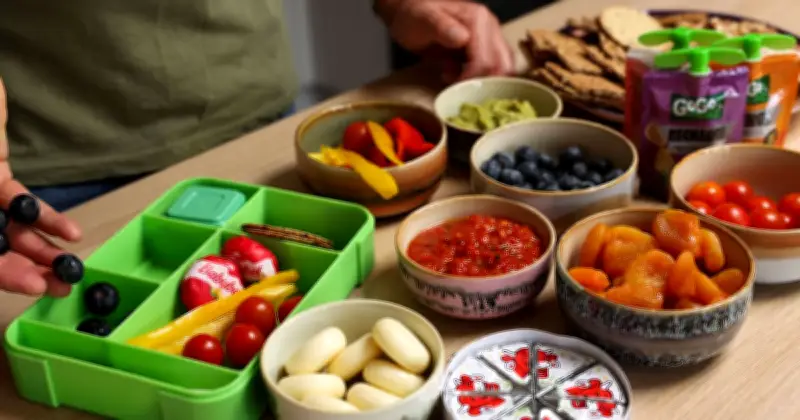
Nutritionist Rob Hobson has challenged the long-held claim that snacking between meals ruins your appetite, arguing that well-chosen snacks can actually help steady hunger and boost nutrient intake.
While snacking is often dismissed as unhealthy, it can be a smart way to top up energy and nutrients, depending on what you reach for. Research suggests healthy snacking advice is leaving many people baffled, with more than six in 10 unsure whether a product labelled 'healthy' really is. Even so, 58% say they pay close attention to the nutritional value of the snacks they choose, and nearly three quarters (73%) use snacks to add fruit, vegetables or dairy to their diet.
Why people snack
For some, it's also about specific health goals: 25% snack to maintain energy levels, 19% to boost protein intake, 15% to support gut health and 14% to support exercise and fitness.
Hobson says small, well-timed 'top-ups' can help keep appetite levels steady rather than swinging between ravenous and overfull, as long as you snack the right way. He said: "For generations, we've been told that eating between meals will ruin our appetite. But well-chosen snacks, eaten at the right time, can bridge the gap between meals, helping us manage hunger, maintain energy levels and provide nutritional top-ups."
The research behind the advice
The research, commissioned by Bel UK, the company behind Babybel, The Laughing Cow and GoGo squeeZ, found the average person estimates that just 15% of their overall food intake comes from snacks. However, existing nutritional evidence shows snacks contribute around a quarter of our daily nutrient intake.
To help close the gap between wanting to snack well and knowing what to choose, Hobson has partnered with Bel UK to create the Getting Snacktive Guide. Rather than asking "What do I fancy?", he believes we should ask "What do I need?" and centre our snacking decisions around this question.
He said: "The question isn't whether we should snack, but what we might need from that snack. That will be different for everyone and can change throughout the day. For someone bridging the gap between lunch and a late dinner, that might mean something like cheese with wholegrain crackers and fruit. Someone exercising might think about carbohydrates to help refuel and protein to support muscle recovery, while someone with a smaller appetite should choose a nutrient-dense snack such as fruit with nuts to provide useful nutrition without being too filling."
Industry and expert views
David Brandman, managing director from the snacking group, added: "The way we eat is changing, snacks are increasingly being used for more than simply satisfying a craving, people want them to provide something useful too. Snacks account for a meaningful part of what we consume so we need to give them the same consideration we give our meals."
Angie Jefferson, registered dietitian at the British Nutrition Foundation, said: "Snacks are often seen as a treat or indulgence, but they can also be a valuable opportunity to add nutrients and healthy foods to our diets. Choosing nutrient-dense options can help boost intakes of fibre, protein, vitamins and minerals, including nutrients that are commonly under-consumed, such as calcium and iron. They can also encourage greater consumption of fruit, vegetables, pulses, nuts and seeds, helping people meet their nutritional needs and support a healthy, balanced diet."