
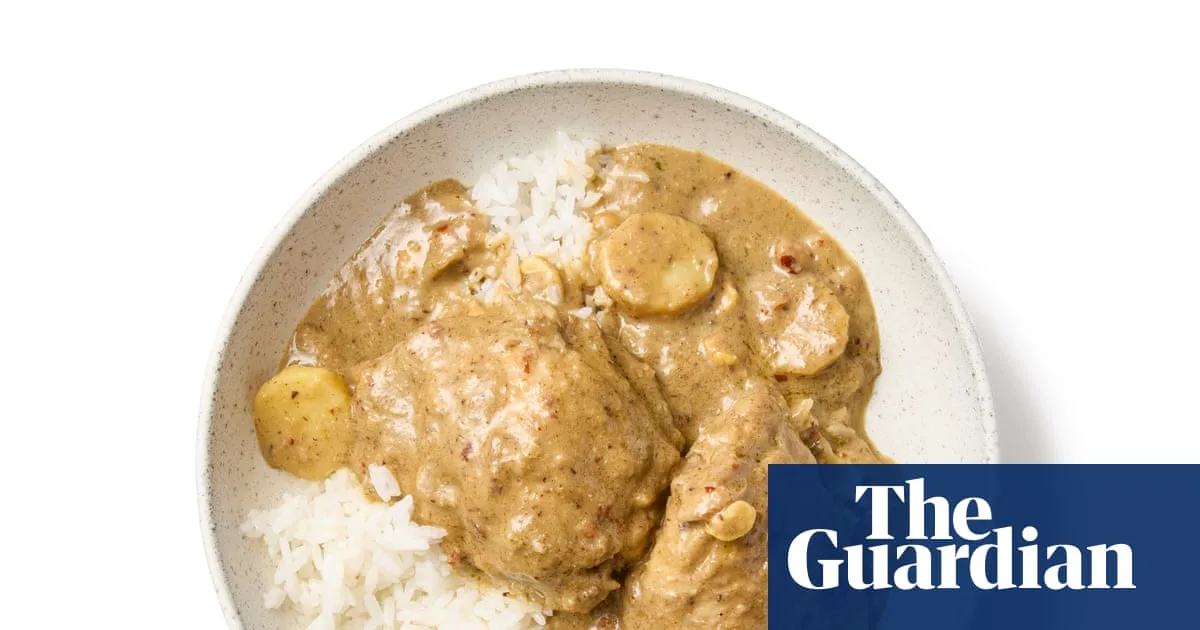
Massaman curry is widely considered the most delicious Thai curry, but also the most complex to prepare. Felicity Cloake, The Guardian's resident perfectionist, has taken on the challenge of mastering this dish, which dates back to the 17th century and reflects Persian, Malaysian, and Indian influences. Unlike other Thai curries, massaman uses dried spices such as cumin, cinnamon, bay leaves, and cloves alongside traditional aromatics like lemongrass and galangal, creating a rich, savoury gravy.
The key to an authentic massaman is the curry paste, which is more time-consuming than red or green curry pastes due to the additional dry spices. While ready-made red curry paste can be used as a shortcut, commercial massaman pastes often skimp on expensive spices. Making your own paste is more satisfying, requiring ingredients such as Thai shallots, lemongrass, garlic, galangal, dried red chillies, coriander root, and shrimp paste.
Galangal, a pale rhizome with a peppery flavour, is essential and should not be substituted with ginger. Dried red chillies are a must, and coriander root can be replaced with stems if unavailable. Makrut lime rind, though not common, adds a pleasing zestiness. The paste typically includes cumin, coriander seeds, cloves, and peppercorns, with variations using cinnamon or cassia.
While massaman is a weekend project rather than a weeknight dinner, the effort is worthwhile for its deeply savoury and comforting flavour. The dish can be made with chicken, beef, or tofu, and is traditionally served with potatoes and peanuts.




