
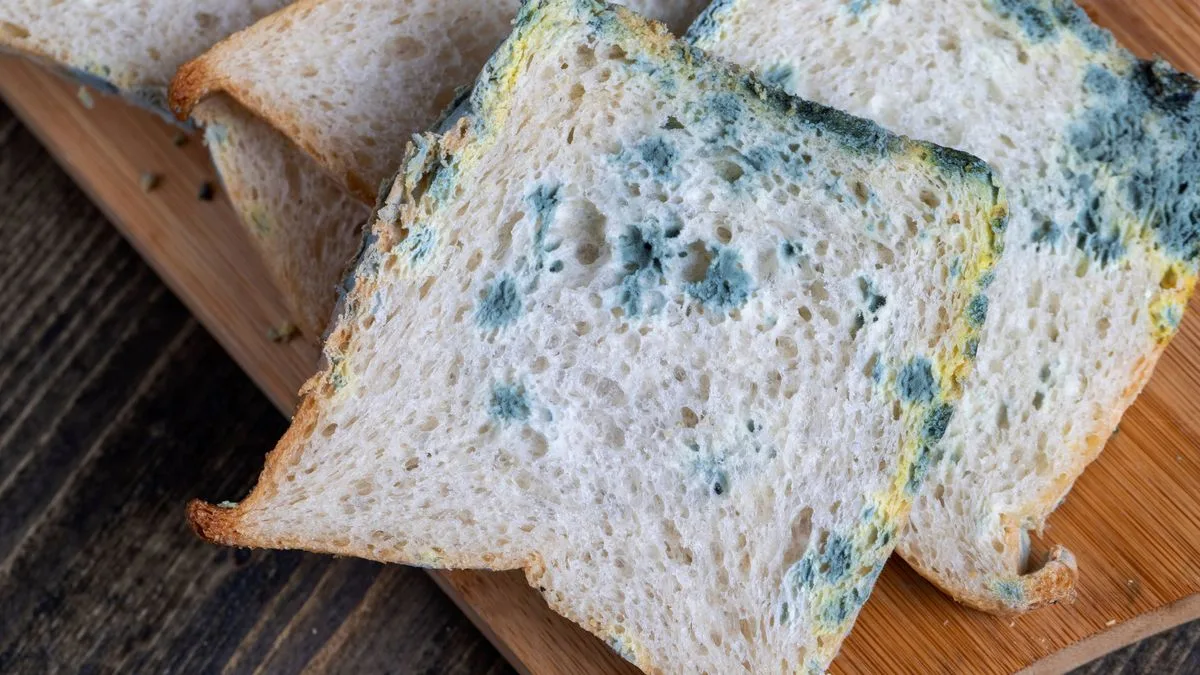
Many people are guilty of simply cutting off the mouldy part of a loaf and eating the rest, but experts are warning that this practice could be putting your health at risk. According to food safety specialists, mould on bread is far more dangerous than it appears, with invisible threads spreading deep into the loaf.
Beth Winters, Technical Manager at The Food WorksSW, explained that the visible fuzzy patches are only the reproductive part of the fungus. Underneath, microscopic hyphae can penetrate much deeper into the bread, meaning that removing the visible mould does not eliminate the contamination. She advises discarding the entire loaf, even if only a small speck of mould is spotted.
Saifur Rahman, Head Chef at Tower Tandoori, echoed this warning, noting that cutting into mouldy bread can drag contamination across clean areas. He also highlighted the risk of mycotoxins, which are toxic compounds produced by some moulds. 'There's no reliable way at home to judge what you're dealing with,' he said, adding that even sniffing mouldy bread can release spores that irritate the airways.
After disposing of mouldy bread, experts stress the importance of thorough cleaning. Ryan Allen, author of Slow Cooker Meals, warned that spores can become airborne and contaminate other foods, such as fruit or items stored in bread bins. He recommends wiping down surfaces and washing any nearby items to prevent cross-contamination.
For healthy adults, accidentally eating a small amount of mouldy bread may cause only mild symptoms like nausea or diarrhoea. However, those with asthma or allergies could experience more severe reactions. To avoid the problem altogether, experts suggest freezing bread if it won't be consumed within a few days.




