
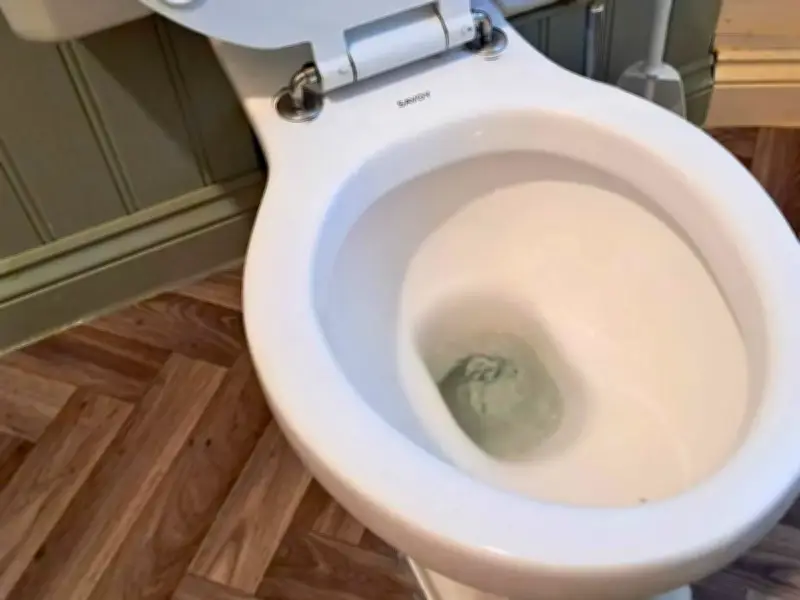
A persistent brown ring around the toilet waterline that resists scrubbing is likely limescale, a hard deposit formed when dissolved minerals in hard water evaporate and bond to porcelain. While bleach and standard cleaners fail to remove it, citric acid — a concentrated powdered form of the natural acid found in citrus fruits — breaks the minerals down into particles that flush away easily.
Why citric acid works
Limescale minerals are predominantly alkaline and can become almost rock-solid over time, so scrubbing makes little difference. Bleach merely lightens the stain while allowing deposits to continue building up. An acidic solution is the only effective way to break down limescale, and citric acid does this without damaging the toilet.
Weaker alternatives like vinegar or fizzy cola drinks may tackle light everyday build-up but are unlikely to shift stubborn stains that have been sitting for some time. Citric acid remains the only affordable product that shifts limescale without vigorous scrubbing afterwards.
How to apply citric acid
Pour around 50g (about three tablespoons) of citric acid into the toilet, followed by approximately 500ml of warm water. Avoid boiling water, as this could crack the porcelain. Do not flush — put the lid down and leave the solution to sit for several hours. Leaving it for at least one hour should work, though for stubborn build-up it may be easier to apply before bed and leave overnight. Once the time is up, flush and the limescale should be completely gone.
Cost and availability
Citric acid can be difficult to find in supermarkets — local Aldi and Lidl stores did not stock it — so checking online first is advisable. It costs £2.25 at B&Q and is also available on Amazon, Savers, Home Bargains, and many pound shops. Applying citric acid once a month is enough to keep limescale from returning.
One crucial safety point: never mix bleach or most standard toilet cleaners with anything acidic, as this can produce chlorine gas. Always wait at least 24 hours after cleaning with bleach and ensure all residue has been thoroughly flushed away before tackling limescale.




