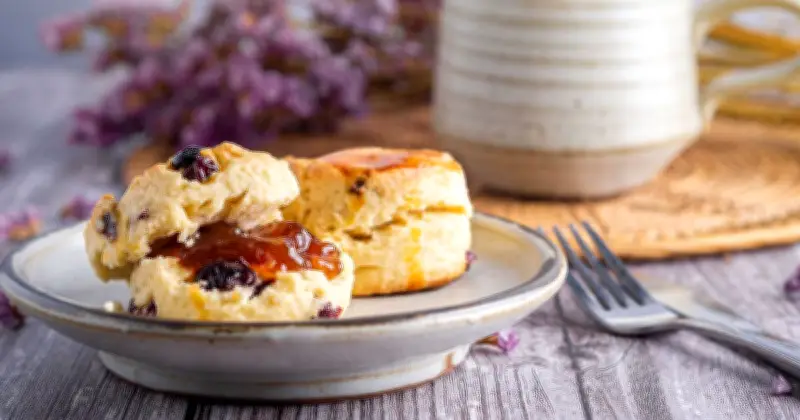
As autumn baking season arrives with National Baking Week starting Wednesday, October 14, chefs and food experts have shared their tips for achieving the tallest, fluffiest scones at home. One surprising ingredient stands out: buttermilk.
Buttermilk for a dramatic rise
Mark McShane, a HACCP and food hygiene consultant, said buttermilk is the best ingredient for the “ultimate tall, dramatic rise” on a scone. He explained that buttermilk's mild acidity reacts with baking powder to create a network of carbon dioxide bubbles that expand rapidly in the oven. This acidity also tenderises gluten strands, allowing the dough to spring upward, and buttermilk's thicker consistency gives the dough structural body.
Kevin Connor, head chef at Audley Scarcroft Park, agreed that buttermilk is better than cream or milk. He noted that buttermilk retains its acid content, which is needed for scones, and is virtually fat-free, making it healthier and lighter than cream.
Mayonnaise as an unexpected alternative
James Buckingham, development chef at Stokes Sauces, recommended a surprising addition: mayonnaise. He explained that mayonnaise contains egg and fat, which can support a tender texture and give structure to the bake. The acidity in mayonnaise can also work with bicarbonate of soda to help produce lift. However, mayo is not a raising agent itself, so it should not be added randomly to the dough.
Flour and butter tips
Sophie Carey, Matthews Cotswold Flour's bakery development manager, said using a fine flour with the right amount of raising agent is vital. Too much raising agent causes scones to rise too fast and topple over; too little makes them dense. She advised rubbing fat into flour until it looks like fine breadcrumbs, with no large lumps of butter, and brushing egg wash with a finger to avoid drips that can inhibit rise.
Olga Stieghorst, head of bakery production at Company Bakery in Musselburgh, Scotland, emphasised keeping butter cold. Cold butter stays in small pieces when rubbed into flour, and as it melts during baking, the water turns to steam, helping lift the dough. Keeping butter cold also limits gluten development, ensuring a tender crumb. She suggested freezing butter for 10 to 15 minutes before starting if you have warm hands or a hot kitchen.