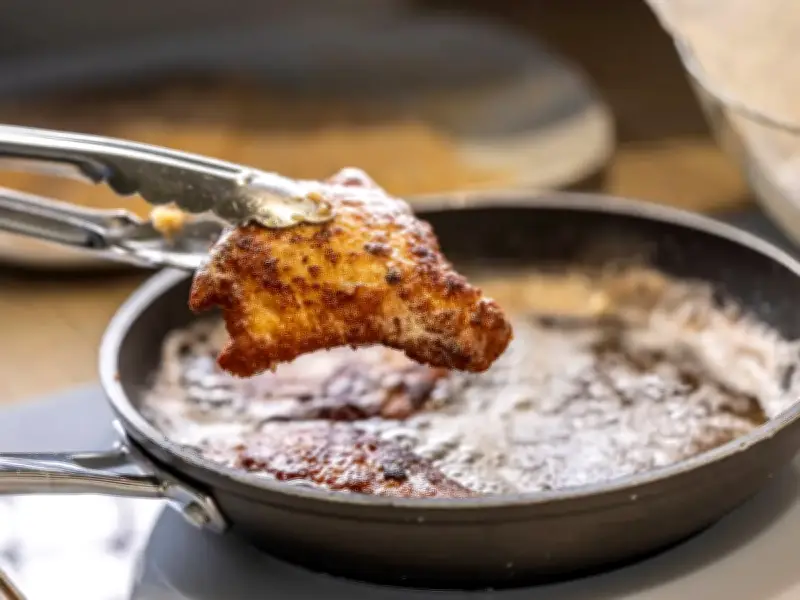
Frying remains a beloved culinary technique embraced by countless cultures throughout history. The method requires cooking food in hot oil to achieve a unique texture and taste. Commonly fried items include chips, chicken, and various vegetables.
A frequent question concerns whether cooking oil can and should be reused following frying. Fortunately, the answer is straightforward.
Oil Shelf Life and Reuse
According to specialists at King Arthur Baking, frying oil has a considerably longer shelf life than many assume. They noted it can be utilised multiple times before requiring disposal. Reusing oil is one of the most effective ways to minimise waste and expenses associated with frying.

The general agreement regarding oil reuse suggests it can be deployed two to three times for breaded, fried items such as chicken. For plain vegetables or potatoes, it may remain viable for approximately four to six applications. However, proper cleaning and straining are essential before any reuse.
Chef Ian Fujimoto's Cleaning Methods
Ian Fujimoto, known as @iankyo on TikTok, boasts over 1.6 million followers and regularly posts his mouth-watering recipes and culinary guidance. In one clip, which has garnered more than 700,000 likes and over 1,000 comments, the chef revealed his approach to using cooking oil.
He explained: "I get asked a lot what I do with my used fry oil. Typically, after you fry something, there'll be lots of little bits stuck in the oil, but that doesn't mean your oil is bad. It just means that you can clean it, cool it and store it again to use later."
To clean the oil, Ian explained that he passes it through a fine-mesh sieve to remove the larger particles while leaving the smaller ones behind. He went on to say: "The other method that I find is way more effective is using a cornstarch slurry. That's one part water to one part cornstarch."
The chef then introduces this slurry into hot oil, observing as all the residue clings to the cornstarch. Ian explained: "It kind of works like gum, where it becomes really sticky and it just grabs hold of everything. Then all we need to do is go ahead and remove it."
When to Discard Oil
The technique works regardless of the type of oil being used, be it sunflower, vegetable, or olive. Ian gets multiple uses from his oil before it needs to be changed. Should the oil develop a sour or paint-like odour, or turn particularly dark and viscous, it must be discarded straight away.