
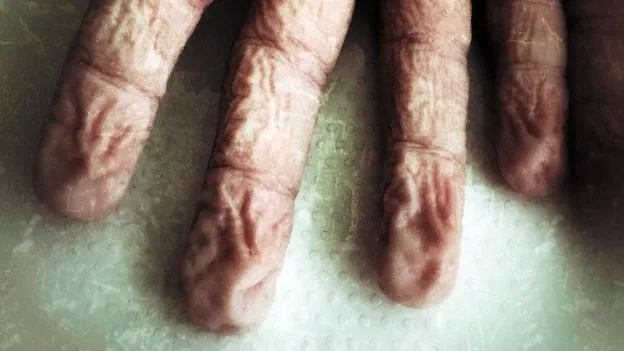
It's a common sight after a long bath or swim: fingertips and toes wrinkled like prunes. While often dismissed as a simple reaction to water, scientists now believe this phenomenon is controlled by the nervous system and could reveal important health clues.
Research shows that only the skin on fingers and toes wrinkles when immersed, not other body parts. The process, which typically begins after 3.5 minutes in warm water (40°C) or up to 10 minutes in cooler water (20°C), is not merely due to water absorption. Studies dating back to 1935 indicate it is an active process regulated by nerves.
In 2003, neurologists Einar Wilder-Smith and Adeline Chow found that wrinkling coincides with reduced blood flow in the fingers. When they applied a local anaesthetic to constrict blood vessels, similar wrinkling occurred, suggesting nerve signals cause blood vessel constriction, leading to skin distortion.
Changes in how fingers wrinkle may point to diseases such as type 2 diabetes, cystic fibrosis, nerve injuries, and cardiovascular problems. For instance, patients with median nerve damage often fail to develop wrinkles, making water immersion a potential bedside test for nerve function.
While the exact evolutionary purpose remains debated, the phenomenon offers a window into autonomic nervous system health. As Nick Davis, a neuroscientist at Manchester Metropolitan University, notes, the pale appearance of wrinkled fingers is due to reduced blood supply near the surface.




