

Women with Rare Birthmarks Run London Half Marathon to Challenge Stigma
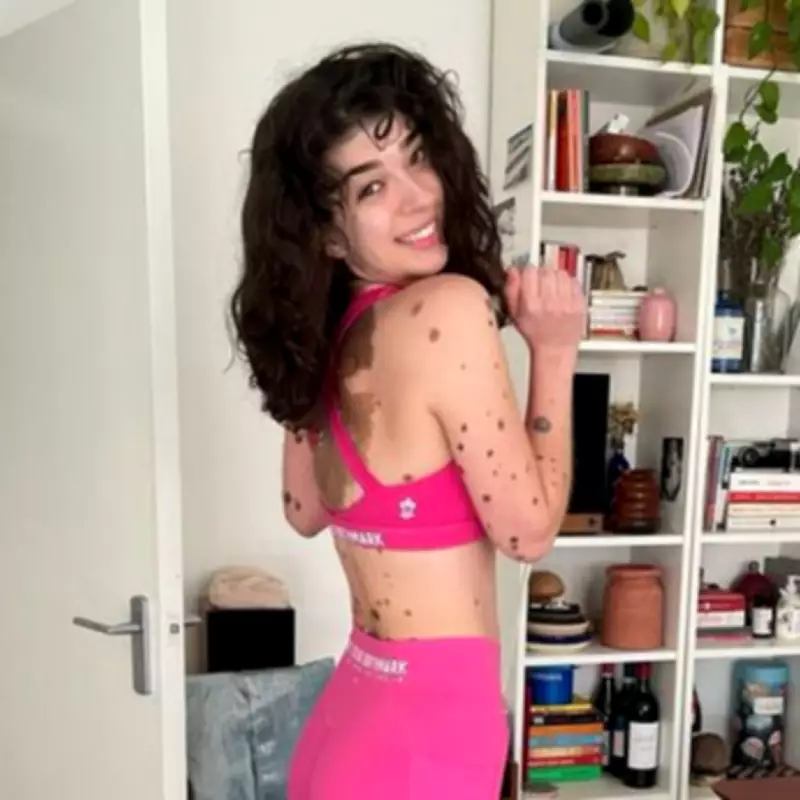
Five remarkable women proudly displayed their rare brown birthmarks while running the London Landmarks Half Marathon last weekend, championing a powerful message to "love the skin you are in." Dressed in vibrant fuchsia pink Lycra gear with backless tops that showcased their unique markings, the runners participated to celebrate the launch of the #BareYourBirthmark national awareness campaign, organized by the charity Caring Matters Now.
Raising Awareness for a Misunderstood Condition
All five women have congenital melanocytic naevus (CMN), a rare genetic condition that presents as large dark brown birthmarks. Affecting only about 1% of newborns, CMN is caused by a non-inherited genetic mutation and can cover up to 80% of the body. Classified as a mosaic disorder, it can sometimes lead to other complexities, including melanoma. The runners aimed to increase public understanding and reduce the stigma associated with visible differences.
Jodie Whitehouse, 45, from Liverpool and CEO of Caring Matters Now, emphasized the campaign's core message. "Confidence doesn’t come from unmarked skin—it comes from loving the skin you’re in," she said. "Scars, birthmarks, skin grafts, skin conditions, and surgical marks all tell a story, and every story deserves to be seen and heard." Jodie ran alongside Helen Stroud, 38, from Harrogate, who also works for the charity; Scarlett Clarke, 20, from Gloucester, a music and dance college student in London; Mia Deschenes, 19, from Edinburgh, studying Art History; and Gemma Whyatt, 31, a doctor from Cambridge.

Personal Journeys of Resilience and Support
Jodie shared her childhood experiences, noting that her birthmark covered 80% of her body, leading to frequent surgeries. "My hospital appointments were often attended by groups of medical students, and it sometimes felt as though I was there to educate others, rather than the focus being on supporting my family and me," she recalled. "People would stare, children would sometimes make unkind comments, and adults would turn away out of awkwardness." Her parents encouraged her to change in communal pool changing rooms to build resilience, a strategy that helped her develop self-confidence over time.
Inspired by connecting with others living with CMN at age 16, Jodie's family established Caring Matters Now, which now supports over 900 people with the condition. Helen, a mother of two boys, shared her own struggles, having undergone multiple surgeries from three weeks old into her early childhood. "As a teenager, I struggled with confidence and hid my birthmarks away for years," she said. "It was only when I was 31 that I discovered Caring Matters Now and finally found others with the same condition. It was life-changing to get the support." Describing the half marathon as "liberating," Helen added that revealing her birthmarks in public for the first time after years of hiding them felt empowering.
Empowerment Through Movement and Community
Scarlett, who studies dance, said that her art form has boosted her confidence. "I’ve always been confident about my skin and never felt embarrassed," she explained. "Dancing has helped me with that. In the summer, when I’m not covered up, people will sometimes stare and ask questions, but I explain to them what the condition is. CMN is so rare, but very visible, and educating people is extremely important." During the marathon, she received supportive comments from fellow runners, which made the experience special.
Gemma recounted nearly 30 operations as a child to remove birthmarks, which left significant scarring. "As I grew into my teens, I became less and less confident," she said. "By the time I was 17, I wouldn’t go on a school trip to a waterpark because of being in a swimsuit." A turning point came during a holiday in Spain when she realized that not all attention was negative. "We wanted to celebrate what we look like," Gemma said about the marathon. "There are so many people living with a visible difference, and we want to normalize it."

Mia noted that people often stare out of curiosity rather than rudeness, due to lack of awareness about CMN. "Other kids my age would ask me what was ‘wrong’ with my back or what had happened to me," she recalled. With support from friends who praised her birthmark as "cool," she learned to embrace her appearance. "Now I’ve learned that you can feel confident whatever your skin looks like, whether you have scars, stretch marks, acne, or birthmarks," Mia said. "All people are beautiful, and that’s what we want our campaign to show."
Inspiring a Movement for Body Positivity
Rachel Croshaw from the London Landmarks Half Marathon praised the runners' courage, stating, "Their courage in running while proudly showing their birthmarks is truly inspiring." The #BareYourBirthmark campaign aims to inspire others with visible differences to join the movement, promoting acceptance and self-love. By sharing their stories, these women hope to foster a more inclusive society where everyone feels proud of their unique skin.





