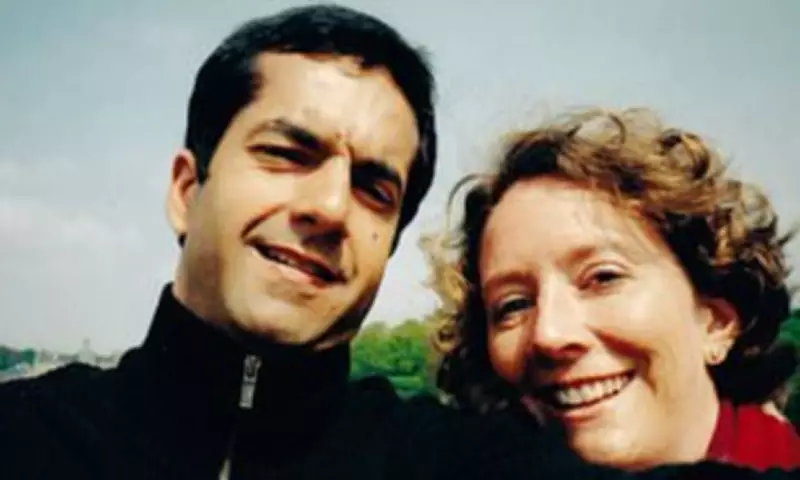
Lucy Driver had struggled with indigestion for years, particularly after her battle with breast cancer. Diagnosed with the disease in 2005, she underwent surgery to remove her left breast followed by rounds of chemotherapy, but was in remission within a year and went on to live without major health problems - aside from the occasional digestive issue.
So, when those symptoms cropped up over the following 15 years - during which she married her husband Jason Venkatasamy and returned to normal life - there was little reason for alarm. That remained the case in March 2022, when Lucy began suffering stomach pain during a hike, initially putting it down to pancreatitis – the term for when the pancreas becomes inflamed.
But the symptoms were the first sign of pancreatic cancer - a devastating disease which is on the rise in the UK, and one that would cruelly claim her life at just 57. Sadly, Ms Driver, originally from Yorkshire, was among the 27 per cent of British women who survive breast cancer only to later receive a second cancer diagnosis.

Mr Venkatasamy, a graphic designer, said his wife 'always seemed to have' problems with indigestion - a burning pain or discomfort in the upper abdomen or chest - after receiving the all-clear from breast cancer. He added: 'It always makes me think back now if that was a continuous symptom of cancer rearing its ugly head.'
The NHS advises that 'heartburn or indigestion that's frequent, very painful or gets worse' can be a symptom of cancer, while Pancreatic Cancer UK advises that it can be a common sign of the disease. One of Ms Driver's main symptoms in the lead-up to her diagnosis was becoming unable to tolerate spicy foods.
Three weeks after her 54th birthday on March 30, 2022 - after abandoning a hike at Seven Sisters in Eastbourne, East Sussex - she went to her GP for blood tests. The results caused such concern that she was told to go to A&E urgently. Mr Venkatasamy said: 'I never thought it would be cancer. It didn't even enter my mind. We just thought it was some sort of pancreatitis or something that could be solved.'
The very next morning, Ms Driver was diagnosed with stage two pancreatic cancer. Around 11,500 people are diagnosed with pancreatic cancer in the UK each year, between 10 and 20 per cent of whom are stage two, but the disease is notoriously difficult both to diagnose and treat.
Common symptoms of the incurable cancer include jaundice - when the skin and eyes take on a yellowish tinge - loss of appetite, weight loss, fatigue, a high temperature, feeling or being sick, diarrhoea and constipation. As it is often caught very late, when treatment options are limited, only 10 per cent of patients live longer than five years after diagnosis - with more than half dying within three months of finding out that they have the illness.
At present, the disease is incurable, with life expectancy just five years from initial diagnosis. Just one in four patients live more than a year. Ms Driver and her husband later met with a private specialist, who Mr Venkatasamy said gave them the 'bad news' that the cancer was 'too big' for immediate surgery and would need to be first shrunk with chemotherapy.
Mr Venkatasamy added: 'When she left the consulting room, she just reduced in size. And then she was so upset because she knew what chemo was going to be like, so that really hit her hard.' Ms Driver had previously undergone chemotherapy 'as an insurance' measure after her breast cancer diagnosis - treatment Mr Venkatasamy described as 'awful, but she got through it'.
Despite trepidation, she endured chemotherapy again, but this time developed painful mouth ulcers that made eating difficult and caused her to lose around 21lbs. The treatment proved effective, though, and her tumour was eventually removed in May 2023. However, doctors later discovered a further 'mass' in her liver, requiring more treatment, before scans in March 2024 showed no evidence of disease.
Mr Venkatasamy said: 'We thought we'd dodged a bullet, as it's very rare to get past pancreatic cancer.' Life returned to normal for Ms Driver. Her hair, which she'd lost during the treatment, grew back. And she even started gaining weight again. But by Christmas time of 2024, the indigestion returned.

Within weeks, scans revealed the cancer had come back and spread to her liver once more. Ms Driver went through more radiotherapy and then chemotherapy, but Mr Venkatasamy said his wife's 'body just couldn't really take that much' more of it by the middle of 2025, so she decided to stop treatment last September.
Pancreatic cancer can tragically wear down its victims by invading nearby organs, blocking the bile and intestinal ducts, and spreading via the blood and lymphatic system to the liver, lungs, and abdomen, eventually triggering organ failure. Ms Driver began palliative, end-of-life care from October via local district nurses who Mr Venkatasamy said 'came around once a week', before her health deteriorated by the end of 2025.
She sadly died aged 57 on January 3, 2026. Mr Venkatasamy said: 'She was very active in her bed and couldn't get comfortable. I remember thinking I should keep her hydrated so I went to the kitchen to get some water. I think she waited for me to get back to the bedroom, and then that's when she passed away. It was a shock because she deteriorated that morning very, very quickly.'
In the aftermath of his wife's death, Mr Venkatasamy said Ms Driver's workplace raised £6,000 in her memory and he wanted to do something of his own to 'mark Lucy's life in some form'. He is now undertaking a 34-day walk over 800 kilometres via Spain's Camino de Santiago this August to raise money for Pancreatic Cancer Action.
Jason said: 'I really want to warn people that pancreatic cancer is pretty much a death sentence. But if you're lucky enough to notice the early symptoms of indigestion or jaundice and react to it straight away, then you've got a fighting chance.'
What is Pancreatic Cancer?
Pancreatic cancer is one of the most lethal forms of the disease, and around 95 per cent of people who contract it die from it. Joan Crawford, Patrick Swayze and Luciano Pavarotti all died of pancreatic cancer. It is the sixth most common cause of cancer death in the UK – around 10,000 people are diagnosed with pancreatic cancer each year in the UK, alongside about 55,000 in the US.
What is the Cause?
It is caused by the abnormal and uncontrolled growth of cells in the pancreas - a large gland in the digestive system.
Who Has the Highest Risk?
Most cases (90 per cent) are in people over the age of 55. Around half of all new cases occur in people aged 75 or older. One in 10 cases are attributed to genetics. Other possible causes include age, smoking and other health conditions, including diabetes.
Why Is It So Lethal?
There is no screening method for pancreatic cancer. Pancreatic cancer typically does not show symptoms in the early stages, when it would be more manageable. Sufferers tend to start developing the tell-tale signs - jaundice and abdominal pain - around stage 3 or 4, when it has likely already spread to other organs.
What Are the Treatment Options?
The only effective treatment is removal of the pancreas. This proves largely ineffective for those whose cancer has spread to other organs. In those cases, palliative care is advised to ease their pain at the end of their life.