

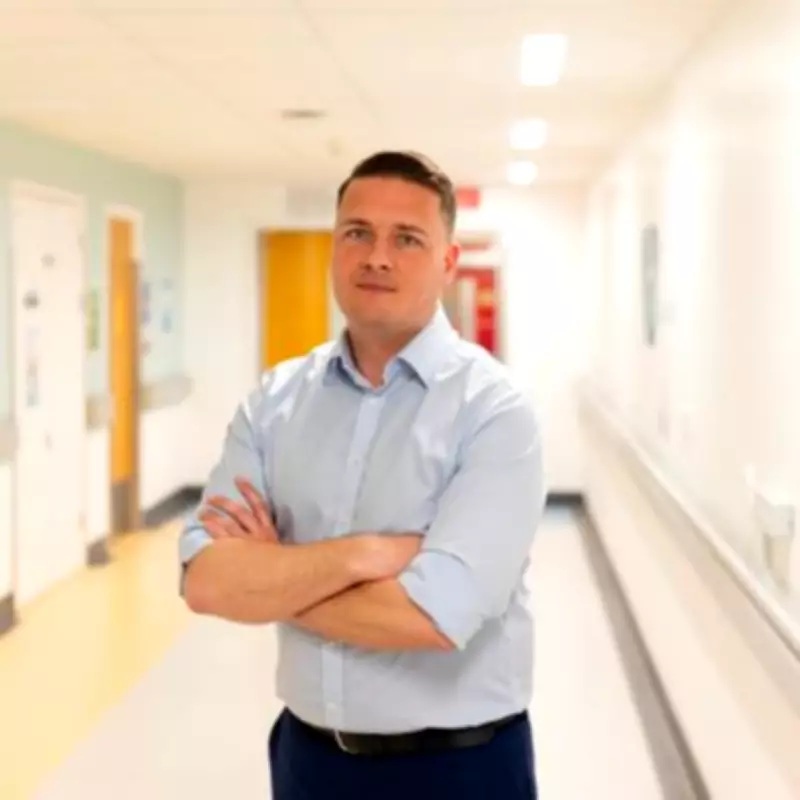
Wes Streeting 'Ashamed' of Corridor Care as NHS Deploys Expert Teams
Health Secretary Wes Streeting has declared he is "ashamed" that patients are being treated in hospital corridors across Britain, as the government launches crack teams to overhaul the worst-performing hospitals.
In an exclusive interview with the Sunday Mirror, Mr Streeting condemned the normalization of leaving sick people languishing on trolleys in inappropriate settings and signaled he would accelerate his pledge to eradicate corridor care by the next general election.
'Undignified and Less Safe'
"I cannot imagine for myself or someone that I love in my own family being on a corridor being remotely dignified," Mr Streeting told the newspaper. "It is certainly undignified, it is certainly less safe, and that's why we've got to get rid of it."

The Health Secretary added: "I've said I want to get rid of this by the end of the Parliament, but if I can do it sooner, I absolutely will and we are keeping a real focus on this."
New Plans to Tackle Crisis
Under new NHS England plans:
- Teams of experts will be deployed to hospital trusts with the worst rates of corridor care to identify and fix systemic problems
- 40 new and expanded urgent treatment centres have been designated across England to ease pressure on stretched A&E departments
- Locations include Birmingham, Leicester, Southampton and Stockport
- 10 new and 4 expanded urgent treatment centres will treat minor illnesses and injuries
- 5 new same day emergency care (SDEC) services and 21 expanded SDEC services will provide rapid assessment and treatment
Corridor Care as 'Type of Torture'
The initiative follows a damning January report by the Royal College of Nursing that described corridor care as a "type of torture." Testimonies from nurses revealed harrowing accounts including:
- Patients treated in freezing corridors, dining rooms, staff kitchens and offices
- One patient left in a chair for four days
- Another patient who died after choking undetected in a corridor
Queen's Hospital Transformation
Mr Streeting spoke to the Sunday Mirror while touring Queen's Hospital in Romford, east London, which was described as a "war zone" last winter with patients lined up in cramped passageways. One corridor had panic buttons and plug sockets installed due to frequent use for patient care.
The hospital has seen marked improvement after introducing a triage scheme where elderly A&E patients are seen swiftly by specialists before being moved to a same day emergency care centre for frail patients. Over nine months, this meant 70% of elderly patients were treated somewhere other than A&E, significantly reducing pressure on the department.
Funding and Implementation
The £215 million funding behind the new centres was first announced last year as part of plans to resuscitate urgent and emergency care. Some facilities will open later this year to increase capacity ahead of winter, though a full timetable hasn't been set out.
NHS England has now formally defined corridor care as 45 minutes or more spent in a clinically inappropriate setting like a hallway or waiting room. Hospital trusts have been ordered to start publishing their corridor care data next month.
Signs of Improvement
Mr Streeting pointed to signs of "green shoots" in the NHS, with waiting lists falling, ambulance response times improving, and better performance on four-hour A&E waits.
"These are all signs of an NHS that's moving in the right direction," he said. "It's not going to be a flick of a switch, overnight transformation. It is consistent, week-by-week, month-by-month, year-on-year improvement."
Immigration and NHS Staffing
The Health Secretary also addressed concerns about NHS staffing amid Home Secretary Shabana Mahmood's immigration reforms, which could double the time to qualify for permanent residence from five to ten years.
"We are so lucky that we've got people from around the world who come to Britain to work in our NHS and social care services," Mr Streeting said. "If they all left tomorrow, the services would collapse."

However, he acknowledged: "We have, I think, at times been over reliant on overseas recruitment. We haven't invested in the training and the development of homegrown talent."
Mr Streeting emphasized his support for emergency legislation to prioritize UK-trained medical school graduates for specialty training places, while describing the Home Secretary's approach to reducing net migration as "similarly sensible."
"I'm bleeding heart liberal on immigration," he stated. "But I think actually, in some ways, it's those of us who are liberal on immigration who I think have a responsibility to look at the numbers sometimes and go, 'This is wildly out of proportion, we've got to deal with it.'"





