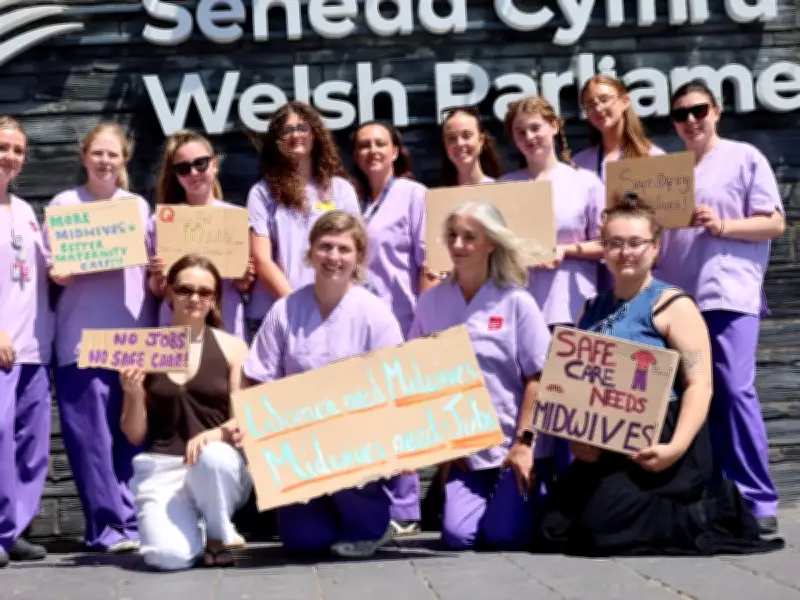
More than 70 nursing and midwifery NHS students who graduated this summer in Wales are still without jobs, in what health bosses describe as a "particularly challenging" situation. Graduate nurses and midwives have said they feel "let down," "worried," and "angry" after years of unpaid work in the NHS during training and having taken out large loans to qualify.
Midwifery graduates face stark job market
Latest NHS new graduate job figures released by Health Education and Improvement Wales (HEIW) show that since the process to match nursing and midwifery graduates to Band 5 NHS jobs began in June, 69 graduate midwives have secured NHS roles while 63 have not. Instead of starting jobs in hospitals, some student midwives have said they are looking at jobs in McDonald's, work on zero hour contracts, or no job at all.
The position is better for graduate nurses, but the roles that group have secured are not always their preference, health bosses admitted. Latest figures this week show for graduate nurses the gap between those seeking jobs and available NHS roles has reduced significantly, from 186 in June to 14 now.

HEIW admits to over-optimistic planning
Additional nursing graduate roles are now available across all regions, HEIW bosses said, but they admitted those jobs may not be what graduates want. "Although the nursing gap has narrowed considerably, available roles do not always align with graduates' preferences," the statement said. "Graduates who have not yet secured roles are therefore being encouraged to consider the full range of suitable opportunities across Wales."
The statement added that whilst the gap between nursing graduates seeking employment and roles currently available across NHS Wales has reduced significantly over the summer, "the position for midwifery graduates remains particularly challenging." In total, 921 graduates have secured roles across NHS Wales this summer.
HEIW is responsible for calculating how many future nurses and midwives Wales needs to train and tells universities running degree courses how many students to recruit. The calculation made three years ago was overconfident. "The number of suitable Band 5 roles available this year was lower than anticipated when education commissioning decisions were made several years ago," HEIW admitted.
Reasons behind the shortage
"Graduates completing their training in 2026 entered education following decisions made in 2022, when NHS Wales was emerging from the Covid-19 pandemic and experiencing high vacancy levels, increasing turnover and significant workforce pressures," the statement continued. Improved workforce recruitment and retention in recent years, together with changes in recruitment patterns, have resulted in lower turnover and fewer vacancies arising than anticipated when workforce plans were submitted four years ago. Alongside increased financial constraints, this has led to fewer suitable Band 5 roles being available this year.
Although the NHS Wales workforce has continued to grow, including a 12% increase in nursing full-time equivalent posts between January 2023 and January 2026, many current vacancies are at higher bands, are in specialist areas or require previous experience, and are therefore not suitable for newly qualified graduates.
Support and future planning
Releasing the latest employment numbers, HEIW said work will continue through the autumn, with health boards identifying further roles and support continuing for graduates who have not yet secured employment. "NHS Wales partners recognise the personal impact of this uncertainty on graduates as they complete their training and prepare to begin their careers," HEIW said.
It has been coordinating an all-Wales response to the graduate jobs shortage by working with health boards, trusts, NHS Wales Shared Services Partnership (NWSSP), Welsh Government, universities and professional bodies, including the Royal College of Nursing and the Royal College of Midwives, to try to find "suitable opportunities" and support graduates who haven't yet got jobs.

Alex Howells, HEIW Chief Executive, said: "While the nursing position has improved considerably since June, we recognise that this remains a difficult and uncertain period for graduates who have not yet secured employment. We understand that the personal impact this uncertainty may have as graduates complete their training and prepare to begin their careers. Our immediate focus is on helping them consider and access the suitable opportunities available across Wales."
He added: "We also recognise the particularly difficult position facing midwifery graduates. A small number of additional roles are expected during the autumn, but these are unlikely to be sufficient for everyone still seeking employment." He said that the Welsh Government and NHS Wales partners will learn from this year to inform future workforce planning.