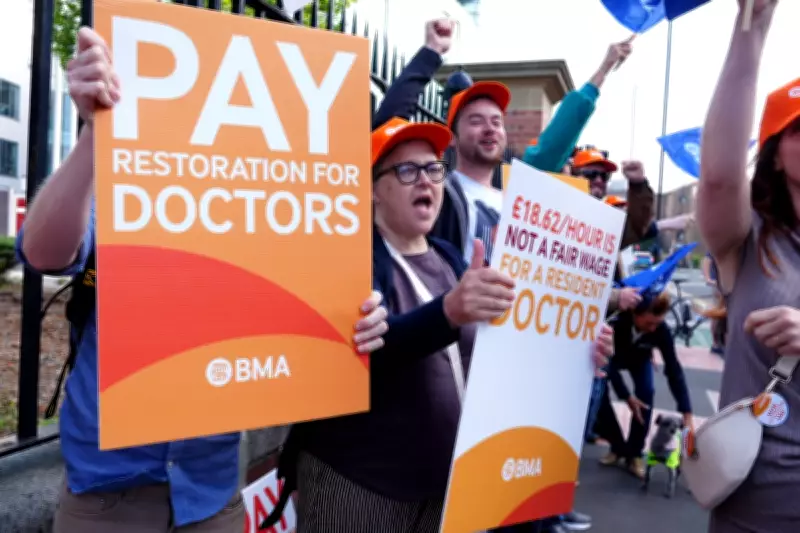
Resident doctors in England are poised to embark on a nearly week-long strike in early April, escalating a prolonged dispute over pay and working conditions within the National Health Service. The British Medical Association has confirmed that industrial action will commence at 7am on 7 April, immediately following the Easter bank holiday weekend, and continue until 6.59am on 13 April.
Starmer's Reckless Accusation and Job Threat
Prime Minister Sir Keir Starmer has condemned the BMA's rejection of the latest pay proposal as "reckless" and issued a stark 48-hour ultimatum on Monday for the union to call off the impending strikes. In a strongly worded article published in The Times, Starmer warned that the government would withdraw an offer of thousands of additional NHS jobs if the walkouts proceed. He emphasised that the NHS would suffer significant damage should the industrial action go ahead, framing the decision as critical for patient care and service stability.
BMA's Firm Rebuttal and Negotiation Stance
BMA Resident Doctors Committee chairman Jack Fletcher responded forcefully, accusing ministers of "effectively moving the goalposts on the deal at the last minute." Fletcher argued that removing potential doctor posts amid existing pressures like corridor care and GP waiting times is detrimental to patients. He stated, "Creating posts and improving patient care should not be dependent on calling off a strike." The BMA leader clarified that any government-imposed deadline would become irrelevant once a credible and sustainable offer is presented. The union remains focused on securing a favourable agreement for both doctors and patients, with plans to re-engage in talks with the government.

Core Issues Driving the Strikes
This upcoming strike marks the 15th such action by resident doctors, formerly known as junior doctors, since March 2023. The central demand is for pay restoration to 2008 levels, which equates to a 26 per cent increase to counteract inflation-driven erosion over the years. Resident doctors are qualified medical professionals in their early training phases, with foundation year salaries ranging from £38,831 to £44,439 and specialist training salaries reaching up to £73,992, inclusive of last year's 5.4 per cent uplift.
While resident doctor pay has risen nearly 30 per cent from 2023/24 to 2025/6, including a 22.3 per cent increase since Labour assumed power, the BMA contends that without an additional 26 per cent boost over coming years, full pay restoration will not occur until 2036. The union seeks revised pay bands of £47,308 to £54,274 for foundation doctors and up to £90,989 for top-tier specialist trainees, negotiated flexibly. Beyond pay, doctors are advocating for reduced competition in specialty training posts, highlighting that many struggle to secure roles despite NHS experience.
Government's Offer and Resident Doctors' Rejection
In December, the government presented a last-minute proposal to increase specialty training posts by 4,000 over three years, reallocated from existing positions. This offer included prioritising UK graduates or those with NHS work history for these roles and funding certain expenses like exam fees. Notably, it did not incorporate any pay increase, with Health Secretary Wes Streeting maintaining a firm stance against reopening pay negotiations. Resident doctors overwhelmingly rejected this offer by 83 to 17 per cent in a subsequent vote.
During a recent speech in East London, Streeting defended the government's approach during previous strikes, noting that they maintained 95 per cent of planned care activity to minimise patient disruption. He contrasted this with predecessors who accepted widespread cancellations during industrial action, asserting a commitment to patient safety and service continuity.
The deepening rift between the government and resident doctors underscores ongoing tensions within the NHS, with the April strike poised to exacerbate pressures already heightened by seasonal flu waves. As the 48-hour deadline looms, both sides remain entrenched, with the outcome hinging on renewed negotiations and potential compromises.