

Two Teenagers Given Second Chance at Life Through Transplant Heroes
Two teenagers, separated by 5,000 miles, are now on the road to full recovery after life-saving stem cell transplants facilitated by the Mirror newspaper. Their remarkable stories have not only transformed their own lives but have also inspired a wave of new donor registrations, potentially saving countless others.
Leo Sproson's Journey Back to Health
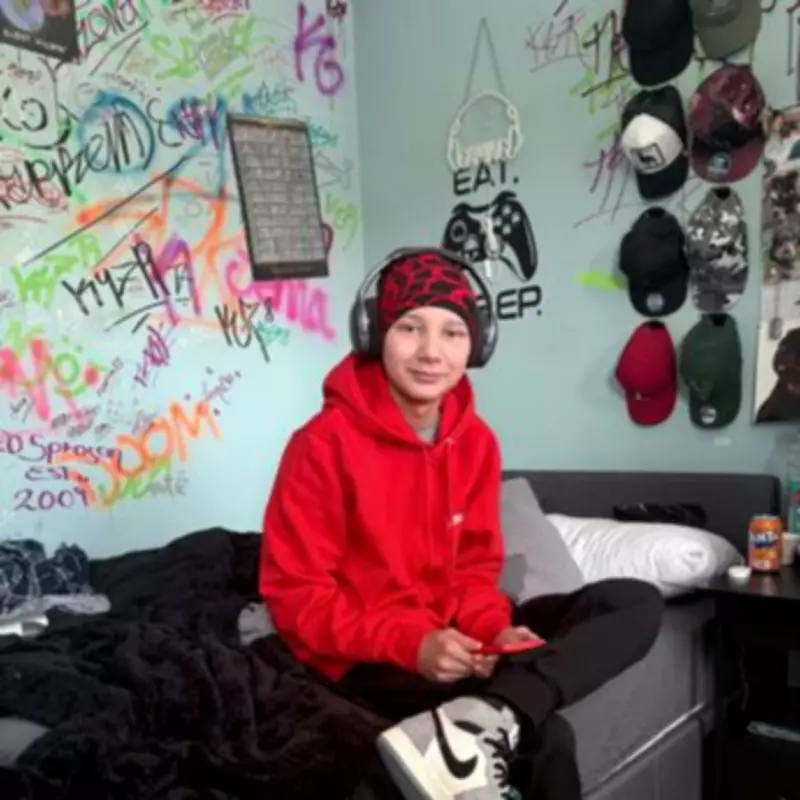
Leo Sproson, a 17-year-old schoolboy from Birmingham, spent five weeks in hospital earlier this year following his bone marrow transplant for leukaemia. He returned home just in time to celebrate his 17th birthday last week with cake, computer games, and new trainers.
His overjoyed mother Jenna Elwell, 42, who runs a pet care business, stayed with him throughout his hospital isolation, even spending her 42nd birthday at Birmingham QE Hospital in January. "He is doing really well, is out of the hospital, and is back home," she reported.

The most extraordinary aspect of Leo's story is that the Mirror's appeal for his donor match resulted in five additional matches being found from people who came forward. "So, at 17, Leo has saved five lives by raising awareness about the need for stem cell donors," Jenna proudly stated. "Not many 17-year-olds can say that."
Jasper Makungu's Recovery in Zambia
Meanwhile, in Kabwe, Zambia - considered one of the most toxic towns on earth - 13-year-old Jasper Makungu continues his recovery at home with his family after receiving a life-saving transplant for sickle cell disease.
His journey began when the Mirror highlighted the plight of Kabwe residents four years ago, meeting his father Jackson who was digging lead for 68p per bag to feed his family. The family had already tragically lost their firstborn son, Jackson Jr., to sickle cell disease at just five years old.
The Mirror teamed up with blood cancer charity DKMS to send Jasper, his 18-year-old sister Mercy (who became his donor), and their mother Carol from Zambia to Bangalore, India for treatment. After 10 months in India, Jasper returned home in December 2024 "full of energy" according to medical staff.
His father Jackson, 48, explained: "He will be indoors for a while and cannot go to school yet. We would like a computer for him to use at home. But we are so grateful that he is better." He expressed profound gratitude to the Indian medical team, DKMS, and the Mirror for saving his son's life.
The Ripple Effect of Their Stories
DKMS spokesperson Bronagh Hughes revealed the broader impact: "We are so grateful to everyone who has joined the stem cell register in response to Leo and Jasper's stories. They have both been able to have their transplants, giving them a vital second chance at life."
However, she emphasized the ongoing need: "There are around 2,000 patients in the UK, and even more across the world, who are still waiting to find a matching donor. By sharing their stories, Leo and Jasper have encouraged thousands of people to sign up as potential donors, giving hope to more patients like them."
The Stark Reality of Donor Shortages
Deborah Hyde, UK spokesperson for DKMS, highlighted the critical situation: "Without a stem cell transplant, children like Jasper who have life-threatening blood disorders will not survive their childhoods. In countries like Zambia, this treatment is not available. Patients have to travel abroad, which is often beyond their means."
The statistics reveal a concerning gap:
- Worldwide, DKMS has more than 13 million potential blood stem cell donors
- The organization has given more than 130,000 second chances at life
- Yet just 3% of the UK's population are registered as potential donors
- A tiny proportion of these are from minority ethnic communities
Sickle cell disease affects approximately 17,000 people in the UK. The sickle-shaped cells become sticky and rigid, clogging blood vessels and damaging organs. While some with the disease die in childhood, others suffer several extremely painful episodes annually. A bone marrow transplant remains the only long-term treatment.
How to Become a Potential Lifesaver
Joining the donor registry is remarkably simple:

- You must be aged 17 to 55 and in reasonably good health
- The process involves painless cheek swabs that take just minutes
- Free kits can be ordered from the DKMS website
Mercy, Jasper's sister who donated her bone marrow and now aspires to become a nurse, exemplifies how ordinary people can perform extraordinary acts. Rakesh Dhanya, CEO of the Sankalp India Foundation where Jasper was treated, continues to monitor his progress through regular blood checks.
These two teenagers' recoveries serve as powerful testaments to medical science, human generosity, and the life-changing impact of raising awareness about stem cell donation. Their journeys from critical illness to recovery have created ripples of hope that extend far beyond their own lives, inspiring a global community to consider becoming potential lifesavers.





