

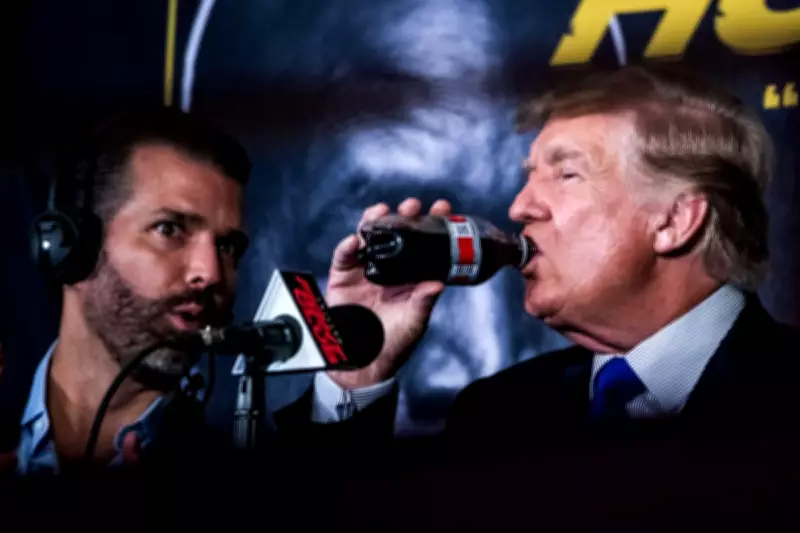
Trump's Unusual Health Belief: Diet Soda as a Cancer Fighter
In a recent revelation, former President Donald Trump has asserted that diet soda may help prevent cancer, a claim that has sparked concern among medical professionals. This information came to light during an interview on the podcast Triggered with Don Jr, hosted by his son Donald Trump Jr., where Dr. Mehmet Oz recounted Trump's unconventional health views.
The Podcast Revelation and Doctor Responses
Dr. Oz, a cardiothoracic surgeon and television personality who currently heads the Centers for Medicare and Medicaid Services, described an incident aboard Air Force One. He noted that Trump was drinking an orange soft drink, specifically Fanta, and defended it by saying, "this stuff's good for me – it kills cancer cells." Trump reportedly based this belief on the idea that since diet soda can kill grass when poured on it, it must similarly target cancer cells in the human body.
In response, physicians have issued public reminders to counter this claim. Dr. Zachary Rubin, a pediatric immunologist from Chicago, humorously pointed out the flaw in this logic, stating that if Fanta's ability to kill grass made it anti-cancer, then bleach would be considered a superfood, which is nonsensical. Similarly, Dr. Owais Durrani, an emergency physician in Texas, posted a straightforward reminder: "Friendly reminder from a doctor, diet soda or soda does not kill cancer cells."

Trump's Dietary Habits and Health Context
Trump has long defended his preference for sweet beverages and fast food, arguing that consuming items from large, reputable chains ensures quality control and helps him avoid illness. During the podcast, Donald Trump Jr. suggested there might be merit to his father's habits, citing Trump's high energy and stamina for his age. This discussion comes as the U.S. health department is updating nutrition guidelines to emphasize "real food," highlighting the ongoing debate over dietary recommendations.
Scientific Evidence on Artificial Sweeteners
Most diet sodas contain aspartame, an artificial sweetener classified by the International Agency for Research on Cancer (IARC) as "possibly carcinogenic to humans" (group 2B). This classification is based on limited evidence, including a 2022 French study of over 100,000 participants that found a 15% higher cancer risk linked to aspartame, though it did not establish causation. Research also indicates that aspartame may affect gut microbiome diversity, potentially impacting metabolic health.
Havovi Chichger, an associate professor at Anglia Ruskin University, has highlighted concerns about artificial sweeteners damaging intestinal walls and beneficial gut bacteria. However, while science explores potential risks, there is no evidence supporting diet soda as a cancer cure or preventive measure.
Broader Implications and Historical Context
This incident echoes past controversies, such as Trump's suggestions during the COVID-19 pandemic about using disinfectants or light internally for treatment. Dr. Rubin referenced this, joking about an AI image of Trump in healing robes. The episode underscores the importance of evidence-based health information, especially as public figures influence dietary perceptions.
Ultimately, while Trump's claims have sparked discussion, medical experts unanimously agree that diet soda does not possess cancer-fighting properties, urging the public to rely on proven health practices.






