

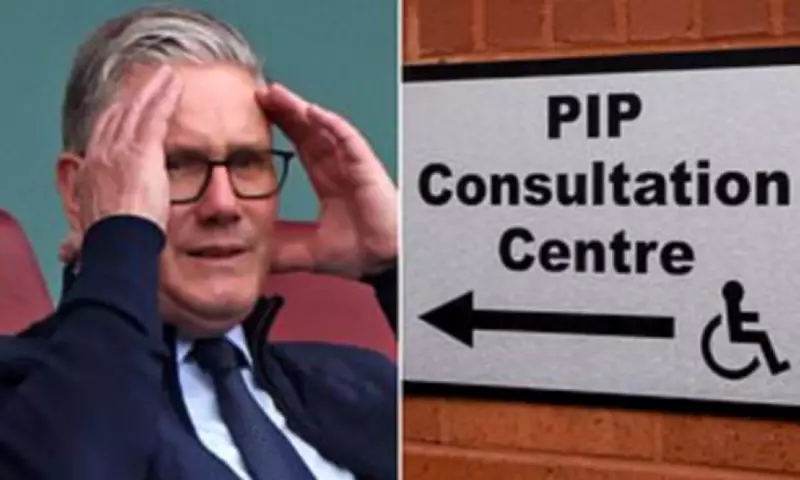
Taxpayers Footing £800 Per Minute Bill for Anxiety Disability Benefits
British taxpayers are now funding disability benefits for anxiety at a staggering rate of £800 every single minute, according to exclusive revelations. The cost of Personal Independence Payments (PIP) specifically for anxiety disorders has skyrocketed from under £100 million in 2019 to nearly £427 million last year under rules that allow claimants to receive payments without ever consulting a medical professional.
System Allows Qualification Without Medical Evidence
The benefit, which provides up to £194 weekly, can be awarded based solely on a personal diary or a letter from a friend describing how anxiety impacts daily life. Unlike many other benefits, PIP payments are not means-tested and recipients are not required to stop working to qualify. This means a full-time company director earning a six-figure salary can receive exactly the same payments as anyone else meeting the criteria.
Critics argue these figures demonstrate that Britain's benefits system has spiraled out of control, with total PIP spending projected to increase from £26 billion annually to £38 billion within just five years. The situation has become so concerning that it prompted a major political confrontation last year.

Political Climbdown After Labour Rebellion
Sir Keir Starmer suffered a humiliating retreat when he abandoned plans to tighten PIP rules just 90 minutes before a Commons vote, following the largest rebellion of his premiership. Ministers had proposed requiring claimants to prove they struggled significantly in at least one area of daily life, rather than qualifying by accumulating minor difficulties across multiple areas.
The plan collapsed after 126 Labour MPs threatened to block it, with rebels arguing the changes would push disabled people into poverty. This political failure has allowed the current system to continue unchanged.
How the Points System Works
PIP assessments operate on a points system across 12 daily living and mobility activities, ranging from washing and cooking to socialising and planning journeys. For example, needing prompting to socialise scores two points, while being completely unable to manage social situations scores eight points.
Just eight points from a possible 72 triggers the standard daily living rate of £73.90 weekly, with a separate mobility component adding up to £77.05 on top. Under current rules, a person who needs occasional prompting to socialise, takes slightly longer to cook, requires reminding to wash, and finds travelling stressful can accumulate enough points to qualify for payments without any formal diagnosis or doctor's note.
Post-Pandemic Surge in Mental Health Claims
Since the COVID-19 pandemic, there has been an explosion in payments for psychiatric disorders, which now account for over 40% of all PIP claims. The Institute for Fiscal Studies reports that mental health conditions represent 55% of the increase in disability benefits spending.
This surge has created a thriving cottage industry of unregulated, no-win, no-fee firms that coach applicants through the process, taking up to 60% of any backdated payment secured. Unlike PPI claim firms, which are legally limited to 20% of any payout, benefit claims companies face no fee limits and answer to no regulator.
Social Media and AI Exploitation
On platforms like TikTok, accounts with hundreds of thousands of followers coach people on exactly which words to use and how to describe symptoms for maximum effect. Think-tank Policy Exchange discovered last month that AI chatbots are generating model answers for PIP claim forms, even when users state they have no medical evidence for their condition.
The system's vulnerabilities have enabled significant fraud cases. Last month, Cath Wieland, 33, from West Sussex received a suspended jail sentence after the Department for Work and Pensions discovered she had been surfing and ziplining in Mexico and visited Thorpe theme park three times while claiming her anxiety was so debilitating she was housebound.
Wieland fraudulently obtained £23,000, spending the money on acrylic nails, tanning sessions, a private Harley Street dentist, 76 beauty appointments, and 60 visits to pubs, clubs, and restaurants while telling the DWP she could not cook, wash herself, or travel alone.

Additional Fraud Cases Exposed
In another case, Sara Morris, 50, from Stone, Staffordshire, told the DWP her anxiety left her unable to leave the house, yet she competed in 73 races as a running club member. Her own Facebook posts exposed the fraud, leading to her conviction for fraudulently claiming £20,528 and an eight-month prison sentence in July 2024.
Official statistics reveal that in the year to January, 66,818 people in England and Wales listed anxiety as their primary disability condition, collecting an average of £122.77 weekly and running up a taxpayer bill of £426.5 million annually.
Broader Mental Health Claims Increasing
The total number claiming PIP for attention-deficit/hyperactivity disorder (ADHD) has surged from 24,697 to 91,181 in six years, while those receiving it for autism has risen from 61,641 to 210,605, at a combined annual cost of £2.4 billion.
Reform Treasury spokesman Robert Jenrick stated: "The eyewatering amount we spend on mild mental health conditions is absurd. It is offensive to the hardworking majority that so much of their taxes is being wasted. The spiralling benefits bill now threatens to bankrupt the country."
Shadow work and pensions secretary Helen Whately added: "Millions are getting benefits for anxiety and ADHD, along with a free Motability car. The bill is too high and the system is broken."
Private Firms Profiting from System
An investigation has exposed how private firms are cashing in on Britain's disability benefits boom by coaching claimants through the system in exchange for pocketing substantial portions of government payouts. These companies, often registered as non-profit advice services, pay their directors hundreds of thousands of pounds annually due to extraordinary success rates.
One company, PIP Help, charges "50 per cent plus VAT" of any back pay awarded from the DWP, with directors' annual pay ballooning from £6,200 in 2023 to £148,000 last year. Another firm, Fightback4Justice, charges £518 in combined fees for helping with appeals plus £500 of any back pay awarded, with director pay rising from £14,800 in 2016 to £125,184 last year.
These firms provide detailed templates for evidence letters and daily diaries, with suggestions like "I was nervous and anxious about going to the doctor… my husband came in with me as I get so flustered I can't remember what I need to say" under the "communicating" section.
A DWP spokesman responded: "We recognise that the welfare system we inherited is in need of reform, which is exactly what we are doing. Our recent changes to Universal Credit narrow the gap between payments for people on health-related benefits and those actively seeking work - with an expected saving of nearly £1 billion for the taxpayer and the removal of perverse incentives that drive sickness claims."
The department added: "We condemn those who charge people for help with PIP applications and exploit our system for financial gain. We are protecting taxpayers' money with the biggest fraud crackdown in a generation - as part of wider plans that will save £14.6 billion by 2031."





