

Health Secretary Issues Stark Warning Over Doctors' Pay Demands
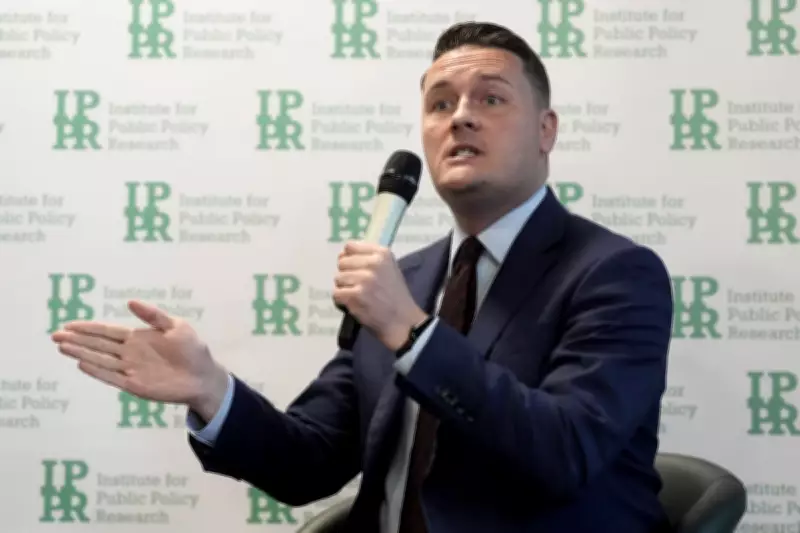
Health Secretary Wes Streeting has delivered a forceful critique of striking doctors, asserting that if "everyone was demanding the same" as resident physicians, "we would be breaking this country." The minister's comments came during a speech at the Institute for Public Policy Research in central London, where he addressed the ongoing industrial action that has plagued England's healthcare system.
The Financial Reality of Pay Restoration
Mr Streeting revealed that meeting the British Medical Association's demands for full pay restoration for resident doctors would cost approximately £3 billion annually. However, he warned this figure could balloon to a staggering £30 billion per year if other NHS staff members received comparable pay increases. "Not unreasonably, I think other staff would have something to say about that: 'We'd like some of that too,'" the Health Secretary remarked.
The minister emphasized the broader implications of such expenditure, noting that £30 billion exceeds the entire budget for the criminal justice system. "Before you know it, just by doing that one thing, full pay restoration for NHS staff... we've just spent, just like that, more money than we spend on the entirety of the criminal justice system," Streeting stated.

Strike Action's Impact on NHS Resources
As doctors in England returned to work following their sixth consecutive day of industrial action—the fifteenth such strike since 2023—Streeting highlighted the financial consequences of these disruptions. He noted that approximately £300 million had been lost during the six-day strike period, funds that could have been allocated to other critical areas within the health service.
"I feel like we've turned the ship, the boat's going in the right direction, except some of the crew are trying to row in one direction while the rest of us are going in the other," Streeting observed, employing maritime imagery to describe the current impasse. "You can't make progress that way."
The Health Secretary acknowledged that pay erosion had occurred under previous Conservative administrations but stressed that resident doctors represent just one segment of the NHS workforce. With responsibility for approximately 1.5 million NHS employees and an equivalent number in social care, Streeting emphasized that many healthcare workers earn substantially less than even the lowest-paid doctors.
Defending the NHS Funding Model
During his IPPR address, Streeting vigorously defended the current tax-funded NHS model, citing recent research that concluded shifting to a European-style insurance system would not improve performance. The IPPR study attributed the health service's challenges to "chronic underinvestment" rather than structural flaws in its funding mechanism.
Experts involved in the research noted there is "no structural silver bullet" for the NHS and described discussions about adopting systems similar to those in Germany, France, or the Netherlands as "a pointless distraction."
Streeting issued a stark warning about alternative proposals, particularly those advocated by Reform UK leader Nigel Farage. "If Reform UK leader Nigel Farage became prime minister, 'there will be no NHS,'" the Health Secretary declared, referencing Farage's stated preference for an insurance-based healthcare system.
Progress Amidst Challenges
Despite the ongoing disputes, Streeting reported several positive developments within the NHS. Waiting lists have reached their lowest level in three years, four-hour waiting times in Accident and Emergency departments this winter were the best recorded in four years, and ambulance response times have improved to their fastest rate in half a decade.
The Health Secretary also noted increased productivity within the service, with efficiency growing at 2.7 percent. However, he sounded an alarm about shifting public attitudes, revealing that a recent survey indicated half of millennials plan to utilize private healthcare within the next year.

"Employers are finding medical insurance an attractive incentive for young recruits," Streeting cautioned. "That presents an existential crisis for the NHS. If a generation of patients opt out, they will eventually ask why they are paying so much in tax for a service they no longer use."
The minister warned this trend could exacerbate health inequalities and jeopardize the NHS's future, concluding that "the case for the NHS needs to be remade and re-won" through modernization that addresses contemporary societal needs.
Ultimately, Streeting called for greater perspective from the BMA, stating: "We all have a stake in this. We all have to pull together as a country, and if everyone was demanding the same as resident doctors, and if everyone was behaving the same way as resident doctors, we would be breaking this country. I think it's time they got a bit of perspective."





