Prime Minister Pledges Confrontation with Tech Giants Over Child Protection
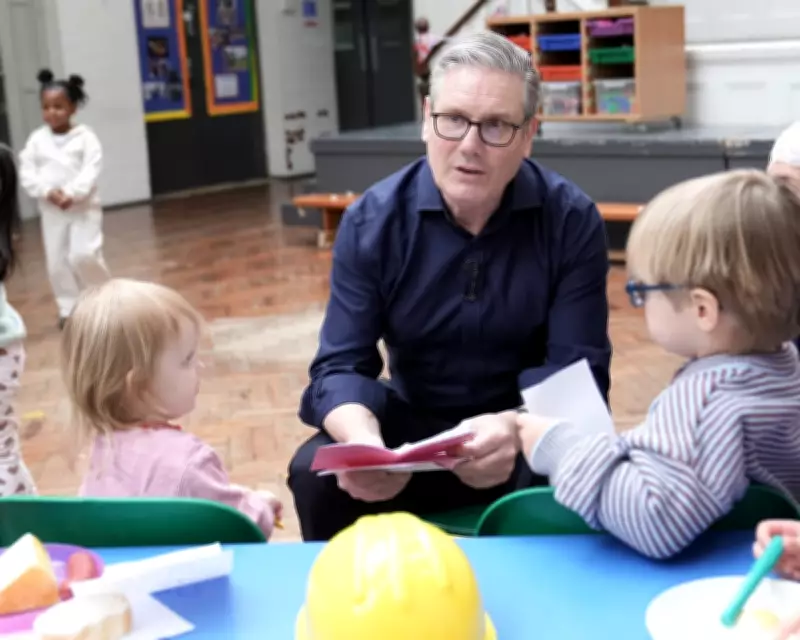
Prime Minister Keir Starmer has vowed to engage in a direct "fight" with social media companies as part of a concerted government effort to limit children's exposure to addictive digital content. This bold declaration came during a visit to Rosendale Primary School in West Dulwich, south London, where Starmer launched new official screen-time guidance aimed at protecting young minds.
New Screen Time Guidelines for Early Years
The comprehensive guidance, developed by a panel led by Children's Commissioner Rachel de Souza and adolescent health expert Professor Russell Viner, establishes clear boundaries for digital consumption. For children under two years old, screen time should be completely avoided except during shared activities with caregivers. Meanwhile, children aged two to five are advised to spend no more than one hour daily on screens, which includes tablets, laptops, mobile phones, and television.
"When there's a lot going on, when children are having a tantrum, trying to find something to distract them is an obvious thing," Starmer acknowledged. "I don't think parents and carers have had any guidance at all yet about what would be appropriate, what might be best."

Potential Social Media Bans and Regulatory Measures
The government is actively considering Australia-style measures that could potentially limit or completely ban social media access for children under 16. This forms part of a broader consultation examining:
- Age restrictions on social media platforms, gaming sites, and AI chatbots
- Limitations on addictive design features and risky functionalities
- Enhanced support systems for parents and families navigating digital challenges
"Some of this will require a fight," Starmer emphasized. "If we're going to do more to protect children, we're going to have to fight some of the platforms that are putting the material up there because they're putting this addictive stuff up there for a reason. They want more children to spend more time online and we've got to fight them and be clear whose side we're on here."
Specific Recommendations for Healthier Screen Habits
The guidance provides detailed recommendations for creating healthier digital environments:
- Bedtimes and mealtimes should be completely screen-free zones
- Families should avoid fast-paced social media-style videos for young children
- Toys or tools utilizing artificial intelligence should be approached with caution
- Shared screen activities like video calling relatives or viewing photos together are preferable to solo usage
- Alternative activities including background music, table games, bedtime stories, and coloring are encouraged
Professor Viner explained the rationale behind these recommendations: "Too much solo screen time can crowd out the things that make the biggest difference – sleep, play, physical activity and talking with parents and carers."
Alarming Statistics and Developmental Concerns
The government revealed that approximately 98% of children are already watching screens daily by age two. Research from the Education Policy Institute indicates that infants with the greatest screen time are significantly less likely to be regularly read to or taken on outdoor excursions, with measurable impacts on language development.
The expert panel's review found that prolonged solo screen usage negatively affects crucial developmental activities including sleep patterns, physical activity, creative play, and meaningful interaction with parents. However, they noted important exceptions for children with special educational needs and disabilities who rely on screen-based assistive technologies.

Professional Endorsement and Parental Challenges
Dr. Mike McKean, Vice-President for Policy at the Royal College of Paediatrics and Child Health, welcomed the guidance as essential for protecting "short, but developmentally crucial early years." He noted: "The growing emphasis on online and digital spaces has made childhood an even more challenging period for parents to navigate. For many years now parents and professionals have been forced to play a dangerous game of catch up, desperately trying to find the right balance for their children."
The panel further recommended that parents reflect on their own screen usage in front of children and consider implementing screen-free periods for the entire family. The ultimate goal is to help children establish healthier relationships with technology, ensuring screen usage doesn't compromise their readiness for formal education.