Family's Desperate Race Against Time to Save Daughter from Childhood Dementia
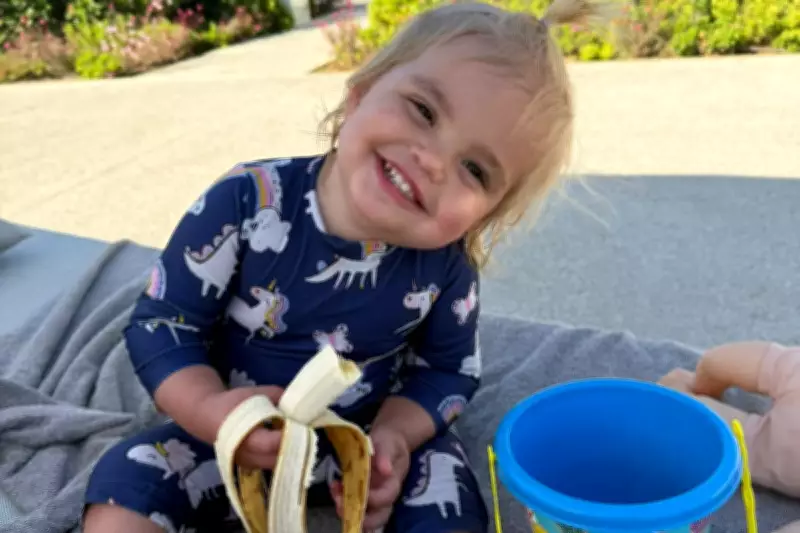
Six months ago, Emily Forrester had no inkling that behind her daughter Leni's radiant, infectious smile lay a devastating medical battle. The toddler displayed no outward signs of illness, offering no hint that anything was amiss. Yet concealed within that cheerful exterior was a catastrophic genetic condition.
The Devastating Diagnosis
The first warning emerged when a close relative underwent routine genetic testing and discovered they carried the gene for Sanfilippo syndrome, a rare disorder that leads to childhood dementia. Medical professionals initially reassured the family that Leni was highly unlikely to be affected. However, the test results prompted her parents to pursue further genetic investigation for their daughter.
What followed was a heartbreaking revelation. Just one week before her second birthday, Leni received a formal diagnosis of Sanfilippo syndrome. This genetic condition stems from an enzyme deficiency that prevents the body from breaking down specific molecules, resulting in catastrophic brain damage over time. Children affected by the disease experience progressive loss of memory, speech, mobility, and face premature death.

The Critical Treatment Window
Currently, there exists no cure and no approved treatment for Sanfilippo syndrome within the United Kingdom. However, Leni could potentially be spared this bleak future if she receives critical treatment within the next six months, before she reaches three years of age.
"If she has to wait six months, that could mean she can no longer talk. If she waits twelve months, that could mean she loses the ability to walk," explained Ms. Forrester. "It is a race against time."
Life-saving treatment for Leni and other children with this genetic disorder does exist, but access remains blocked by insufficient funding. "Getting the treatment could completely change the trajectory of her life, and she could go on to live normally with no symptoms," the devoted mother emphasized.
The Cruelty of the Condition
"This condition is particularly cruel because children develop normally until around two or three years old," Ms. Forrester described. "So you get a glimpse of what kind of person they would be if all was normal. Then it gets ripped away from you in a ten-minute phone call where you get the most catastrophic diagnosis you can imagine."
Without timely intervention, or any treatment at all, the outcome will be fatal. A clinical trial for a promising treatment is expected to commence in the United States later this year. Leni's parents are urgently calling for government assistance to fund the research, enabling UK patients to participate.
The Treatment Mechanism and Funding Crisis
The proposed treatment involves replacing the missing enzyme in children with Sanfilippo by implanting a permanent port in their brains. The body is then regularly flushed with the enzyme via this port weekly for the remainder of the patient's life, as their bodies cannot produce the enzyme independently.
This clinical trial was previously conducted by Great Ormond Street Hospital in London over six years. It reached advanced phases with effective results but was ultimately terminated due to funding shortages. Children who had developed normally while on the trial subsequently declined once funding ceased.
An alternative option involves gene therapy treatment developed by UK-based Professor Brian Bigger. However, his research cannot progress to clinical trials without substantial financial backing.
The Financial and Political Landscape
The cost of funding the US clinical trial stands at £5.5 million. "For an individual, £5.5 million is a huge amount. But for a nation, it is not," Ms. Forrester asserted, as she called on the government to expand newborn screening to detect rare genetic conditions earlier and allocate more funding to accelerate transformative treatments.

Ms. Forrester acknowledged singer Jesy Nelson for using her platform to raise significant awareness for Spinal Muscular Atrophy, which affects her twin daughters, and for meeting with the health secretary. However, she noted that families without celebrity status struggle to receive responses from senior politicians.
"Politicians should prioritize meeting families suffering with genetic disorders, not only celebrities to get their screen time," she urged. "These children have been pushed to the side. There is no support for the families, even though the impact of childhood dementia is the same as childhood cancer; there is a huge difference in research and funding."
Charity and Government Responses
Bob Stevens, CEO of the MPS Society, a charity supporting people with Mucopolysaccharide Diseases including Sanfilippo, revealed he was promised a meeting with Health Secretary Wes Streeting last summer, but it never materialized. Ms. Forrester's local MP, Laura Trott, has also requested a meeting with Mr. Streeting, which remains unanswered.
"The UK currently screens for far fewer conditions than many comparable countries, meaning families are often diagnosed only after crucial time has been lost," Mr. Stevens stated. "There is no scientific reason that we cannot screen for many of these diseases, but we know it comes down to money. For conditions like MPS III, early diagnosis is essential as new therapies move closer to reality. If we treat early, then a far better outcome will be achieved for families."
A Department of Health and Social Care spokesperson responded: "We are making sure patients with rare diseases, like Sanfilippo syndrome, get a definite diagnosis faster, while improving access to specialist care, treatment, and drugs. At the same time, we are working hard to find new ways to slow down the progress of the dementia, speed up diagnosis, and improve our understanding of the disease."
Leni's parents have established a GoFundMe page to raise funds for her treatment and to increase awareness of Sanfilippo disease, highlighting the urgent need for action in this critical six-month window.