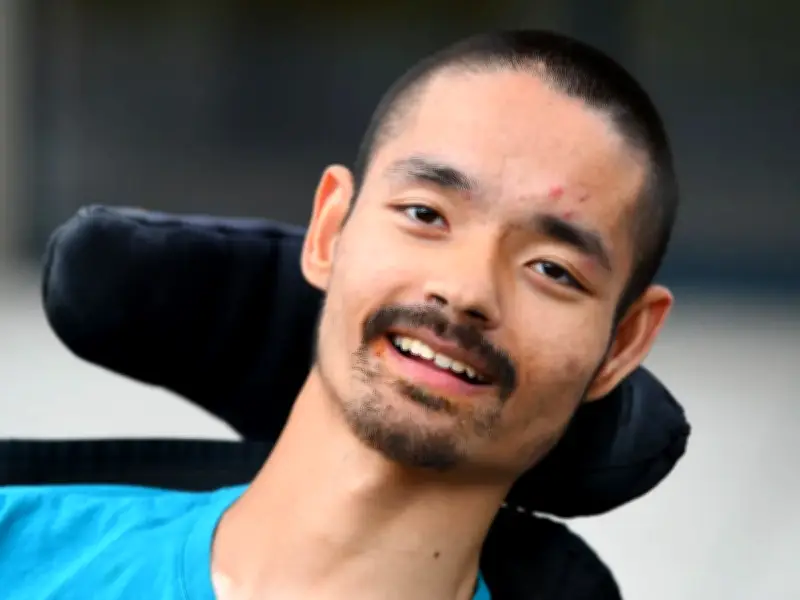
Harin Ellis, 25, from Sefton Park, is calling for a patient-led traffic light system for hospital discharges after an experience he says left him feeling unsafe, and he wants to take his campaign to Prime Minister Andy Burnham.
Mr Ellis was born prematurely at 27 weeks and weighed only 1lb. His parents were told by doctors he would "not survive", but he did. He has cerebral palsy, a lifelong condition that affects the ability to move. People with cerebral palsy have a higher risk of developing urinary tract infections (UTIs) due to how the condition affects the nervous system and muscle control of the urinary tract.
Mr Ellis picked up a UTI infection and was admitted to hospital as a result last month. Before being discharged, he told staff that he did not feel safe to leave. The primary reason he felt unsafe returning home was that his flat, which has supported living arrangements, currently lacks a working fire exit, meaning it would be difficult to get him out if the infection flared up again or in another emergency. Despite explaining this, Mr Ellis claims a hospital staff member dismissed his concerns.
Traffic light discharge proposal
Mr Ellis said a "traffic light system" for hospital discharges could help improve everyone's treatment in the NHS. Under his proposal, a patient saying 'red' would signal they do not feel ready or safe to go home, yellow would mean extra support is needed and green would show they feel safe.
Mr Ellis told the ECHO: "Before they discharged me, I said to them, 'I don't feel safe.' Then I was spoken to by a hospital worker. And one of the things he said made me think, hang on, this can't be right.
"I've not got a safe fire exit to exit my flat. The landlord fixed it and then it broke again. That was the main reason why I didn't feel safe to come home. But the hospital worker just said, 'you've got staff there, you'll be fine.'"
"His exact words were, 'I have these conversations every day, I know this is not what you want to hear.' For me, as an active campaigner and as a patient, I don't feel that I should be spoken to like that. Every patient should have the right to feel heard."
Campaign for wider change
Mr Ellis, who says his UTI infection now appears to have been cleared up, believes the traffic light system could improve healthcare across the country. He said: "This is the whole reason why I've started this campaign because, if I felt like this, how does everyone else feel?
"It's about other young people as well, young people that might have had bigger surgeries. Their families might not feel safe. I would really like this traffic light system to be rolled out across the whole UK.
"I know this patient led traffic light system won't change everything overnight, but I truly hope it will help take some pressure off the NHS and calm things down for patients and staff alike."
Drawing on his experience of living with cerebral palsy, Mr Ellis has consistently campaigned for the lives of disabled people to be improved. He has previously urged Liverpool City Council to make its Christmas markets more wheelchair friendly. He has also argued that more hotel rooms should include a profiling bed and a ceiling hoist, which disabled people like him need to sleep.
Mr Ellis has set up a petition about his latest call for change and wants to take it to the highest levels. He said: "It's not about attacking the NHS, in any way shape or form. It's to try and make the NHS better.
"I'm not doing this for fame. It's to try and speak to Andy Burnham to say, 'look, you've been saying from day one you want to fix the care system, but I've found a way to fix it.'"
Government response
Mr Burnham has made introducing a National Care Service a key pledge of his premiership, arguing greater coordination between different care services and the NHS will ensure people can get the best treatments they need at the right location. However, the National Care Service will only apply to people aged 65 and over.
A Department of Health and Social Care spokesperson told the ECHO: "We applaud Harin Ellis's campaigning on this important issue.
"It's important that people are discharged from hospital at the right time, and we are working with trusts and local authorities to ensure they follow best practice.
"This process should be driven by dignity and respect. Patients should be offered options for care and support they receive afterwards, and they and their families and carers should be kept informed and involved at every stage."
The ECHO also approached NHS England for comment.