

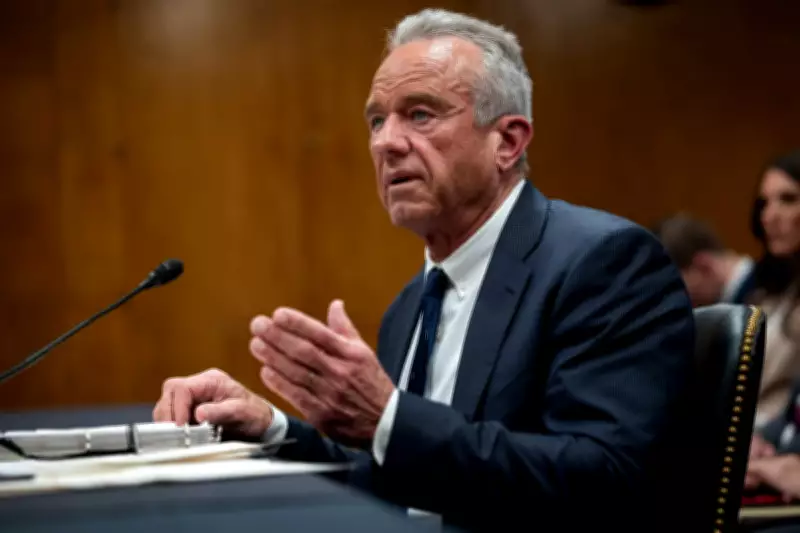
Health Secretary Robert F Kennedy Jr encountered rigorous interrogation from US senators during a Senate Finance Committee hearing on Wednesday, primarily focused on the administration's response to the measles outbreak and the dissemination of vaccine misinformation.
Senator Wyden Criticizes Vaccine Messaging
In his opening remarks, Senator Ron Wyden lambasted Kennedy's approach to vaccines, stating, "When it comes to vaccines, Robert Kennedy has used this once-in-a-lifetime platform to make parents doubt themselves and doubt their doctors." Wyden added, "The secretary has ducked, bobbed, and weaved without taking the responsibility of saying what needs to be said: vaccines save lives in America." This set a contentious tone for the proceedings, highlighting deep concerns over public health communication.
Tensions Over Measles Outbreak
The discussion intensified when addressing the measles outbreak, with Wyden directly challenging Kennedy's longstanding vaccine views. Kennedy has repeatedly distanced himself from responsibility for the outbreak during recent Capitol Hill appearances. Public health experts argue that Kennedy failed to strongly advocate for vaccination, instead promoting unproven treatments like steroids as the virus spread across state lines.

Kennedy defended his position, asserting, "I had nothing to do with the measles outbreak here. We have limited our outbreak better than any country in the world." He noted that Mexico and Canada reported higher case numbers, but the US recorded 2,288 measles cases last year—the highest since the disease was declared eliminated 25 years ago. Another 1,748 cases have been reported this year, raising fears among experts that the US could lose its elimination status.
Questioning on Flu Deaths and Vaccine Agreements
Senator Michael Bennet pressed Kennedy on vaccine recommendations, pointing out that 2025 saw the highest number of childhood flu deaths in modern American history. Bennet questioned, "I assume you no longer believe that the flu vaccine is destroying children's brains, that there's zero evidence that the flu vaccine prevents any hospitalizations or any deaths, because today, you're here agreeing that the vast majority of kids that died from the flu were people without vaccines." Kennedy replied, "We're making sure that we follow the science."
Wyden also demanded the release of written agreements with pharmaceutical companies, to which Kennedy refused, citing proprietary information and trade secrets. This refusal added to the skepticism surrounding transparency in health policy.
Shift in Vaccine Messaging
Senator Ben Ray Luján accused Kennedy of "pushing vaccine misinformation" and asked how he would reduce measles cases and improve MMR vaccination rates. Kennedy responded, "We promote the MMR. We advise every child to get the MMR," marking a notable shift from his previous mixed messaging. This pivot coincides with the Trump administration appearing to step back from earlier claims that vaccines pose a major public health risk, amid declining Republican poll numbers before the November midterm elections and ongoing medical community criticism.
Political Context and Medicaid Funding
Republican Senator Bill Cassidy, a vaccine supporter, did not address the topic during his questioning, having backed Kennedy's confirmation after assurances on federal vaccine guidelines—assurances that were not fulfilled. Cassidy faces a challenging primary in Louisiana next month, with Donald Trump endorsing an opponent in a rare move against a party member.
Kennedy reiterated that the administration is not cutting Medicaid funding, citing a Congressional Budget Office projection of spending rising from $668 billion in 2025 to $981 billion in 2036, a 47% increase. However, this increase would have been larger without the One Big Beautiful Bill Act passed last summer. The White House's proposed 2027 budget suggests a $15 billion cut to the Department of Health and Human Services, a 12% reduction from this year.

AI in Healthcare and CDC Leadership Issues
Artificial intelligence in healthcare was another topic, with Senator Maria Cantwell inquiring about AI use in Medicare claims. Kennedy acknowledged "probably kinks in the system" but stated the technology aims to detect fraud, with HHS working to resolve issues. He noted states expanding AI in diagnostics and billing as "resourceful and imaginative."
Fourteen months into Kennedy's tenure, the Centers for Disease Control and Prevention faces significant disruption, with 80% of senior leadership roles unfilled. This lack of permanent leadership hampers policies on infectious diseases, heart conditions, and cancer screening. Bureaucratic delays and data collection disruptions have slowed productivity, according to current and former CDC officials.





